




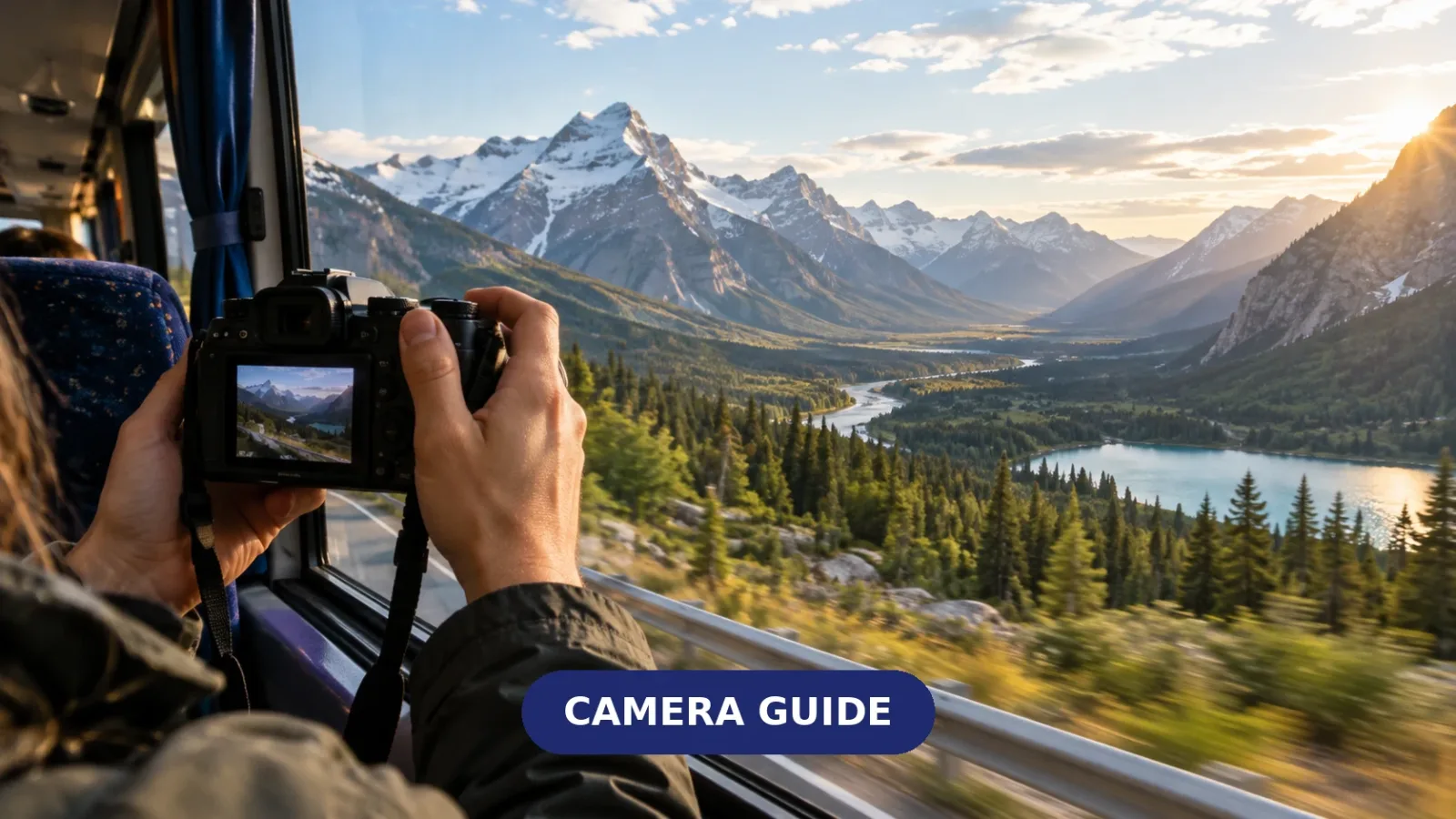
- Shutter
- 1/400s or faster - speed is everything
- Aim far
- Nearby objects blur first
- Aperture
- Around f/8 for depth of field
- Window
- Open it if you can; fight reflections if not
Short answer first: shutter speed is the whole game. Set 1/400th of a second or faster, aim at things far from the bus rather than the roadside rushing past, keep your aperture around f/8, and let ISO carry whatever is left. The rest is fighting the window glass and picking your moments. Here is each layer, with who says so.
Shutter speed first
Digital Photography School's moving-vehicle guide suggests at least 1/400th of a second, preferably faster, to freeze a scene shot from a moving vehicle. photographer Doug Bardwell's tour-bus field note - a photographer's field note from 2010, still mechanically sound - puts it at 1/500th: he caught a sharp frame of a woman carrying firewood in El Salvador with the camera preset to 1/500s and ISO 400. The direction is the same from both: set the speed before the moment arrives, because from a bus you will not get a second chance.
Aim far, not near
Both sources make the same point about distance: the closer the object, the faster it sweeps across your frame, and the more shutter speed it demands. Bardwell's field note calls objects 5 to 10 feet away "almost impossible" to shoot sharp from a moving vehicle - his example from that trip, not a universal line, since the real limit moves with the vehicle's speed, the subject's distance and your shutter speed, and Digital Photography School notes the foreground is where motion first shows - distant hills and buildings stay sharp at speeds that turn the roadside into streaks. So compose on the far ridge, the skyline, the lake - not the fence line flying past the window.
Aperture and ISO
For depth of field, Digital Photography School suggests a small aperture, around f/8, adjusted to your lens's sweet spot. That plus 1/400s-or-faster costs light, and ISO is what pays the bill: the same guide notes ISO matters less here than shutter and aperture - lower is always better, but a higher ISO is exactly what lets you keep the fast shutter and small aperture. On a modern camera, a bit of grain beats a blurry frame every time.
Beat the window
Glass is the second enemy. Digital Photography School's advice is to open the window if you can - a closed window adds reflections, dirt and limits how you can compose. That comes with real conditions: open it only if the bus operator allows it and it is safe, stay seated and belted, keep the camera and yourself fully inside, and never distract the driver. If it will not open, shoot through the viewfinder and consider a polarizing filter to cut reflections. Their other caution is about manners: pointing a long lens at people while driving through a village can come across as creepy - landscapes and cityscapes, yes; close-ups of strangers through glass, no.
Pick your moments
From a moving seat, scenes are now-or-never: the composition exists for two seconds and is gone. Digital Photography School's framing is to accept that and be ready - camera on, settings preset, eyes up. Take the shot the moment the view opens rather than waiting for the perfect version; the bus will not wait, and a slightly imperfect sharp frame beats the perfect one you watched disappear.
Quick questions
What shutter speed do I need from a moving bus? At least 1/400th of a second, preferably faster, per Digital Photography School's moving-vehicle guide; photographer Doug Bardwell's field note uses 1/500s with ISO 400. The faster the bus and the closer the subject, the more speed you need.
Why is the foreground always blurry in my bus photos? Because near objects sweep across the frame fastest - Digital Photography School notes the foreground is where motion shows first. In his 2010 field note, Doug Bardwell calls objects 5-10 feet away almost impossible to freeze, but that is his example, not a universal threshold: how close you can shoot sharp depends on the bus's speed, the subject's distance and your shutter speed. The reliable move either way is to aim far.
What aperture and ISO should I use? Digital Photography School suggests around f/8 (adjusted to your lens) for depth of field, and letting ISO rise as needed to hold the fast shutter - lower ISO is better in principle, but a sharp high-ISO frame beats a clean blurry one.
How do I avoid window reflections? Only if the bus operator permits and it is safe: opening the window is Digital Photography School's first fix, since glass adds reflections and dirt. Stay seated and belted, keep the camera and yourself inside, and don't distract the driver. If the window stays shut, shoot through the viewfinder and try a polarizing filter to cut the glare.
Can a phone do this, or do I need a camera? The physics are identical: motion blur comes from slow shutter speed, and phones default to slow speeds inside a dim bus. If your phone has a pro/manual mode with shutter control, set a fast shutter - 1/400s is a starting point, not a guarantee - hold it steady, and aim far.

A Miranda House graduate and lawyer who traded courtrooms for slow travel. Cheshta travels with the batches we host ourselves, with a soft spot for travelling alongside elders.
Planning your next trip?
We'll handle insurance, hotels, airport assistance and the itinerary — the same way we do it for every trip.
Was this helpful?
one tap, no sign-up