




The short answer
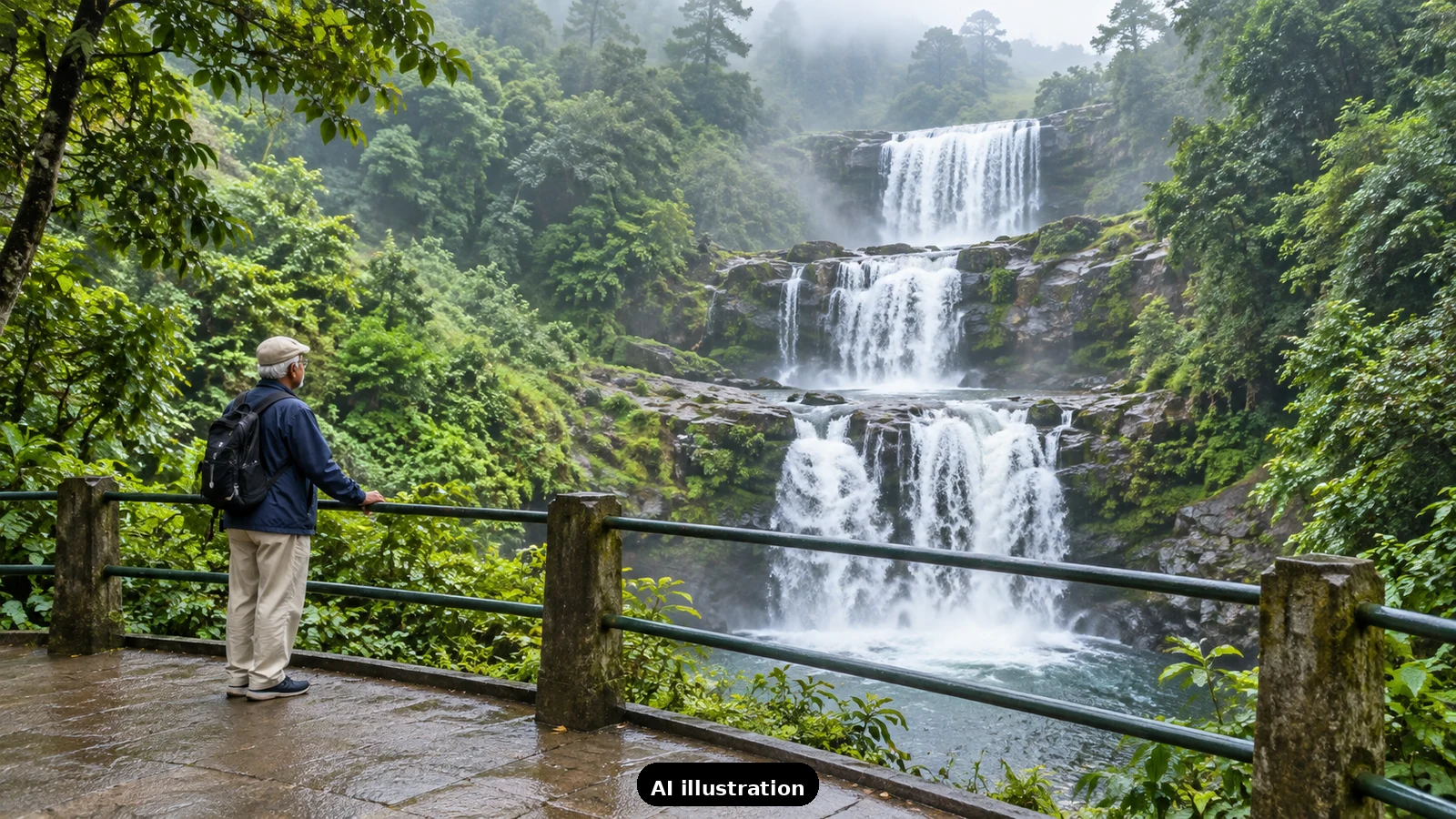
Partly. Elephant Falls, 12 km from Shillong's centre, is actually three waterfalls stacked down a ravine - the Khasi name, Ka Kshaid Lai Pateng Khohsiew, means exactly that. The first tier is visible from a flat path near the entrance, so nobody in the family misses out. The second and third tiers - including the tallest, most dramatic drop - sit at the bottom of roughly 120 concrete steps that stay wet from the spray. Good knees and a steady hand on the rail, go ahead; otherwise, the first tier is a genuinely satisfying visit on its own.
Getting there
- The falls are 12 km from central Shillong in Upper Shillong, about 30 minutes by taxi on a winding hill road. A taxi for the return trip is the comfortable choice - shared transport on this route is cramped.
- Vehicles park near the ticket counter, so the approach is short.
- Entry is a small cash fee at the on-site desk, plus parking. Carry small notes - ₹20, ₹50, ₹100 - as change can be scarce.
- The site opens at 6 AM; early morning means emptier steps and softer light.
The three tiers, tier by tier
- First tier: a broad cascade veiled by pine and fern, visible from near the entrance on flat ground. This is the senior-friendly viewing point, and it is pretty, not a consolation prize.
- Second tier: a quieter stream sliding over flat stone slabs, reached part-way down the staircase.
- Third tier: the show-stopper - the stream plunges vertically into a clear pool, with a wooden bridge across the bottom for the full head-on view. This is also the deepest point of the descent.
What the steps are really like
- About 120 concrete steps in total, with handrails the whole way down - and back up.
- Waterfall spray keeps the steps perpetually damp, and moss can make them slick. Slip-resistant shoes are not optional here.
- The descent is steep and narrow in places; the climb back is the part that tests knees and lungs.
- Go down slowly, use the rail, and rest at the second tier both ways. If anyone in the group is unsure, the first tier plus a cup of tea near the entrance is a happy morning.
Season changes the decision
December to April is the dry window: gentler water, clearer pools and the safest footing. June to September turns the falls into a roaring mud-brown torrent - spectacular, but the spray soaks the viewing bridge and the steps are at their most treacherous. For senior travellers, winter is the clear pick, whatever the photos from monsoon season promise.
Practical comforts
- No toilets deep in the ravine - use the facilities near the entrance before descending.
- Carry water; there is nothing to buy below.
- Near the entrance, local operators rent traditional Khasi dress for photos - a fun, completely flat activity.
- A walking stick helps on the steps if you use one at home; umbrellas are useless in the spray, so carry a light rain jacket instead.
- Pair the falls with the Air Force Museum or Shillong Peak on the same road - both easier on the legs - rather than another stepped waterfall the same day.

A Miranda House graduate and lawyer who traded courtrooms for slow travel. Cheshta travels with the batches we host ourselves, with a soft spot for travelling alongside elders.
Planning your next trip?
We'll handle insurance, hotels, airport assistance and the itinerary — the same way we do it for every trip.
Questions on this article
asked by readers, answered by us
Was this helpful?
one tap, no sign-up