




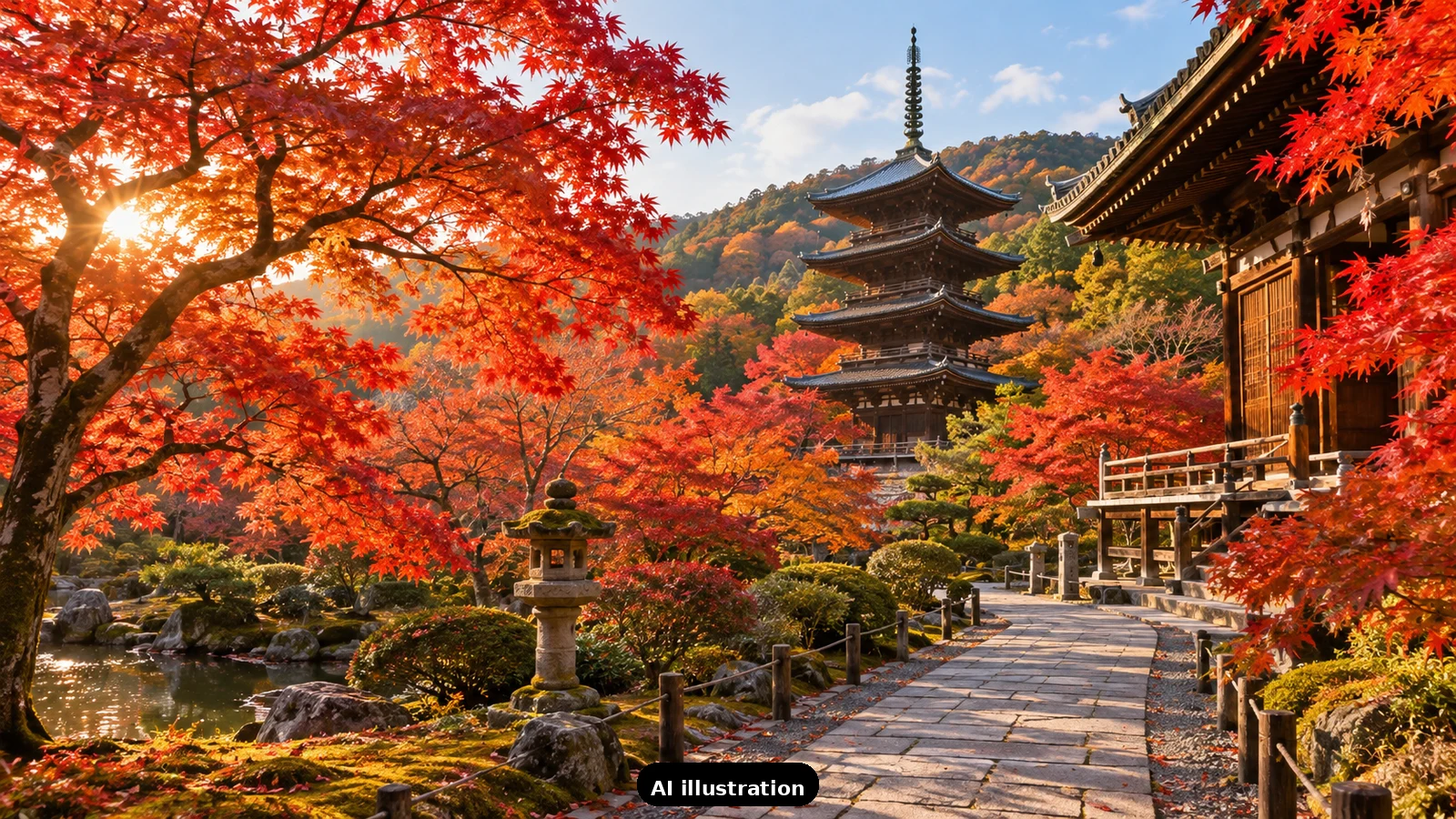
Autumn foliage (koyo) is Japan's second great travel season, and the planning mistake most first-timers make is treating it as a single event with a single date. Japan stretches nearly 3,000 kilometers north to south and climbs from sea level to 3,000-meter peaks, so the color does not arrive on one day - it rolls down the country for three months. Whether you should come in October or November depends entirely on where you want to go. Here is the destination-by-destination picture, plus how to verify the real 2027 dates once the official forecasts exist.
An honest word about 2027 dates first. Nobody can tell you the 2027 peak days yet - including us. Japan's two professional foliage forecasters, the Japan Meteorological Corporation (JMC) and the Japan Weather Association (JWA), publish their first seasonal forecasts around the start of September each year, then update them through October and November as the weather develops. JNTO's japan.travel site runs an English autumn forecast page that mirrors these updates. So everything below is built from the historical normal windows - the dates that hold in a typical year - and your job in September 2027 is to check the forecasts and confirm where your trip sits against them. Any website quoting exact 2027 peak dates before September 2027 is recycling averages.
October destinations: go north, go up. The season opens in Hokkaido's Daisetsuzan mountains around mid-September - the earliest color in Japan - and works down through the hills: Sapporo and the Jozankei gorge typically peak in mid-to-late October. Tohoku follows, with the Oirase Stream and Lake Towada usually best in mid-to-late October. In the Japanese Alps, Kamikochi's larches and maples run through October before the valley closes for winter in mid-November. Nikko is the altitude lesson in one day trip: the high Okunikko area around Lake Chuzenji and Kegon Falls peaks in early-to-mid October, while the famous shrine town at the bottom colors up in late October and early November. The Japan Weather Association's mountain forecasts cover roughly 3,000 peaks by elevation - worth checking, because two towns thirty minutes apart can be two weeks apart in color.
November destinations: the classic city season. This is the month most people picture. Tokyo's ginkgo avenues (Meiji Jingu Gaien) and garden maples (Rikugien, Shinjuku Gyoen) usually run from mid-November into early December. Kyoto is the headliner: Tofukuji, Eikando, Kiyomizu and Arashiyama typically peak from mid-November to early December, with the classic late-November window being the safest single bet - temple by temple, higher ground goes first. Osaka castle park and Nara's parks follow the same mid-to-late November rhythm. Hiroshima and Miyajima's Momijidani maple valley peak in mid-to-late November. Kyushu is last: Takachiho Gorge and Yufuin usually hold their color into early December. For reference, the JWA's 2026 assessment called a normal season: northern mountain areas late September to mid-November, northern plains mid-October to late November, and ginkgo (the yellow trees) late October to late November - a fair sketch of a typical year's shape.
How to choose between October and November. If your heart is set on Kyoto and Tokyo's famous scenes, November is your month and late November is your target - accept the crowds as the price. If you want foliage without the crush, October in Tohoku or Hokkaido delivers spectacular color at a fraction of Kyoto's peak-season pressure, with cheaper beds and emptier trains. A longer trip can chase the front: start in the Alps or Nikko highlands in late October, finish in Kyoto in late November.
Booking reality for 2027. Autumn is Japan's second-busiest season and Kyoto is its epicenter: good-value hotels for the late-November weeks routinely sell out months ahead, so book by mid-year, keep free cancellation where you can, and plan famous temples for opening time on weekdays. Trains and day-trip buses to foliage spots also fill - reserve seats once your forecast check confirms dates.
How to verify the 2027 forecast. From early September 2027: check the JMC and JWA foliage forecasts (both cover around 700 named spots, updated repeatedly through the season) and JNTO's English forecast page on japan.travel. Cross-check your exact destinations, then lock or shift your booking - a forecast can move the peak by a week, and a week is the whole game at Kyoto's peak.
How TripKeeper times the season. Our team tracks the September-November forecast updates every year and sequences trips against the actual peak, not the brochure average: founder-hosted departures are scheduled around these windows and adjusted when a forecast shifts. Travelers building their own trip get the same timing advice through the trip-planning inquiry - dates, order of cities, and what to book early - grounded in the live forecast, not guesswork.

A Miranda House graduate and lawyer who traded courtrooms for slow travel. Cheshta travels with the batches we host ourselves, with a soft spot for travelling alongside elders.
Planning your next trip?
We'll handle insurance, hotels, airport assistance and the itinerary — the same way we do it for every trip.
Questions on this article
asked by readers, answered by us
Was this helpful?
one tap, no sign-up
