




Ask anyone who has done Kyoto in August and you get the same story told two ways: 'the best festivals of my life' and 'the hottest I have ever been'. Both are true. Japanese summer is a serious season - not a reason to cancel, but a reason to plan like the locals do. Here is what the heat actually means for a sightseeing day, and how to travel well through July and August.
How hot is hot. Tokyo and Kyoto in July and August run daily highs around 31-35 degrees Celsius, and Kyoto - a basin ringed by mountains - regularly leads the country's heat tables. The number on the thermometer understates it: humidity of 70-80% makes 33 degrees feel like hard work. Japan issues heatstroke alerts on the worst days and takes them seriously; so should you. Osaka and Hiroshima sit in the same band. The relief valves are real: Hokkaido stays in the mid-20s, and the Japan Alps and highland towns like Karuizawa and Kamikochi run five to ten degrees cooler than the cities.
When the heat is fine, and when it is not. Fine: mornings until about 10 AM, evenings after 5 PM, and any time you are indoors - Japan air-conditions aggressively. Risky: 11 AM to 4 PM on cloudless days, especially on temple grounds (stone and gravel radiate), castle climbs, and long walks between sights. Dangerous: pushing through dizziness, headache or nausea in that window. Heatstroke in Japan hospitalizes tens of thousands every summer, and tourists overestimate their tolerance because sightseeing does not feel like exercise. It is.
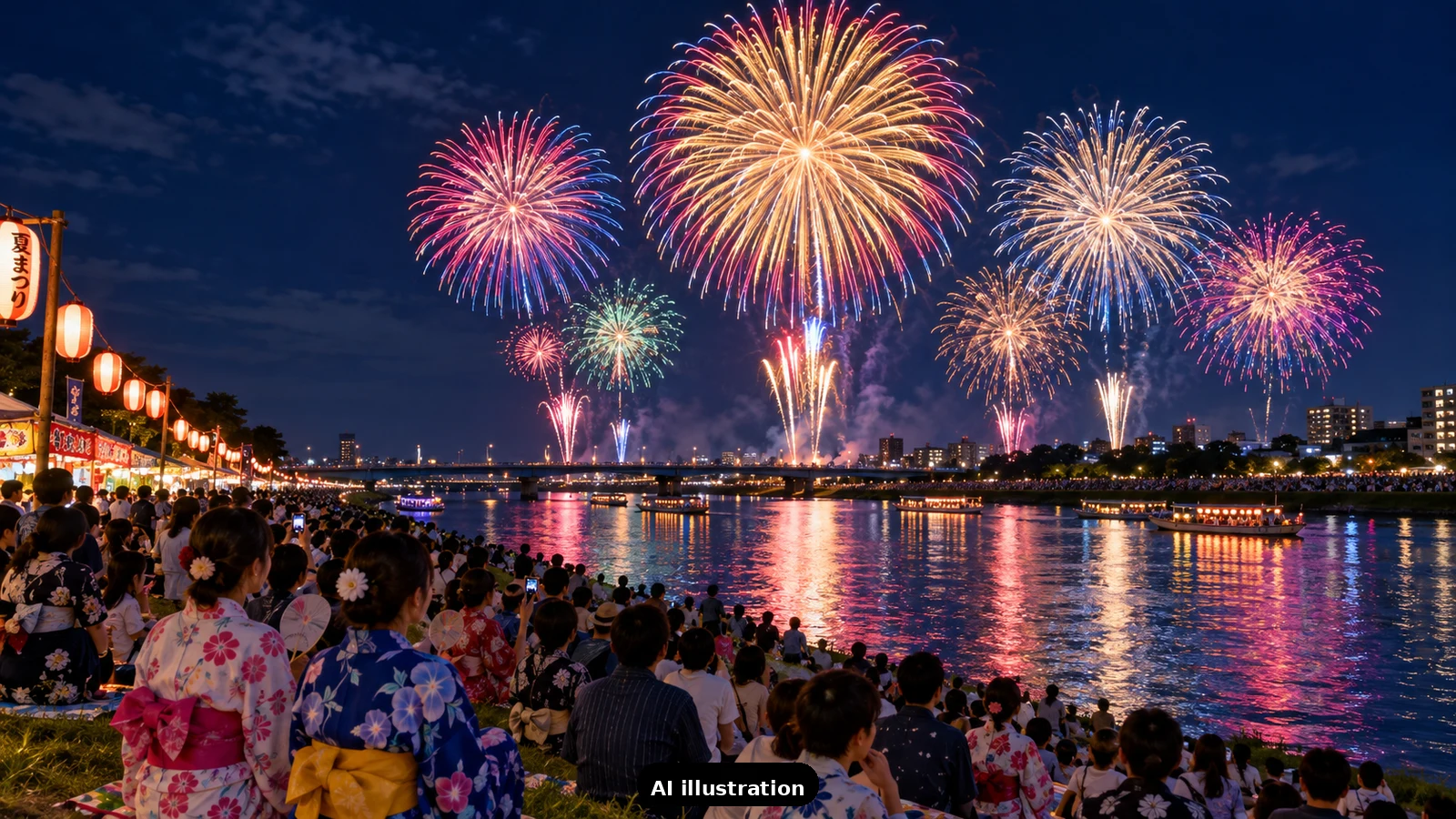
The local daily rhythm. Watch how Japan handles its own summer and copy it: sights at opening time, a long lunch and an indoor block (museums, department stores, aquariums, a nap) through the early afternoon, then back out for the evening, which in summer is the main event. This is the season of matsuri - Kyoto's Gion Matsuri runs through July, Osaka's Tenjin Matsuri in late July, and fireworks festivals (hanabi taikai) light up rivers most summer weekends, with crowds in cotton yukata and food stalls in the streets. The heat buys you the best evenings of the Japanese year.
Families and seniors: the adjusted version. Small children and older travelers feel heat first and recover slowest, so for them the rhythm is not optional, it is the plan. Cut the sight count to one or two a day. Choose indoor anchors with real seating (aquariums are the summer champion - Osaka's Kaiyukan, Tokyo's Sumida). Use taxis for short hops without guilt; they are cheap by world standards and every one is a mobile air-conditioner. Carry hydration - Japan's convenience stores and vending machines (on practically every block, selling cold drinks and sports drinks like Pocari Sweat) make this easy. And pick hotels with a pool or an onsen: the end-of-day soak or swim is what makes a summer day land well.
The gear that earns its space. A hat and a folding umbrella (used as a parasol - completely normal in Japan), sunscreen, a small towel or handkerchief (many restrooms lack dryers), and a handheld fan - electric neck fans are the current local standard and sold everywhere. Dress loose and light; the linen-and-cotton look is not just fashion, it is survival.
Where to route a summer trip. If your dates are fixed in July-August, weight the itinerary north and up: a few days of Tokyo's festival energy, then the Alps or Tohoku, or a Hokkaido leg for lavender season (Furano's fields peak in mid-to-late July). Keep Kyoto and Osaka to mornings and evenings, and put the beach or the islands on the table - this is their season. Mount Fuji's official climbing season also opens in early July and runs to early September, the only window when the trails and huts operate - but that is a hike, not a sightseeing stop, and should be planned as one.
How TripKeeper schedules the season. Summer itineraries from our team are built on the local rhythm: outdoor anchors at 8 AM, indoor and shaded blocks at midday, festival and fireworks evenings as the payoff, and rest built in for the travelers who need it most - elders get the cool-hours schedule by default, not by request. Founder-hosted batches run this way on the ground; independent travelers get the same heat-aware sequencing through the trip-planning inquiry.

A Miranda House graduate and lawyer who traded courtrooms for slow travel. Cheshta travels with the batches we host ourselves, with a soft spot for travelling alongside elders.
Planning your next trip?
We'll handle insurance, hotels, airport assistance and the itinerary — the same way we do it for every trip.
Questions on this article
asked by readers, answered by us
Was this helpful?
one tap, no sign-up
