




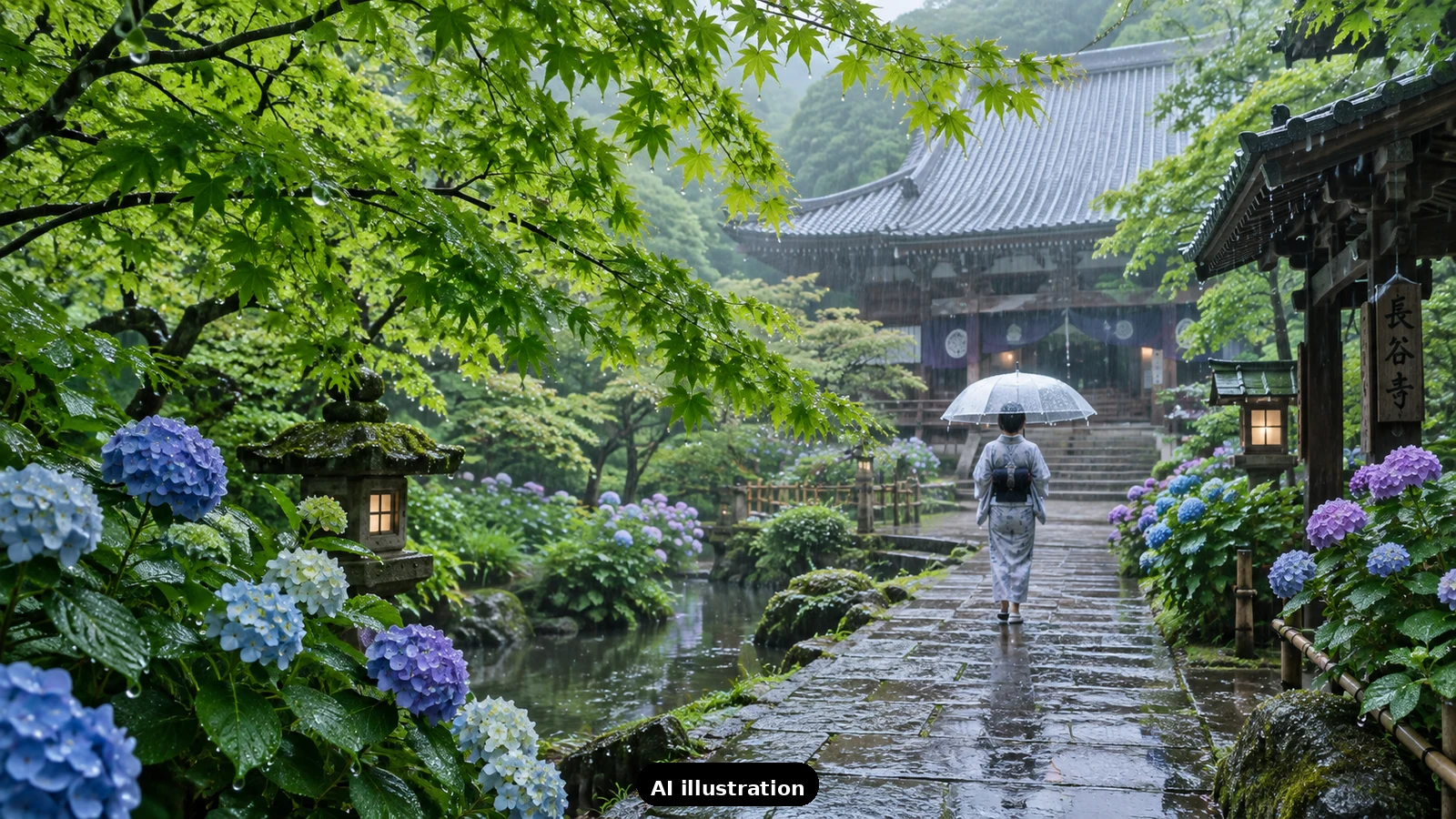
June is Japan's most unfairly skipped month. It sits between the spring crowds and the summer holiday wave, hotels exhale and drop their rates, and the countryside goes an almost fluorescent green. The catch is real but misunderstood: tsuyu, the rainy season, which runs roughly early June to mid-July across most of Honshu. The key word is 'rainy season', not 'monsoon' - and the difference decides whether June ruins your trip or quietly makes it.
What tsuyu actually feels like. It does not rain all day, every day. A typical tsuyu week mixes grey drizzly days, dramatic downpours that last an hour or two, and - between fronts - perfectly clear stretches that catch everyone by surprise. Think 'pack an umbrella', not 'cancel the trip'. Temperatures sit in the comfortable low-to-mid 20s Celsius in Tokyo and Kyoto, warming and humidifying as the month goes on. The genuinely wettest region is the south (Kyushu gets it heaviest and earliest); Hokkaido has no rainy season at all, which is why domestic tourists flood north in June.
What June gives you back. The crowds at Kyoto's temples thin out dramatically - Fushimi Inari on a June morning can feel like a different decade. Hotel prices soften across the board. And the season has its own headline act: hydrangeas (ajisai), which peak in June and turn temple gardens like Kamakura's Hasedera and Kyoto's Mimuroto-ji into blue-and-purple festivals. Add fresh green maple leaves (aomomiji) in the temple gardens, fireflies in the countryside streams, and the plum harvest, and June stops looking like a consolation prize.
Where to go when the sky opens. Japan is unusually well built for rain. The museum bench is deep: Tokyo's teamLab installations, the Ghibli-adjacent and art museums, Kyoto's manga museum and samurai-ninja experiences. Covered shopping arcades - Osaka's Tenjinbashisuji, Kyoto's Teramachi, every city's station malls - are a rainy-day institution, not a backup plan. Department-store food halls (depachika) are a legitimate rainy-afternoon destination. And an onsen town in the rain is arguably onsen at its best: hot bath, cold drizzle, mountain mist.
How to plan around the weather. Keep the itinerary loose enough to swap days: check the forecast each evening and put outdoor sights on the clear mornings. Carry the local uniform - a cheap transparent umbrella from any convenience store and shoes that can handle a wet street. Book the one or two things that genuinely need dry weather (a Fuji-view day, a Miyajima sunset) with adjacent flex days. And treat the rain itself as a sight: temple gardens are designed for it - moss deepens, ponds ripple, and the photographs look like they were taken in another century.
Who should actually avoid June. Honestly, very few travelers. Beach-focused trips should wait for July and August. Anyone whose heart is set on guaranteed Fuji views should know summer cloud cover makes the mountain shy in any month from June to August. And travelers who hate humidity should aim for Hokkaido or the Japan Alps, where June stays mild. For everyone else, June is the thinking traveler's month: the same Japan, cheaper and quieter, wearing its greenest clothes.
How TripKeeper builds a June trip. Rainy-season itineraries from our team pair every outdoor anchor with an indoor understudy, schedule Fuji and mountain days with flex on both sides, and lean into what June does best - hydrangea temples, onsen evenings, food halls and quiet gardens. Founder-hosted groups get the forecast calls made for them each morning; independent travelers get the same swap-ready structure through the trip-planning inquiry.

A Miranda House graduate and lawyer who traded courtrooms for slow travel. Cheshta travels with the batches we host ourselves, with a soft spot for travelling alongside elders.
Planning your next trip?
We'll handle insurance, hotels, airport assistance and the itinerary — the same way we do it for every trip.
Questions on this article
asked by readers, answered by us
Was this helpful?
one tap, no sign-up
