




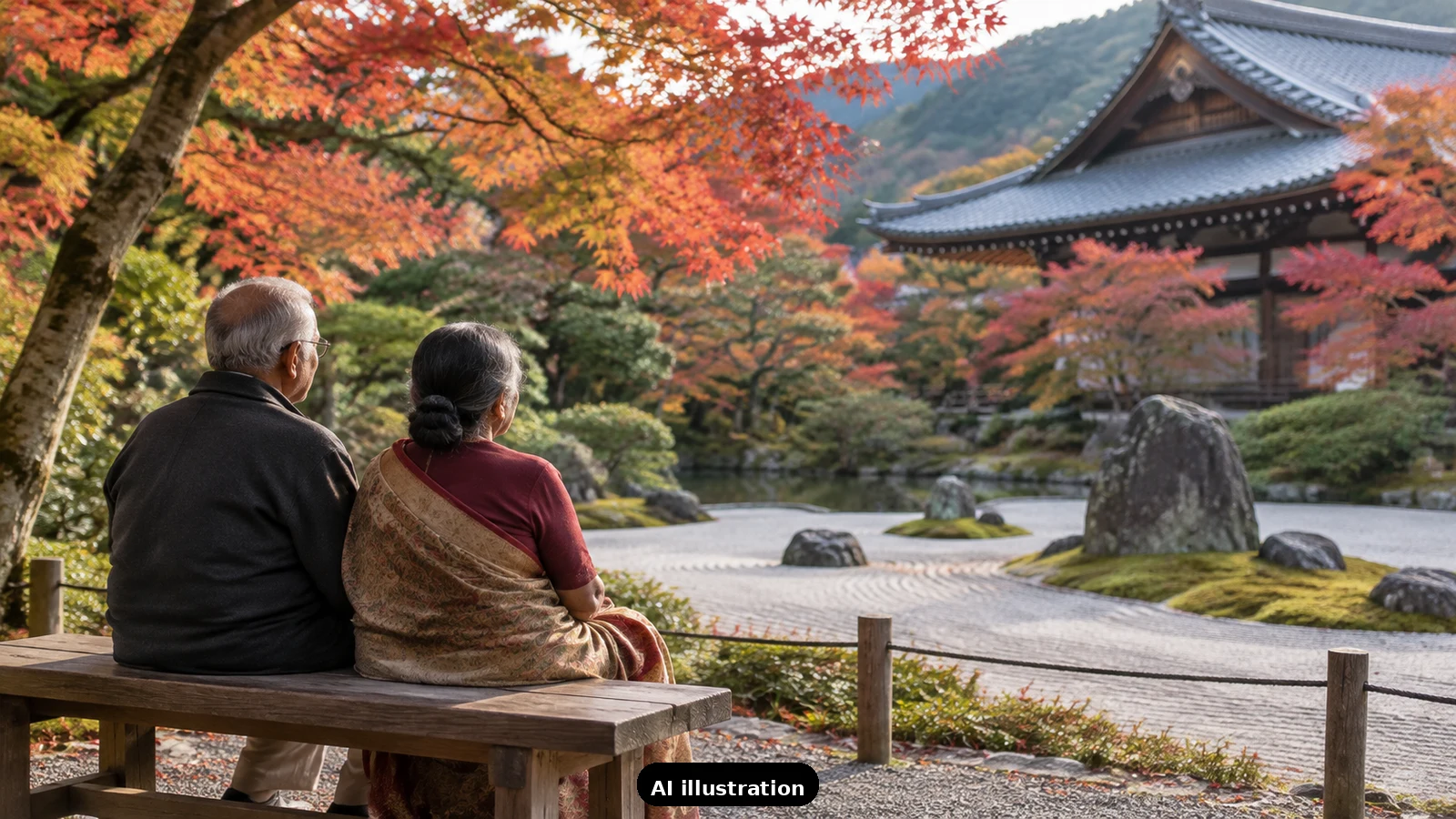
Parents over 60 can love Japan deeply - the temples, the gardens, the food, the sheer orderliness of it - but only if the trip is designed for their pace, not borrowed from a honeymoon itinerary. The changes that matter are structural: two or three bases instead of five, one anchor sight per day, mornings out and afternoons light, seated experiences over standing queues, and taxis used freely and without guilt. Here is the ten-day shape that works.
The rules of a senior-paced trip. One big sight a day, with everything else optional. Mornings are the energy window - start by 9, be back by mid-afternoon. Book hotels near stations, not views. Forward the big suitcases between cities by takkyubin so nobody lifts a bag onto a train rack. Carry a small folding umbrella and a bench mindset: Japan's gardens are made for sitting, and sitting is half the pleasure.
Days 1-3, Tokyo gently. Day 1: land, transfer, rest - nothing more. Day 2: Meiji Shrine's wide flat forest walk (benches throughout), then a drive-past look at the Imperial Palace area and an early night. Day 3: a Sumida River cruise to Asakusa - sightseeing seated, which parents adore - Senso-ji at a slow pace, and the Nakamise lanes only as far as energy allows. Skip the Skytree queue if legs are tired; the view is not worth the standing.
Days 4-5, Hakone or a soft Tokyo day. Option one: an easy loop toward the mountains - an onsen inn night near Hakone with kaiseki dinner served at a table (ask for chairs; many ryokan accommodate), ropeway views from a gondola seat, no hiking. Option two: stay in Tokyo for teamLab Planets or a garden day at Shinjuku Gyoen. Parents with knee trouble should pick the garden; the hot-spring inn involves tatami and low furniture.
Days 6-8, Kyoto slowly. Take the Shinkansen - reserved seats, station lifts, a smooth two hours. Day 6: arrive, rest, and an evening Gion stroll of twenty gentle minutes. Day 7: Kiyomizu-dera early, before crowds, accepting the slope (there are rest points, and a taxi can drop you at the upper gate), then a seated tea ceremony - an hour of culture from a chair. Day 8: Arashiyama's bamboo grove is flat and short if you enter from the main gate; pair it with a Hozugawa river boat ride (two hours, fully seated, beautiful) or skip both for a café day by the Kamo river when energy runs low.
Days 9-10, Osaka and home. Day 9: a short hop to Osaka for the castle park (elevator up the keep for those who want the view) and an easy evening at Dotonbori - the neon is best enjoyed from a canal-side café chair. Day 10: fly home from Kansai with a buffer morning.
Health and comfort notes. Japan's pharmacies are excellent but language is a barrier - carry prescriptions and a basic medicine kit from India. Travel insurance that covers seniors is not optional; medical care in Japan is very good and very expensive without it. Book wheelchair-friendly rooms proactively if needed, and note that station staff will happily help - a word to the uniformed attendant at any gate brings real assistance, not a shrug.
How TripKeeper helps. Slow itineraries for parents are close to our hearts - a large share of our founder-hosted Japan groups are exactly this: children sending parents, or parents finally travelling themselves. Our tour leaders set the gentle pace, pre-book seated experiences, arrange the taxis and the luggage forwarding, and carry every traveller's dietary and medical notes. Our team handles hotels, insurance and airport assistance end to end. Send a "Plan your trip" inquiry and tell us about your parents - we will shape the ten days around their knees, their interests and their chai times.

A Miranda House graduate and lawyer who traded courtrooms for slow travel. Cheshta travels with the batches we host ourselves, with a soft spot for travelling alongside elders.
Planning your next trip?
We'll handle insurance, hotels, airport assistance and the itinerary — the same way we do it for every trip.
Questions on this article
asked by readers, answered by us
Was this helpful?
one tap, no sign-up
