




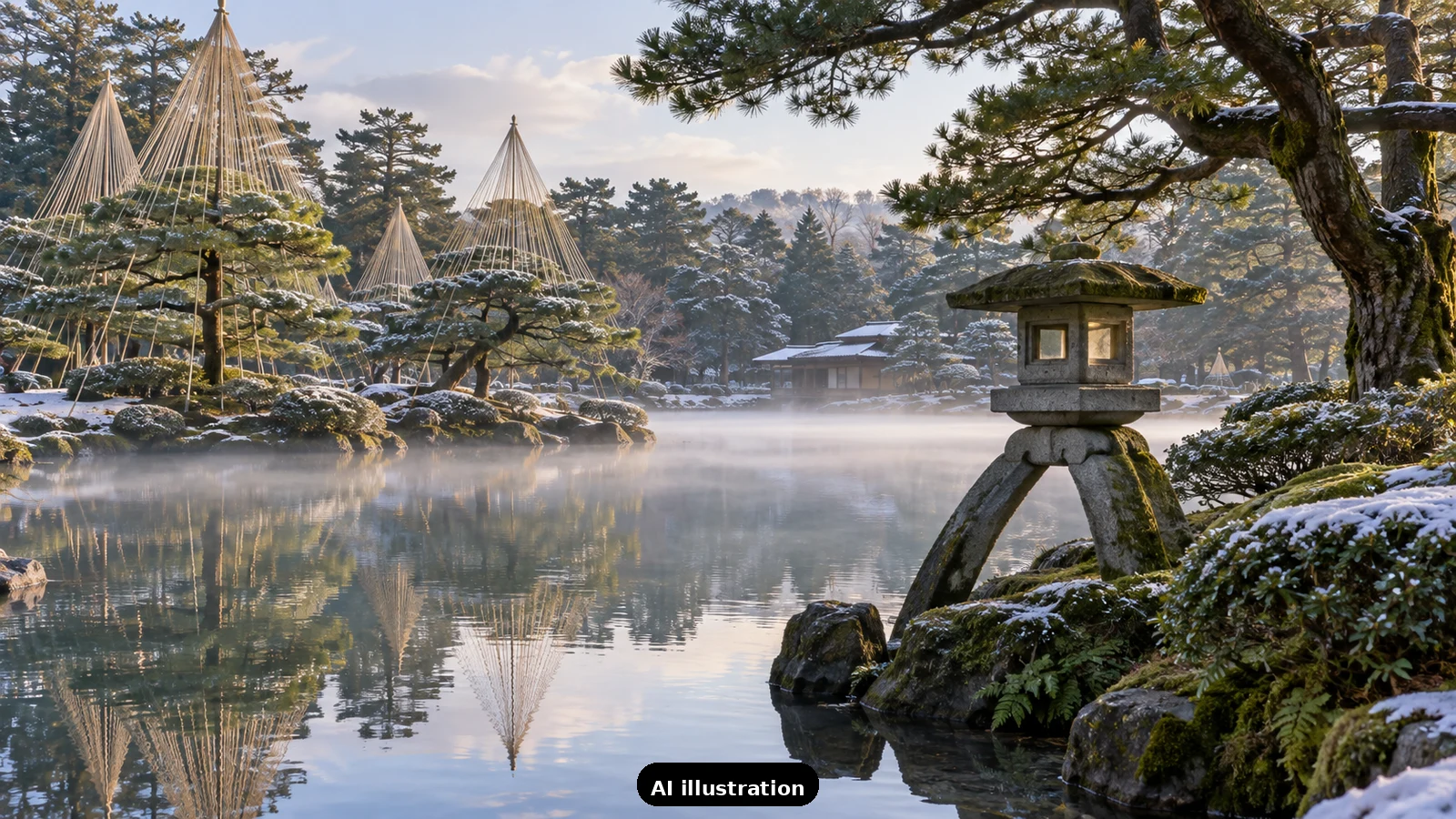
If your picture of Japan is wooden teahouses, geisha districts, samurai lanes and one of the great gardens - but your worry is queues, selfie sticks and timed-entry crowds - Kanazawa is the answer more and more experienced travelers give. It is not a Kyoto replacement: it is a smaller, calmer city that does a Kyoto-style experience at human scale. Here is the honest comparison, and how Kanazawa slots into a normal itinerary.
What Kanazawa genuinely has. Kenrokuen is officially one of Japan's three great landscape gardens - spacious, meticulously kept, and busy but never suffocating the way Kyoto's famous temples get. Next door, Kanazawa Castle's restored grounds give you the fortress context. The Higashi Chaya district is a preserved geisha quarter of wooden lattice-fronted teahouses where working geisha still perform - you can hear shamisen from the lanes at dusk, and several teahouses are open to visitors. The Nagamachi samurai district keeps its earthen-walled lanes and a restored samurai house. Add the 21st Century Museum of Contemporary Art, the Omicho seafood market for lunch, and a gold-leaf craft tradition that supplies most of Japan's gold leaf, and you have a genuinely full two-day city.
What Kyoto still does better. Depth and range. Kyoto has seventeen World Heritage sites, dozens of first-rank temples and shrines, Fushimi Inari's torii tunnels, Arashiyama's bamboo, and layers of history no other Japanese city matches. If it is your first trip to Japan and you care about the famous icons, Kyoto is not skippable - the trick is timing it (early mornings, shoulder seasons) rather than replacing it. Kanazawa's sights are excellent; Kyoto's are unmatched in number and gravity.
The crowd difference is real. Kyoto's pressure is concentrated and famous: Fushimi Inari by mid-morning, Kiyomizu's lanes at midday, buses full in blossom season. Kanazawa receives a fraction of that traffic. Kenrokuen at 9 AM feels like a garden, not an attraction; the Higashi Chaya lanes in the evening are close to empty; restaurant reservations are a convenience, not a campaign. For travelers whose Japan dream is atmosphere over icons - photographers, repeat visitors, anyone who found Kyoto's peak moments stressful - Kanazawa delivers the texture they came for.
Getting there and fitting it in. The Hokuriku Shinkansen connects Tokyo to Kanazawa in about two and a half hours on the fastest trains, making it a natural stop on a Tokyo-Kanazawa-Kyoto route: go Tokyo to Kanazawa, then continue to Kyoto via the Thunderbird limited express (about two hours) - no backtracking. From Kanazawa, buses run to Shirakawa-go and Takayama, so it also anchors a mountain-villages loop. A rail pass covers the trains on both legs (seat reservations recommended).
Who should choose which. First trip, ten days or less, icons matter: do Kyoto properly and add Kanazawa only if you have the days. First trip with two weeks, or a return trip: the Tokyo-Kanazawa-Kyoto arc is arguably the best single route in Japan right now - you get the icons and the breathing room. Traveling in peak blossom or autumn weeks: Kanazawa becomes not just nicer but strategically smart, with better hotel availability and prices than Kyoto at its most crushed. Families and seniors appreciate its flat, compact, calm center.
The verdict in one line. Kyoto is the masterpiece gallery - crowded because it deserves to be. Kanazawa is the beautiful house down the street where you can actually hear yourself think. The best trips visit both, in the right order: Kanazawa first for the atmosphere, Kyoto second for the icons, mornings early everywhere.
How TripKeeper routes it. Our team regularly builds the Tokyo-Kanazawa-Kyoto arc with reserved trains, a night or two in Kanazawa's center, and Kyoto's headline sights placed at opening hours on the quieter days. Founder-hosted batches run the arc with the pacing built in; independent travelers get the same route logic, seat reservations and crowd-aware scheduling through the trip-planning inquiry.

A Miranda House graduate and lawyer who traded courtrooms for slow travel. Cheshta travels with the batches we host ourselves, with a soft spot for travelling alongside elders.
Planning your next trip?
We'll handle insurance, hotels, airport assistance and the itinerary — the same way we do it for every trip.
Questions on this article
asked by readers, answered by us
Was this helpful?
one tap, no sign-up
