




Kyoto has an overtourism problem, but it is a concentrated one. The queues you have seen in photographs belong to about five pin-drops on the map: Fushimi Inari's gates, the Arashiyama bamboo grove, Kiyomizu's stage, Kinkaku-ji's golden pavilion, and the Gion lanes at dusk. Step one train stop or one early morning away from those pins and Kyoto is still the city people fall in love with - temple bells, moss gardens, shopkeepers who have time to talk. This two-day route keeps the classics at the edges of the day and spends the middle where the crowds are not.
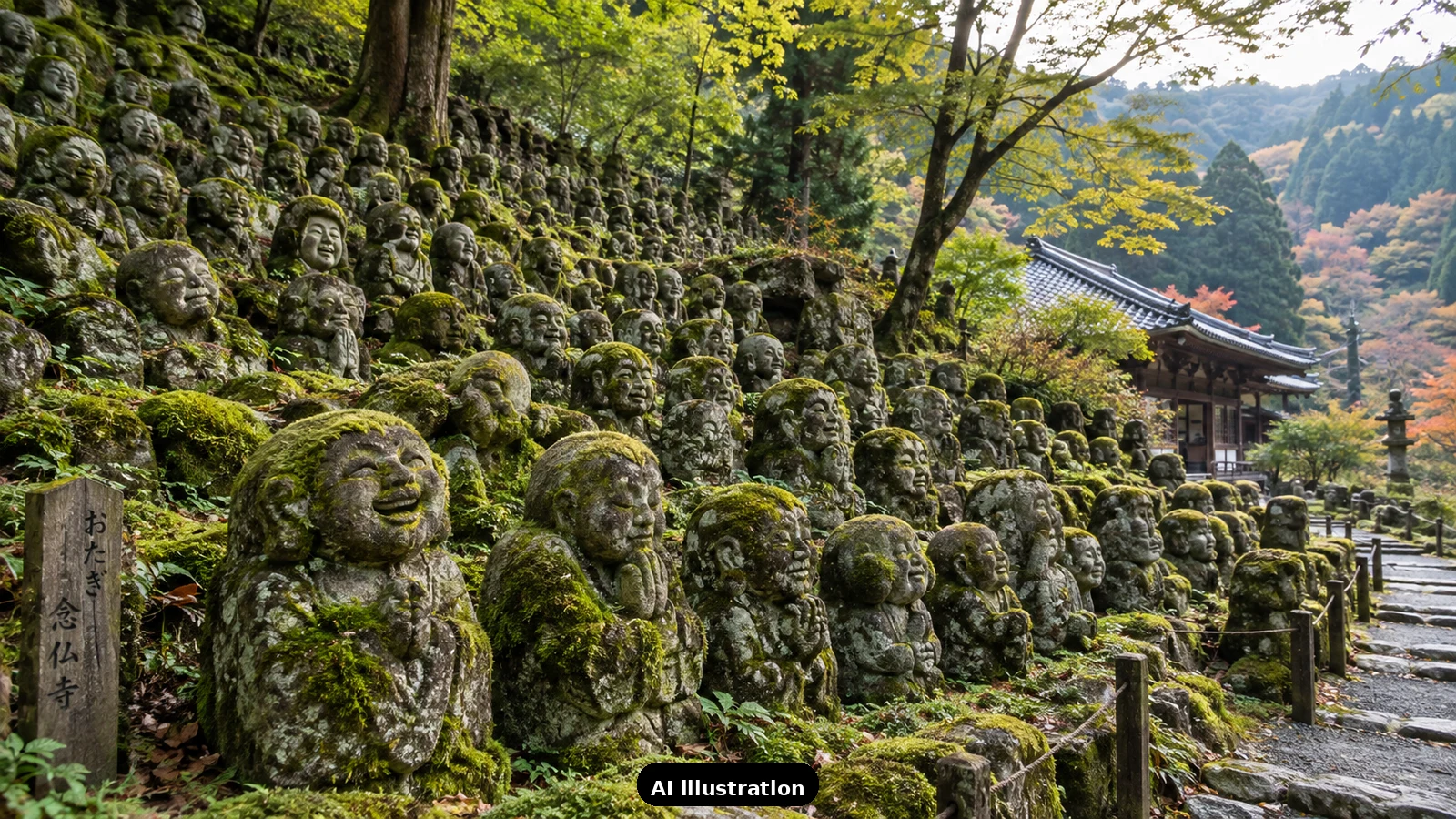
Day one morning: north Arashiyama, not the grove. Take the early train to Arashiyama but walk away from the bamboo. Ten minutes uphill past the grove's end the crowds evaporate: the thatched roofs of Saga-Toriimoto preserved street, then Otagi Nenbutsu-ji, a hillside temple of 1,200 moss-covered stone statues, each carved with a different face - many visitors call it the best hour they spent in Kyoto. Circle back through the bamboo grove late morning if you like; by then you have already had the better version of the area.
Day one afternoon: the Fushimi that is not Inari. South of the famous shrine, Fushimi is Kyoto's sake district - a canal-lined quarter of white-walled breweries with tasting rooms and a small museum. Two hundred years of brewing history, a fraction of Inari's footfall. If you still want the torii gates, go at 7 AM or after 5 PM; the gates do not close, and the mountain is silent at both ends of the day.
Day one evening: Pontocho or Nishiki's side streets, not Gion's main lane. Gion's most photographed private lanes now restrict photography after years of tourists mobbing working geiko and maiko - respect the signs, keep to the public streets, and never block or follow anyone for a photo. For the same atmosphere with none of the scrum, walk Pontocho alley across the river or the covered streets around Nishiki market after the stalls close. Dinner in Kyoto is best booked, not found; ask your hotel to call ahead.
Day two morning: Ohara or Kurama - the mountain Kyoto. An hour by bus or train from the center, and the air itself changes. Ohara, in the northern hills, holds Sanzen-in's moss garden and a farming-village main street selling pickles and miso. Kurama, up the Eizan line, has a mountain-top temple reached by a cedar-forest path (or a short cable car) and, across the saddle, the village of Kibune, where summer restaurants platform over the river. Pick one; both are the Kyoto that Kyotoites escape to.
Day two afternoon: the quiet giants of the center. Back in the city, the sights that tour buses skip: Sanjusangendo's hall of 1,001 golden Kannon statues (photography rules keep it hushed), the Zen rock gardens of Daitoku-ji's subtemples where you may sit alone for an hour, or the Philosopher's Path at 8 AM when it belongs to joggers and cats. Finish at a neighborhood sento bathhouse - the unglamorous, genuinely local Kyoto - before the train or flight out.
The rules that keep this route working. Timing beats location: any famous sight before 8 AM or after 4 PM is a different place. Shoulder seasons beat peak: late January, June and early December carry the same beauty with half the bodies. And respect is the entry ticket: the geiko districts, small temples and neighborhood streets stay open and welcoming precisely to the visitors who treat them as someone's home, not a set.
How TripKeeper routes around the crowds. Crowd-avoidance is sequencing, and sequencing is what our team does: temple mornings scheduled against cruise-ship and holiday calendars, alternatives swapped in when a sight crosses the line from busy to miserable, and restaurant bookings made before you land. Founder-hosted groups get a guide making these calls in real time; independent travelers get the same routing through our trip-planning inquiry - including which day of your week each sight should land on.

A Miranda House graduate and lawyer who traded courtrooms for slow travel. Cheshta travels with the batches we host ourselves, with a soft spot for travelling alongside elders.
Planning your next trip?
We'll handle insurance, hotels, airport assistance and the itinerary — the same way we do it for every trip.
Questions on this article
asked by readers, answered by us
Was this helpful?
one tap, no sign-up
