




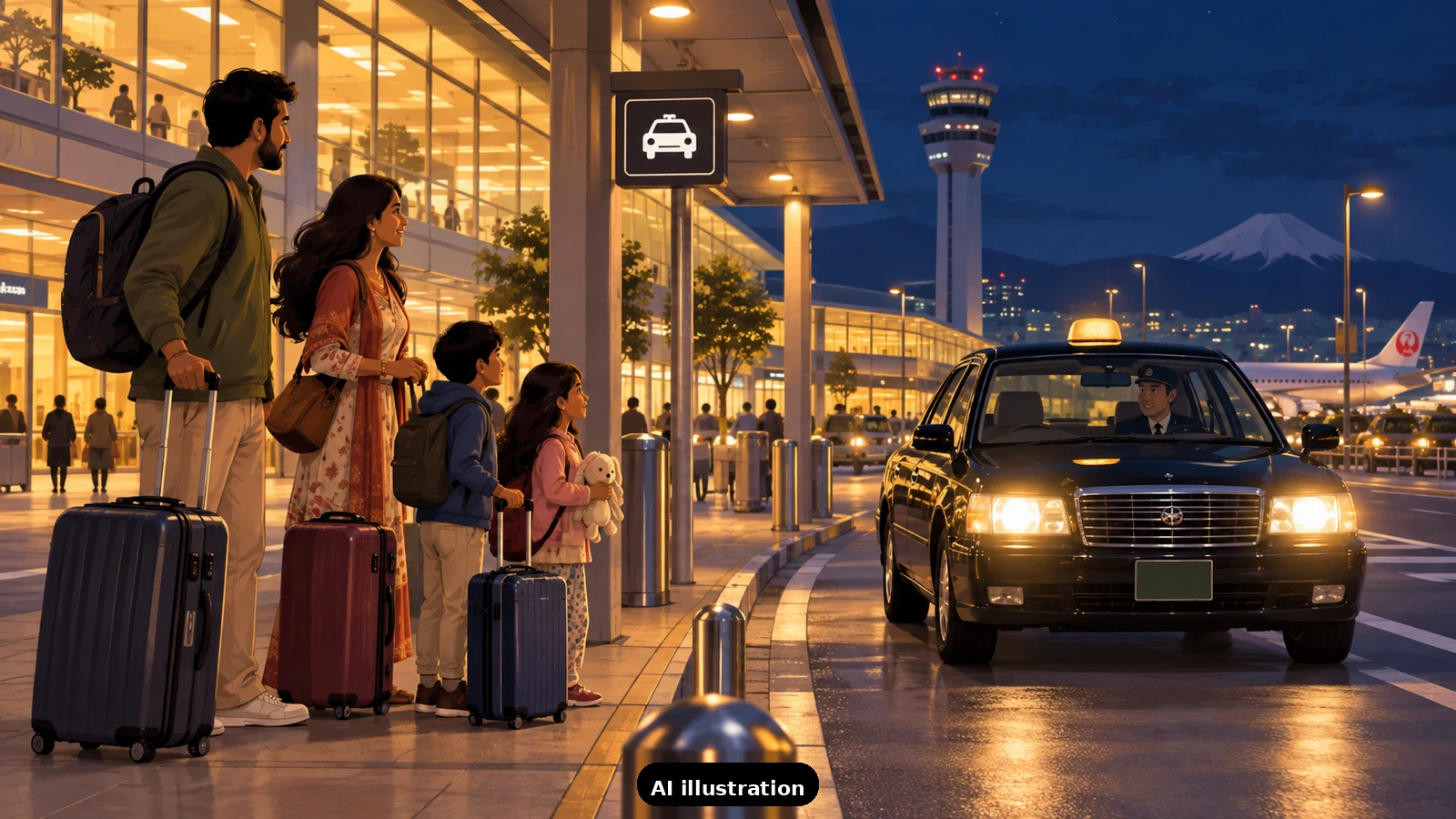
Most India-Tokyo nonstops land in the morning, but connections through Singapore, Hong Kong or the Gulf can put you on the ground late - and one delayed first leg can turn a 9 pm landing into a midnight one. Tokyo's airports behave very differently after the trains stop, so the answer depends on which one you land at. Plan this before you fly, not at the arrivals hall at 1 am.
First, know when the trains stop. At Haneda, the Keikyu line and the monorail wind down around midnight, and restart roughly around 5 am. At Narita the last Skyliner leaves around 11 pm, with the Narita Express ending earlier - after that, there is no train into the city until morning. If your scheduled landing is within an hour of these cutoffs, treat the train as a bonus, not a plan: immigration, baggage and the walk to the platform eat that hour quickly.
Haneda after midnight: buses exist. Haneda is the airport that still works late. Keikyu Bus and the Airport Limousine both run late-night and early-morning services on routes toward hubs like Shinjuku and Ikebukuro, specifically covering the hours when trains do not run. Check the operators' timetables for your date - routes and departure bays change - but if you are staying near a major station area, there is a fair chance a night bus gets you close. From the drop-off, a short taxi hop finishes the job.
Haneda's other strength: the taxi is survivable. Because Haneda sits inside the city, a midnight taxi to most central hotels is a 20-40 minute ride at flat or metered rates that, while not cheap by Indian standards, will not break the trip. For a family of three or four with suitcases after a long travel day, splitting one taxi often beats dragging luggage onto a night bus. Late-night surcharges apply, so expect somewhat more than the daytime fare.
Narita after about 11 pm: the honest answer. Narita has no late-night bus, and once the last Skyliner has gone, your realistic options are three. One: a flat-rate taxi into Tokyo, which is a long ride priced in the tens of thousands of yen - the zone-based flat fares exist precisely for this, and Tokyo's official tourism guidance quotes them, but it is an expensive way to start a holiday. Two: sleep at the airport - Narita has hotels by shuttle plus an in-terminal capsule option, and the terminal itself stays open. Three: wait for the first train around 5 am, which is only sensible if you land close to that hour. For families, the airport hotel usually wins on both cost and sanity.
The check-in problem nobody mentions. Japanese hotels officially check in from mid-afternoon, but almost all hold rooms for late arrivals if they know you are coming - and some smaller properties lock their doors or close the front desk at night. Whatever your arrival hour, tell the hotel your landing time in advance, by email or through your booking app, and get a confirmation. Landing late at a small ryokan or guesthouse without warning them is the one combination that can genuinely leave you locked out.
The best plan is avoiding the problem. When the flight choice exists, an arrival before about 9:30 pm keeps every option open at Haneda and most at Narita. After that, rank your fallback in this order: night bus or taxi at Haneda; taxi or airport hotel at Narita. And whatever you choose, decide at booking time - the worst version of this decision is the one made standing at an empty train platform at 12:40 am.
This is exactly the kind of timing we engineer out of TripKeeper itineraries. We match the flight's landing hour to the arrival airport's last trains before we book it, pre-arrange the transfer when the timing is awkward - a car waiting at the arrivals exit beats any night bus with sleepy children - and we tell your hotel when to expect you, in writing. If you are staring at two flight options that land three hours apart, send them over on the plan-your-trip page; the right one is usually obvious once the ground plan is drawn.

A Miranda House graduate and lawyer who traded courtrooms for slow travel. Cheshta travels with the batches we host ourselves, with a soft spot for travelling alongside elders.
Planning your next trip?
We'll handle insurance, hotels, airport assistance and the itinerary — the same way we do it for every trip.
Questions on this article
asked by readers, answered by us
Was this helpful?
one tap, no sign-up