




The short answer: yes, with a map
Langkawi is not a vegetarian paradise by default - it is a seafood island. But it feeds vegetarians reliably once you know the three safety nets: dedicated vegetarian kitchens, Langkawi's many Indian restaurants, and a handful of Malay dishes that are safely plant-based when you order them with two sentences of Malay. The only real risk is not the menu - it is the ingredients that never make it onto the menu.
The hidden three: what "vegetarian" can still contain
In Malaysian cooking, "no meat" does not automatically mean vegetarian. Three ingredients appear in dishes that read completely meat-free:
- Belacan - fermented shrimp paste. It seasons most sambal, many curries, laksa and rojak. A vegetable stir-fry can be finished with belacan without a word on the menu.
- Ikan bilis - dried anchovies. Fried into nasi lemak, tossed through kangkung (water spinach), blended into sambal.
- Oyster sauce and fish sauce - the default seasoning in Chinese-style vegetable dishes.
This is why "vegetarian fried rice" at a hawker stall can arrive with dried shrimp on top. The fix is not avoiding local food - it is asking clearly.
The words that work
Staff across Cenang and Kuah understand English, but precision helps. Two phrases cover almost everything: "Saya vegetarian, tiada daging, tiada ikan" (I am vegetarian, no meat, no fish) and "tanpa belacan, tanpa ikan bilis" (without shrimp paste, without anchovies). Said once, politely, they turn a risky order into a safe one. Most kitchens will happily adapt fried rice, noodles and vegetable dishes on the spot.
The dedicated vegetarian kitchens
- Xin An (Kuah) - Langkawi's only purely vegetarian restaurant, a Chinese-style kitchen doing mock-meat renditions of Malaysian and Chinese classics. The single most worry-free vegetarian meal on the island.
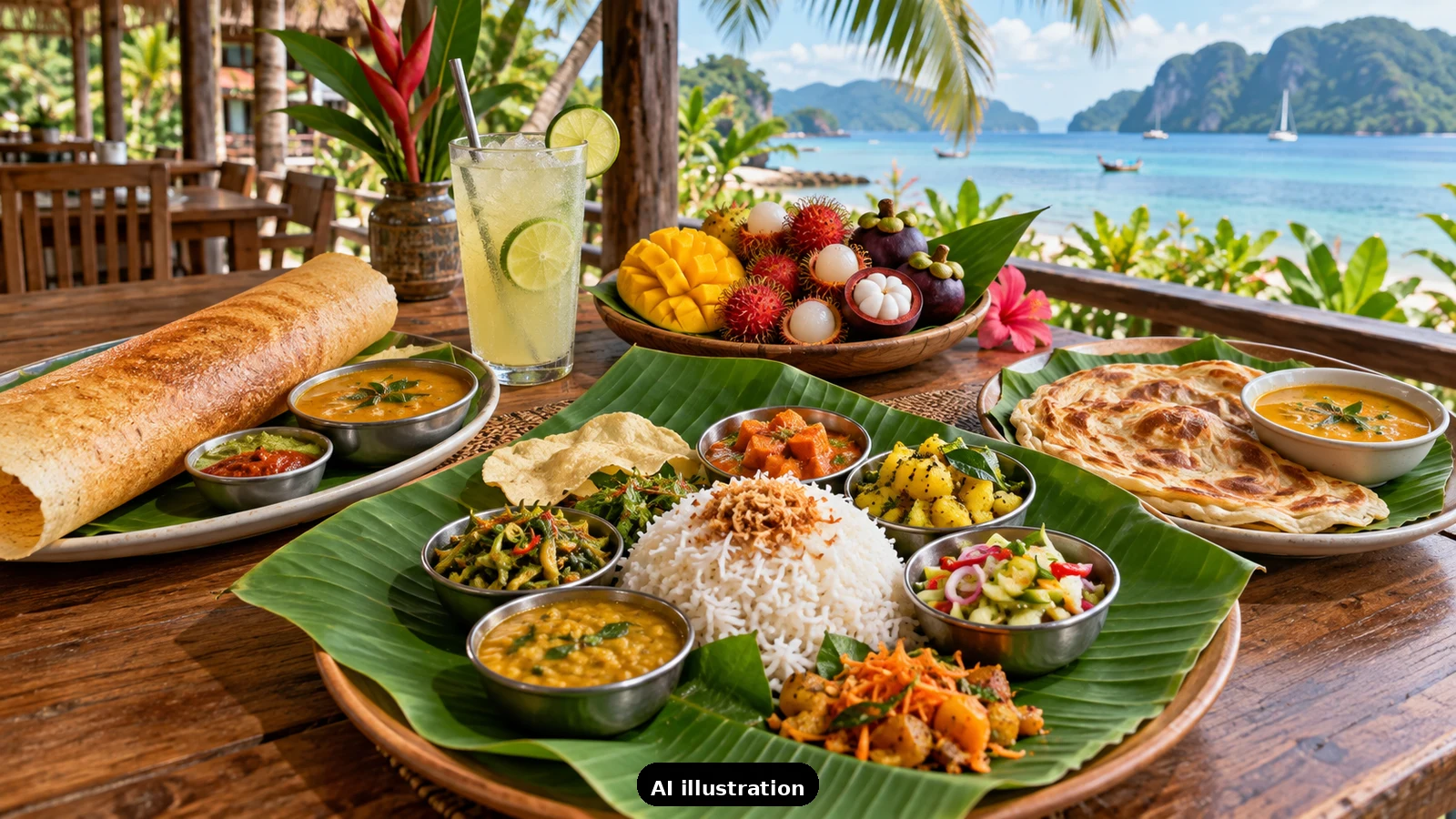
- Apathaas Taste (Kuah) - a dedicated vegetarian Indian restaurant, strong on South Indian breakfasts and banana-leaf style meals.
- Indian restaurants generally - Langkawi has a deep bench of Indian kitchens across Kuah and Cenang (Delhi Palace and others), where vegetarian curries, dosas and thalis are first-class menu items, not afterthoughts. For a splurge, HAVA at the Four Seasons does northwestern Indian food at resort level.
Safely vegetarian Malay dishes (when ordered right)
- Nasi lemak - order it plain: coconut rice with cucumber, peanuts and egg, asking for the sambal to be checked for belacan and ikan bilis, or served on the side.
- Sayur campur / economy rice - point at the vegetable, tofu and egg dishes at the counter; skip anything with sambal mixed in unless you have asked.
- Roti canai with dhal - the breakfast default, reliably vegetarian at Indian-Muslim mamak stalls; confirm the dhal has no anchovy stock if you are strict.
- Gado-gado and rojak - ask for versions without belacan (the peanut sauce and fruit salad dressing often contain it).
- Fresh fruit - Langkawi's fruit stalls are the easiest meal on the island: mango, pineapple, rambutan, mangosteen.
Practical strategy for a Langkawi week
Make one trip to Kuah for Xin An or a dedicated Indian vegetarian meal. For Cenang days, lean on Indian restaurants and the cafes that mark vegetarian dishes clearly - several Western-style cafes on the strip have explicit vegan and vegetarian menus. Keep the two Malay phrases ready for hawker meals. And when in doubt at a seafood-heavy local place, the economy-rice counter with pointed choices is always safer than a written menu.

A Miranda House graduate and lawyer who traded courtrooms for slow travel. Cheshta travels with the batches we host ourselves, with a soft spot for travelling alongside elders.
Planning your next trip?
We'll handle insurance, hotels, airport assistance and the itinerary — the same way we do it for every trip.
Questions on this article
asked by readers, answered by us
Was this helpful?
one tap, no sign-up