



A missing seat number is a reason to ask the operating airline what remains unfinished, not proof by itself that the flight is overbooked or that you cannot travel. Start by checking whether you have a boarding pass at all. On an international journey, a document headed confirmation slip can need a counter visit even if online check-in appeared successful. Official source.
1. Before leaving home: identify the document and flight
Open the current document through the airline’s official booking or check-in route. Match the passenger, operating airline, flight number, departure date and airports for the exact segment. Check each connection separately. A seat shown on another leg or in an old screenshot does not settle this flight.
Read the document heading and any instruction to visit a counter. Air India says international passengers, including some domestic-then-international journeys, may receive a confirmation slip and must take it to the airport check-in counter for verification before a boarding pass is issued. Its FAQ expressly says the slip cannot be used to board. This is an Air India document example, not a rule that every airline issues the same slip. Official source.
2. Read the seat field, not the gate or sequence
Write down exactly what the seat field says: blank, a number, GATE, STBY or another instruction. IATA’s boarding-pass data model allows GATE for a seat not allocated but to be allocated at the gate, and STBY for a standby ticket to be allocated at the gate if available. These are data definitions, not a diagnosis of why your airline left the field blank or a guarantee that a seat will become available. Official source.
Do not use the terminal gate number, boarding group or check-in sequence as a seat. IATA identifies the check-in sequence separately from the seat field. If the wording is unclear, ask the carrier to read the actual record rather than translating a code from an unrelated airline’s website. Official source.
3. At the airport, before the next checkpoint: ask the operating airline
Take the current document, booking reference, ticket or itinerary, passport and the entry or transit documents required for your actual journey. Keep any paid-seat receipt and old seat assignment available if relevant. These are items for checking the case, not a declaration that every passenger needs the same visa or papers.
Ask the airline: Is this an issued boarding pass or a confirmation slip? Is my check-in complete? What is my booking and seat status on this flight? Do you need to verify a document, issue a pass or assign a seat? Which staffed desk should I go to next, and by what time? Do not leave the counter just because another passenger says seats are always assigned at the gate.
For Air India’s confirmation-slip route, the published instruction is its airport check-in counter. For another airline or a genuine pass with a pending seat, obtain that carrier’s own instruction. Do not assume a security officer, immigration counter or kiosk can finish an airline seat or document problem. Official source.
4. If already past security or immigration: use a staffed airline point
Go to the airline’s staffed gate or service point and show the exact document and flight. Explain that no usable seat is shown and ask what must happen before boarding. Do not independently leave a controlled area to search for a check-in counter; ask staff for the permitted route if they say you need to return.
Keep the current boarding status and deadline in view while asking. IndiGo’s carriage conditions distinguish having a pass from meeting boarding requirements and tell passengers at silent airports to check current flight displays. That is a carrier example, not a universal reporting time. A pending seat question does not itself extend your flight’s gate deadline. Official source.
5. Before boarding: verify what the airline changed
If staff issue a new pass or seat, recheck the passenger, flight, date and seat for this segment. Ask how to obtain the current usable pass if an old phone copy has not updated. Keep the complete issued document; never type a seat into the PDF or edit its barcode yourself.
If the airline says you are not being carried, ask it to explain and record the actual reason and the next options. A blank seat field alone does not establish denied boarding, compensation, a free upgrade or a refund. Those depend on the facts and applicable rules and are outside this seat-assignment checklist.
Counter checklist to keep together
Current document and its heading; booking and exact flight segment; required passport and journey documents; previous seat or paid-seat receipt if any; airline-confirmed next desk and deadline; updated pass or a clear instruction about what remains. This guide is for recovering an unassigned-seat situation, not choosing a preferred seat or learning every field on a pass.
Related help
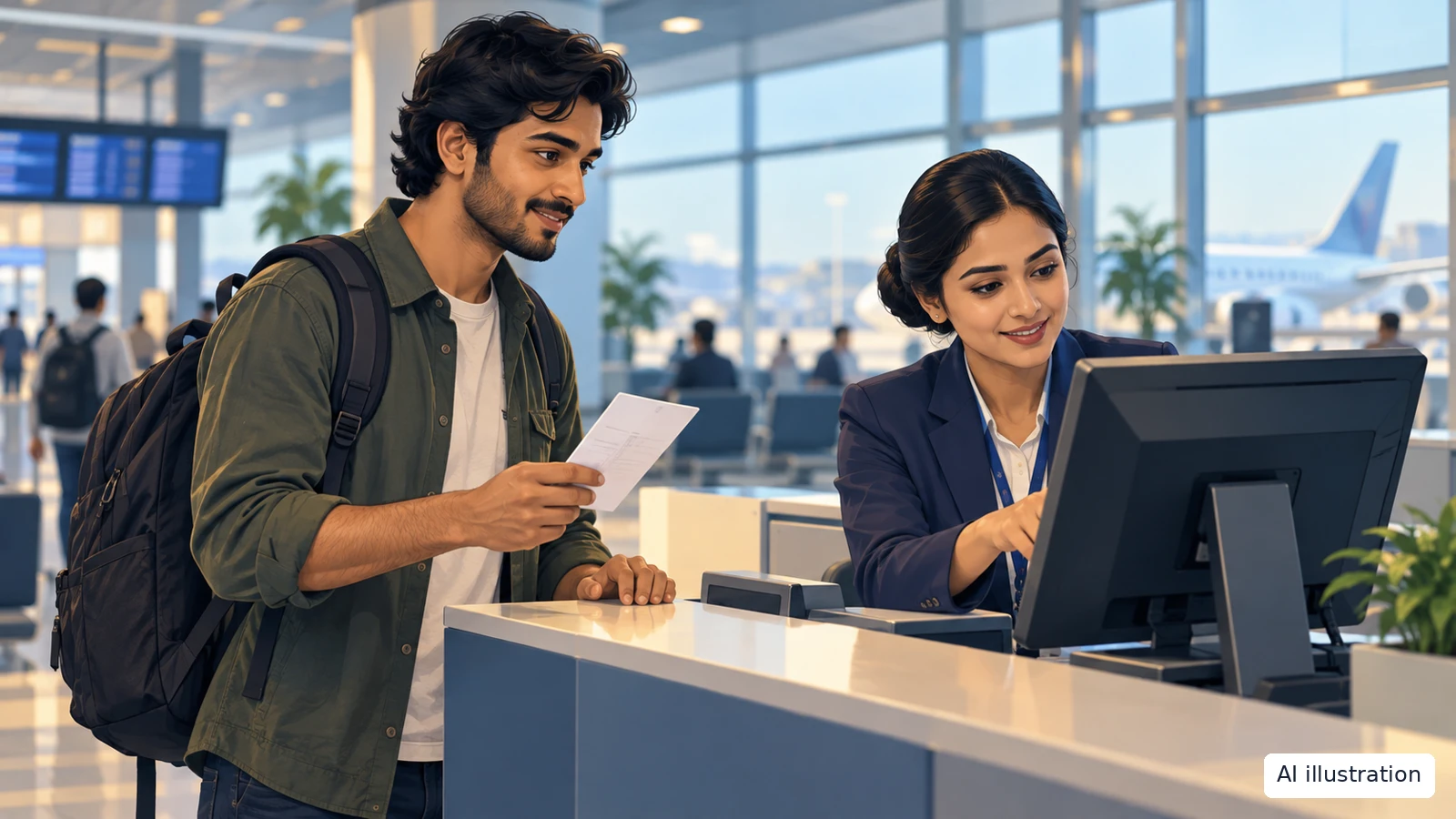
AI illustration: Fictional traveller asking airline staff about a seat; not an actual carrier, airport or denial-of-boarding incident.
Quick questions
Does no seat number prove the international flight is overbooked?
No. Ask the operating airline to check the actual document, check-in and seat status. The blank field alone does not establish the cause.
Should I wait at the gate if Air India issued a confirmation slip?
Its published FAQ directs the slip to the airport check-in counter for verification and a boarding pass. Do not replace that with advice from another passenger.
Can I write the earlier seat onto the pass myself?
No. Have the airline confirm the current seat and issued document for the exact flight segment.

A Miranda House graduate and lawyer who traded courtrooms for slow travel. Cheshta travels with the batches we host ourselves, with a soft spot for travelling alongside elders.
Planning your next trip?
We'll handle insurance, hotels, airport assistance and the itinerary — the same way we do it for every trip.
Questions on this article
asked by readers, answered by us
Was this helpful?
one tap, no sign-up