




Reviewed 18 November 2026. An editorial houses-and-landscape comparison using UNESCO and Brazil's IPHAN. Historical townscape descriptions do not establish garden entry, interior access or present conditions.
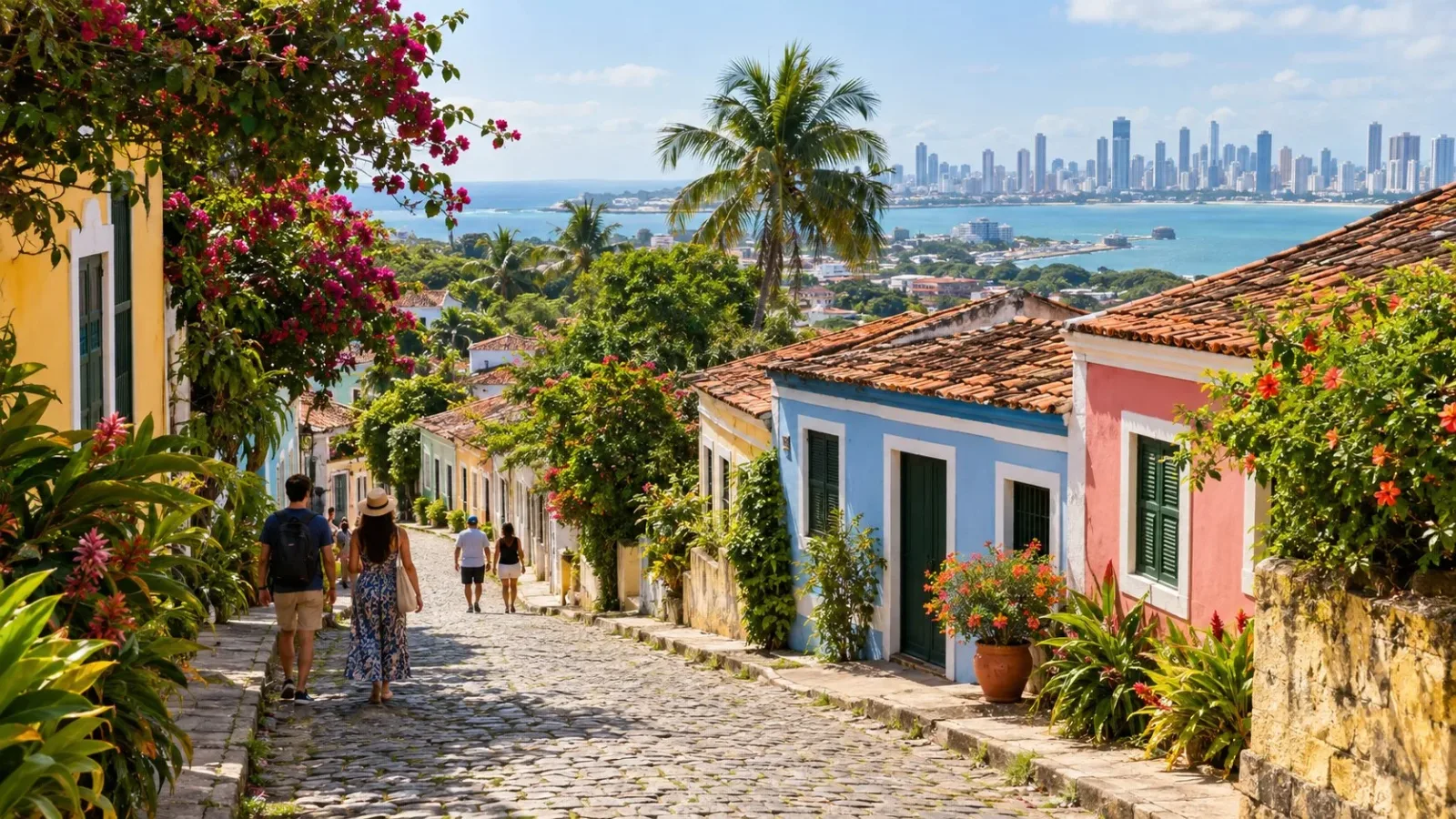
AI illustration: fictional Olinda-inspired town scene. Not an actual location, person, exact building, garden entry or current condition.
Choose the town form or its green spaces
Our suggestion is town form for hills, streets, houses and larger landmarks, or the garden landscape for the planted spaces among buildings. These are connected interests, not an official ranking.
UNESCO describes landscape, urbanism and architecture together. The houses and the vegetation belong to the same larger subject.
The ground helps explain the street pattern
UNESCO describes the urban fabric as moulded to the contours of the topography. Its account brings hilltop monuments, larger multi-storey buildings and a network of houses into one tree-covered landscape.
Keep that larger arrangement in mind. Changes in street direction and the positions of buildings belong to the terrain, rather than a single repeated street pattern.
Houses and landmarks work at different scales
UNESCO contrasts the simpler houses with the more elaborate decoration of larger architectural works. It describes many houses as painted in vivid colours or faced with ceramic tiles.
A house front and a prominent landmark answer different questions about the town. The smaller repeated buildings matter alongside the larger structures, not only as their background.
A historic town can contain several periods
UNESCO describes rebuilding after Dutch destruction and historic fabric largely dating from the eighteenth century, incorporating older monuments. That is not a claim that every building has one date.
IPHAN's Pernambuco account also identifies colonial buildings, later tiled façades and neoclassical or eclectic work. A shared townscape does not require every part to come from one architectural period.
Gardens and backyards belong within the townscape
UNESCO includes gardens, hedgerows and planted grounds in the architectural ensemble. IPHAN also describes houses with tree-planted backyards.
These are spaces within the built town, not a separate backdrop. A domestic planted plot is not automatically a public garden, and its place in a heritage account does not grant entry.
Connect the buildings and the spaces between them
Lead with the hills and streets for town form, or houses and planted plots for the relationship between architecture and greenery. Our preference is to keep both scales in the explanation.
Check official visitor information separately. No garden entry, interior access, ritual, route, admission, ticket, step-free access or current-condition claim is established here.
Sources
Questions people ask at the gate
How do the hills affect the town?
UNESCO describes the urban fabric as moulded to the terrain, connecting houses and larger buildings within the landscape.
Why compare houses and landmarks?
The official account contrasts simpler houses with larger and more elaborately decorated architectural works.
Are all houses described as tiled?
No. UNESCO describes many as brightly painted or faced with ceramic tiles, not every house as one type.
Do all buildings belong to one period?
No. UNESCO and IPHAN describe several periods and architectural treatments within the townscape.
Are planted backyards public gardens?
Not automatically. Their place in the heritage description does not establish public entry.
Does this establish visitor access or present conditions?
No. No entry, ritual, route, ticket, admission, step-free access or current condition is established.
Next walk starts at a new gate.
Was this helpful?
one tap, no sign-up

A Miranda House graduate and lawyer who traded courtrooms for slow travel. Cheshta travels with the batches we host ourselves, with a soft spot for travelling alongside elders.