




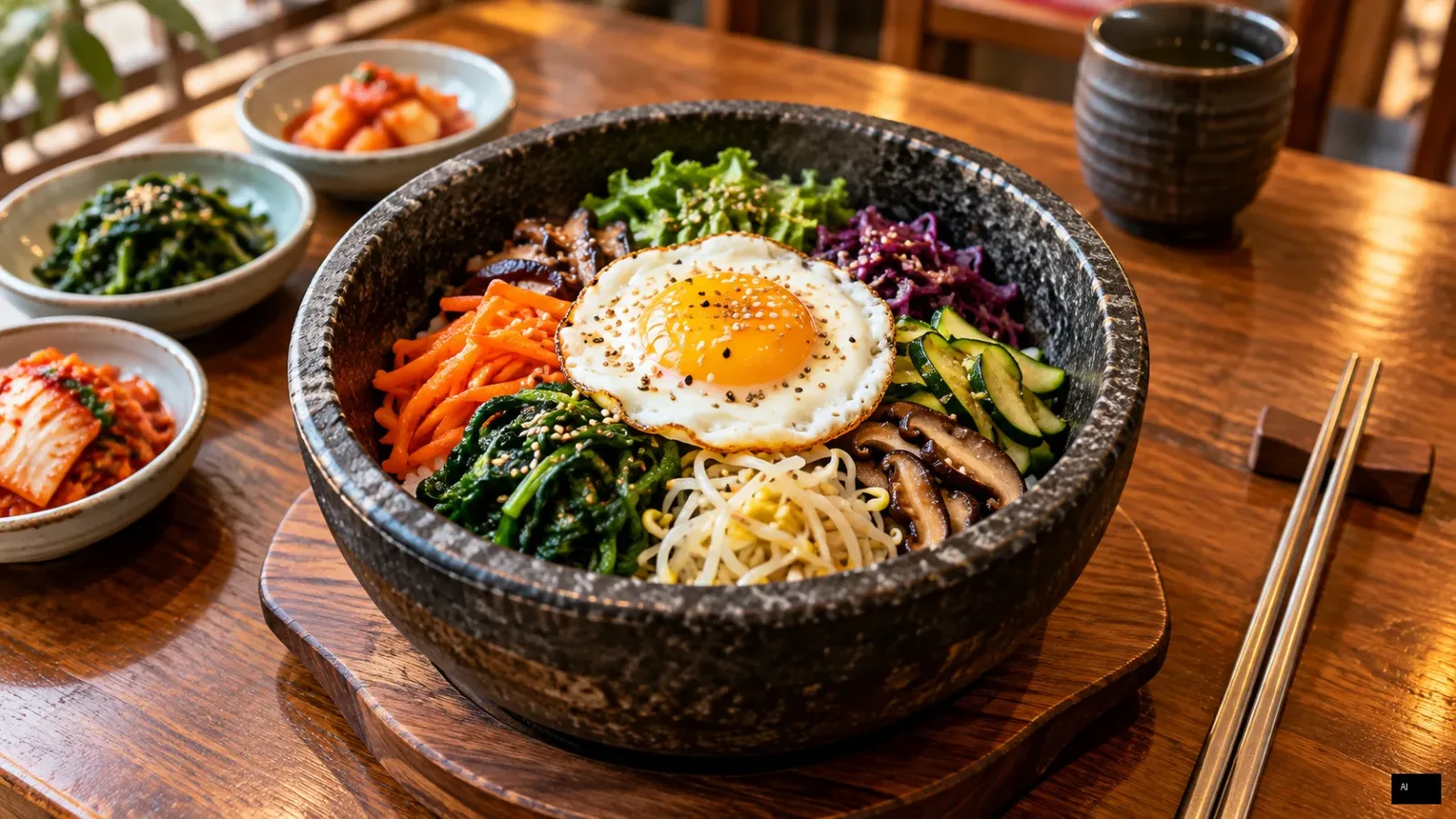
- Default trap
- Minced beef in most bowls
- Hidden base
- Anchovy sauce and beef broth
- Safe order
- Sanchae (mountain vegetable)
- Guaranteed veg
- Temple food, from 36,000 won
- Magic phrase
- Gogi bbaejuseyo (no meat)
Bibimbap is the dish every Indian vegetarian is told to eat in Korea, and the one most likely to betray them. The bowl arrives looking like a garden, but Seoul's default recipe hides meat and fish in three places. Here is what is actually inside, what to order instead, and the one cuisine where vegetarian is the whole point.
What is hiding in a standard bibimbap
Four things. First, minced stir-fried beef - many shops add it by default even when the menu does not say yukhoe or bulgogi. Second, the sauce base: several regional styles skip gochujang entirely and season with myeoljang, a clear liquid reduced from anchovy jeot (the Tongyeong lineage) - invisible and fully fish-based. Third, beef broth used to cook the rice or soup on the side. Fourth, the egg - fine for Indian vegetarians who eat eggs, a problem for vegans and Jains. The Seoul average for a bowl is now 12,000 won (Korea Consumer Agency, September 2026), so you want the right bowl the first time.
The safe variants and how to order them
Ask for sanchae bibimbap - the mountain-vegetable version built on bracken, bellflower root, mushrooms and spinach; it is the closest standard order to vegetarian, though you still say the magic phrase because kitchens sometimes add beef as a 'garnish'. The phrase: gogi bbaejuseyo (remove the meat), and for strictness add kyesan bbaejuseyo (no egg) and myeolchi eopsi (no anchovy). Pointing works: Papago or Google Translate's camera handles Korean menus instantly. In Jeonju-lineage houses, order the brass-bowl (yugi) bibimbap rather than the sizzling dolsot - the brass bowl is the traditional form (the stone bowl was only invented in 1969) and the vegetables are seasoned individually, so a veg version loses nothing. Gochujang itself is vegetarian: chilli, rice and fermented soybean.
Temple food: the guaranteed answer
Korean temple cuisine is vegetarian by doctrine - no meat, no fish, and not even garlic or onion, which Jains will appreciate. The reference address in Seoul is Balwoo Gongyang, run by the Cultural Corps of Korean Buddhism opposite Jogyesa Temple: lunch course 'Seon' at 36,000 won, the 'WON' course at 50,000 won (Visit Seoul official listing), open 11:30-21:00 with a 15:00-18:00 break. Reserve ahead - it is small and famous. It also makes a memorable 'one special meal' even for non-vegetarians. Day to day, Buddhist areas around Jogyesa and Insadong have smaller temple-style kitchens; tofu houses (sundubu, order it with vegetable broth) and gimbap shops with vegetable rolls (3,923 won average) fill the gaps. For the rest of the trip's planning, our 3-day Seoul itinerary routes the sightseeing and the budget guide prices the food line by line.

A Miranda House graduate and lawyer who traded courtrooms for slow travel. Cheshta travels with the batches we host ourselves, with a soft spot for travelling alongside elders.
Planning your next trip?
We'll handle insurance, hotels, airport assistance and the itinerary — the same way we do it for every trip.
Questions on this article
asked by readers, answered by us
Was this helpful?
one tap, no sign-up