




- Key phrase
- Gogi ppego (without meat)
- Hidden trap
- Anchovy stock in stews
- Safe bet
- Dolsot bibimbap, no meat
- Strict option
- Temple food near Beomeosa
- Haeundae
- Easiest area for requests
Honest answer first: Busan is a seafood-first city, and vegetarian eating here takes more effort than in Seoul. Anchovy stock and fermented seafood are flavour foundations - invisible in the bowl but present. The good news: it is a learnable landscape. With two Korean phrases and a short avoid-list, you will eat well, cheaply, and sometimes brilliantly.
The menu surprises to know
The single most important item is kimchi: traditional kimchi contains jeotgal - fermented seafood, usually salted shrimp - and it is structural, not a trace. Most kimchi served in Busan restaurants is not vegetarian; water kimchi (mul kimchi) and cubed radish kimchi (kkakdugi) sometimes skip the seafood, but ask rather than assume. The stews are the other trap: doenjang-jjigae and sundubu-jjigae sound vegetarian - soybean paste, tofu, vegetables - but the base stock is almost always dried anchovies (myeolchi yuksu). Tteokbokki at BIFF Square stalls often simmers in anchovy stock too, though some vendors use a purely chilli-and-water preparation that is vegan. And eomuk, the "fish cake" steamed on sticks everywhere: tourists who do not read Korean sometimes assume it is tofu. It is ground fish paste - not an option.
The two phrases that do the work
Write these on your phone: "gogi ppego juseyo" (without meat, please) and "myeolchi yuksu isseoyo?" (does it have anchovy stock?). Between those two questions you will catch most hidden animal products. Add "gyeran ppego" if you skip egg, and know the word "chaesik" (vegetarian) - but note that some restaurants hear "vegetarian" and still serve anchovy-stock stew, genuinely believing it qualifies, because the anchovies are not visible. Restaurants that show a "chaesik" or "sachal eumsik" (temple food) sign have usually already thought through the stock question.
What to actually order
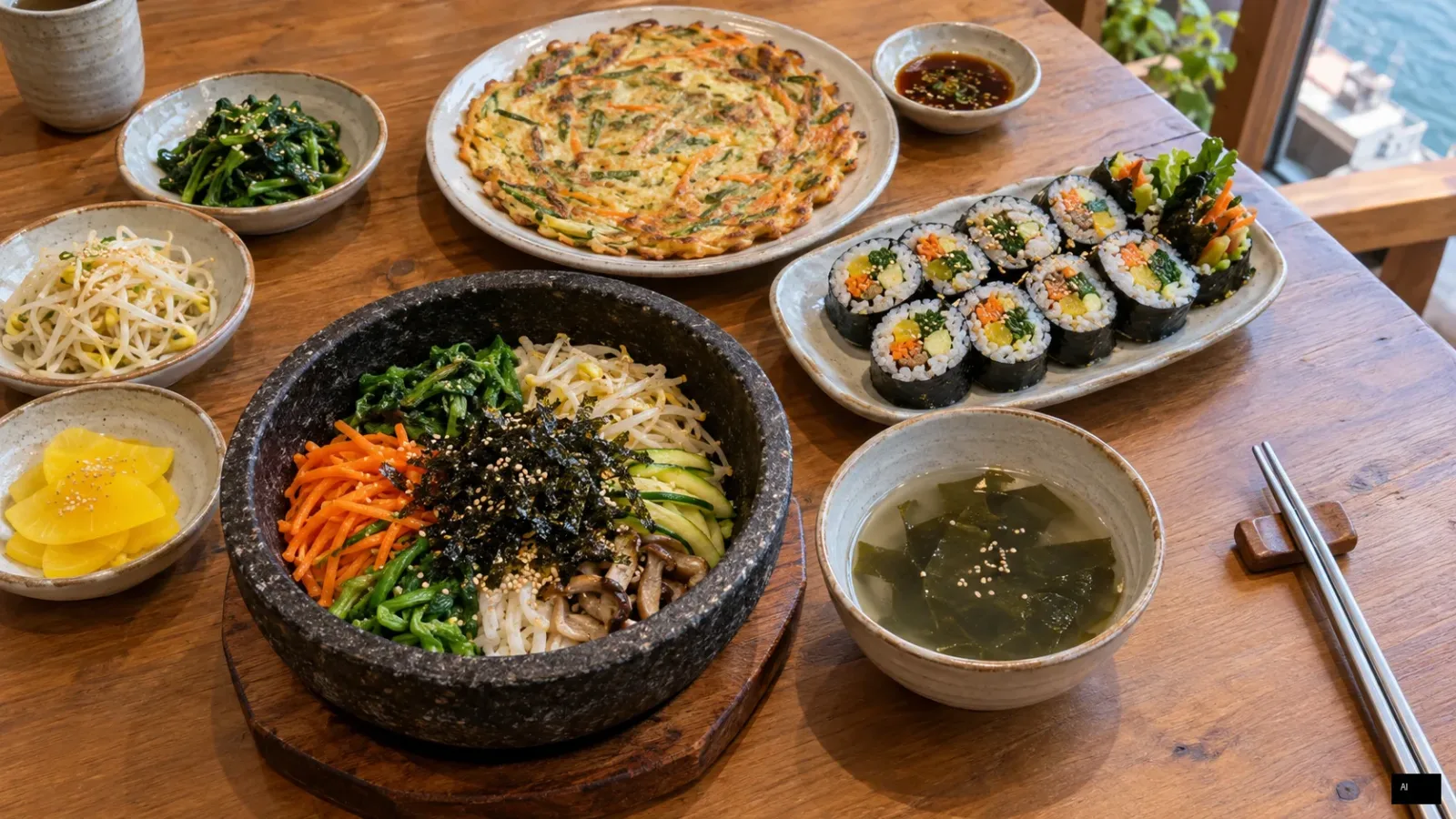
Dolsot bibimbap, ordered "gogi ppego", is the reliable mainstay - arranged vegetables, rice, gochujang, sizzling stone pot. Dubu-jorim (spicy braised tofu) is one of the best accidentally vegan dishes in the repertoire. Japchae works beautifully once you ask for it without the standard beef or pork. For strict vegetarians, temple food (sachal eumsik) is the gold standard - no meat, fish, eggs, or even garlic and onion - and the area around Beomeosa temple has restaurants and a templestay programme; call ahead, as hours vary. Loving Hut, the international vegan chain, keeps Busan branches - check current locations on arrival.
Near Haeundae specifically
Haeundae is the easiest part of Busan for dietary requests: more internationally oriented restaurants, and tourist traffic means staff are used to the conversation. Options are spread out, so research specific restaurants before heading out rather than wandering. Gwangalli, one metro stop region over, has seen several plant-based cafe-format spots open in recent years - look for "vegan-friendly" or "chaesik" on signs. The hardest area is Nampo and Jagalchi, the historic seafood quarter: treat it as a spectator experience, eat before you go, and grab ssiat hotteok (seed-stuffed sweet pancakes) as the vegetarian street snack there. Self-catering backup is everywhere: E-mart, Homeplus and Lotte Mart stock tofu, namul and plant-based ranges, and GS25/CU convenience stores cover the gaps - check kimbap labels, as most contain tuna or egg. Budget-wise these meals sit in the same 7,000-12,000-won band as everything else local (see the Busan budget guide). Planning the rest of the trip? The 3-day itinerary and the spring weather guide slot food stops into the days.

A Miranda House graduate and lawyer who traded courtrooms for slow travel. Cheshta travels with the batches we host ourselves, with a soft spot for travelling alongside elders.
Planning your next trip?
We'll handle insurance, hotels, airport assistance and the itinerary — the same way we do it for every trip.
Questions on this article
asked by readers, answered by us
Was this helpful?
one tap, no sign-up