




- Official veg map
- 32 restaurants + 6 cafes (Visit Jeju)
- Hidden trap 1
- Anchovy stock in stews and noodles
- Hidden trap 2
- Jeotgal (seafood) in most kimchi
- Safe fallback
- Bibimbap, no meat or egg (~10,500 won)
- Magic phrase
- Myeolchi yuksu isseoyo?
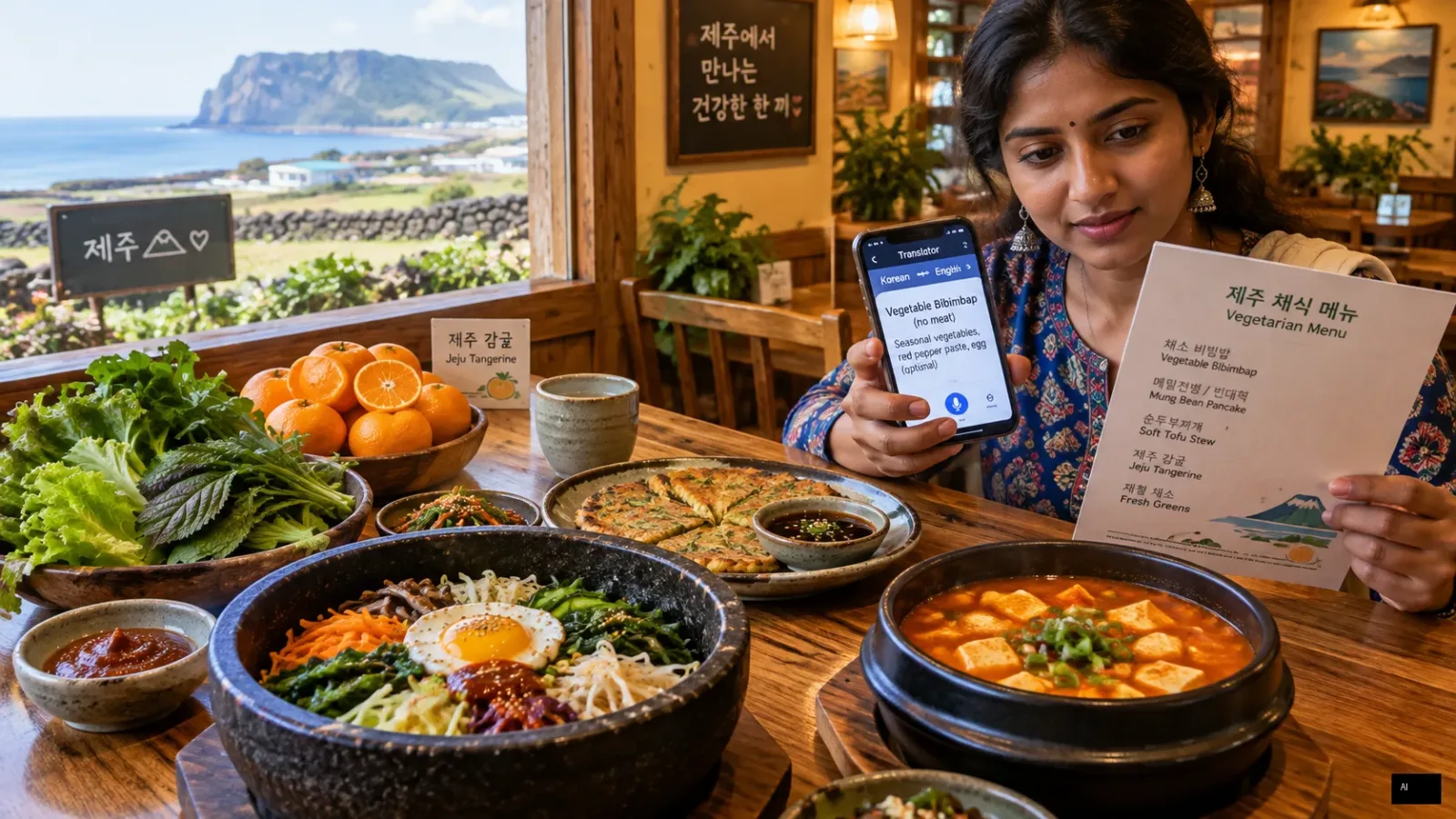
Jeju's kitchen runs on black pork and the day's catch, so a vegetarian trip here takes more care than in Seoul. The good news: it is genuinely doable in 2026, and Visit Jeju even publishes an official vegetarian restaurant map - 32 restaurants and six bakeries and cafes with vegetarian or vegan options, downloadable in English and Korean. This guide is about the part no map covers: the dishes that look vegetarian and are not.
The hidden non-vegetarian traps
Korean cooking's two invisible ingredients are both on Jeju in force. The first is myeolchi yuksu, anchovy stock - the base for most stews, noodle soups and tteokbokki sauce, even when no meat is visible. The second is jeotgal, fermented seafood - the seasoning in most kimchi, including the cabbage kimchi that arrives free with every meal. So "vegetable kimchi stew" usually means anchovy stock plus jeotgal-seasoned kimchi: two fish products in a dish with no meat in the name.
Jeju adds its own specialties to watch. Momguk, the island's signature gulfweed soup, looks like a seaweed soup but is traditionally simmered in pork broth. Gogi-guksu, Jeju's famous noodle bowl, is pork by definition. Around Seongsan and the east coast, most restaurants are haenyeo seafood houses where even the side dishes swim. And kalguksu - the hand-cut noodle soup that seems like a safe order - usually starts from anchovy stock, so always ask.
What you can order almost anywhere
Bibimbap without meat and egg (say "gogi ppego juseyo" - please remove the meat - and "gyeran ppego" for no egg) is the reliable fallback; Jeju's average bowl runs 10,500 won in the Korea Consumer Agency's official price survey. Dubu jorim (braised tofu) is a standard side dish. Vegetable jeon pancakes are common at markets, though batters occasionally use egg. A small but growing number of restaurants now stock vegan kimchi made without fish sauce - ask, because it will not be announced on the English menu.
The dedicated vegetarian places
Jeju City has the most options, led by cafes like Jeju 901 (vegan brunch, grain bowls and smoothies; closed Mondays and Tuesdays). The west coast's cafe strip around Aewol has fully vegan kitchens such as Lan's Kitchen (vegan Korean-Vietnamese bowls). Down south, Seogwipo has Gammiropda Jeju (plant-based Korean dishes with a zero-waste approach), the garden-style Santosha in Andeok, and a branch of the Loving Hut vegan chain. For a meal that is vegetarian by design rather than adaptation, look for temple food at Jeju's Buddhist temples - traditional Buddhist cooking is naturally vegan. Download the Visit Jeju vegetarian map before you land; between its 32 listed restaurants and the HappyCow app, no day needs to end hungry.
Self-catering and market days
Dongmun Market in Jeju City and Seogwipo's Maeil Olle Market are your friends: Jeju tangerines, fresh greens, kimbap stalls that will make a vegetable roll to order, and bakeries. E-Mart and Lotte Mart stock soy milk and imported vegan staples. A couple of market meals a week also keeps the budget in shape - see the food costs in our Jeju couple's budget.
Five phrases that do the work
"Jeoneun chaesikjuuija-yeyo" (I am vegetarian). "Gogi ppego juseyo" (please remove the meat). "Haemul ppego juseyo" (please remove the seafood). "Myeolchi yuksu isseoyo?" (does it contain anchovy stock?). "Gyeran ppego juseyo" (please remove the egg). The fourth is the one that saves you - it catches the invisible stock problem that "no meat" does not. If you are combining Jeju with the mainland, our Busan vegetarian guide covers the same traps there, and the 3-day Jeju itinerary notes which meal stops on that route are the easy ones.

A Miranda House graduate and lawyer who traded courtrooms for slow travel. Cheshta travels with the batches we host ourselves, with a soft spot for travelling alongside elders.
Planning your next trip?
We'll handle insurance, hotels, airport assistance and the itinerary — the same way we do it for every trip.
Questions on this article
asked by readers, answered by us
Was this helpful?
one tap, no sign-up