




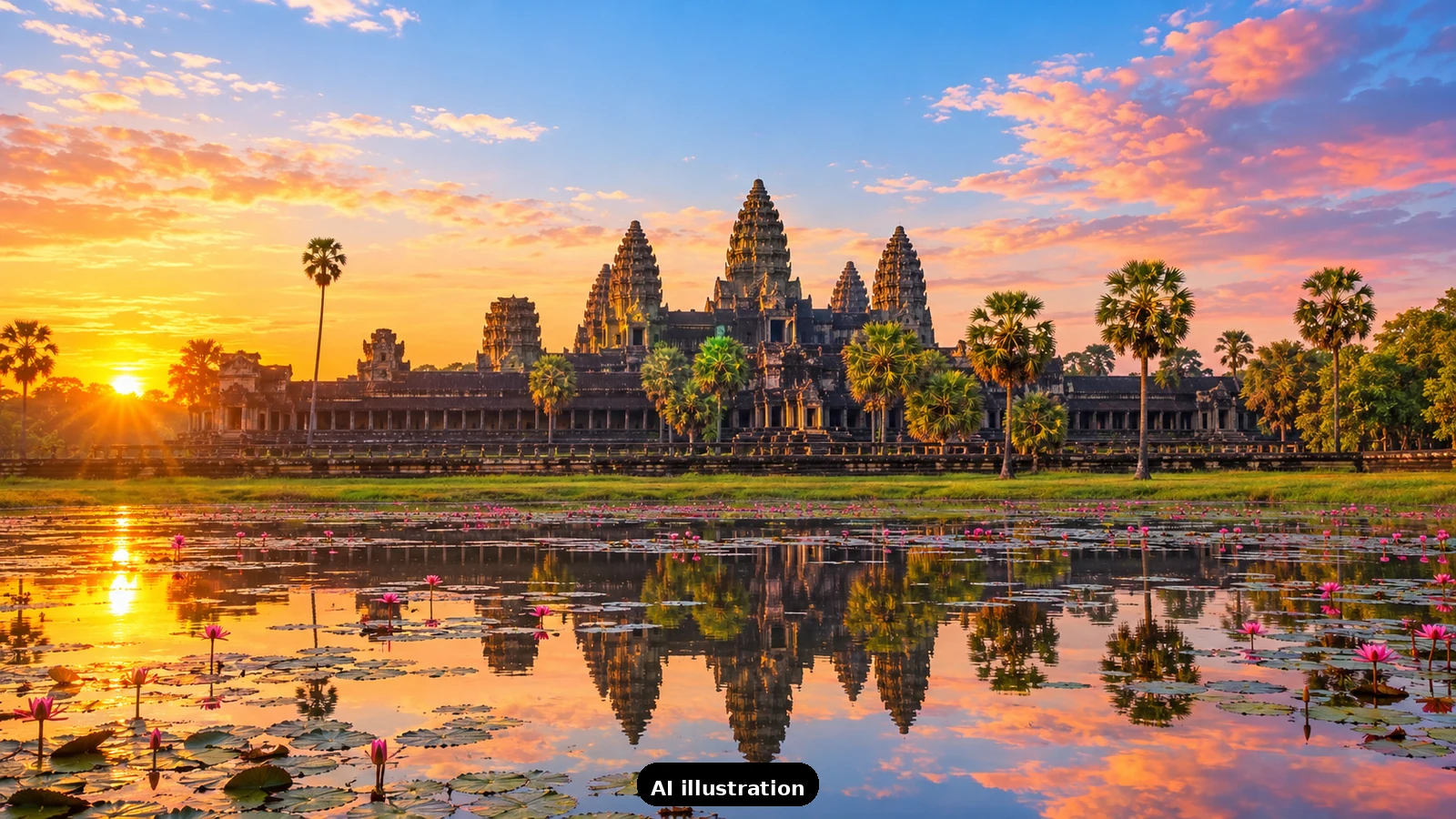
Ask ten travelers when to visit Siem Reap and nine will say November to February. They are right about the weather and wrong about how easy it will be. These four months are Cambodia's cool, dry season: blue skies almost every day, almost no rain, and the most comfortable temple weather of the year. They are also the months when half the world's travelers come to the same conclusion. Here is what to actually expect, month by month, and what to lock in early.
The weather, from the records. Long-term climate data for Siem Reap shows the dry season at its best: January averages a high of about 31°C (88°F) and a low of 22°C (71°F), with barely 5 mm of rain in the whole month and humidity around 65%. February is a touch warmer, equally dry, and slightly less humid. November and December sit between - warm afternoons around 30-32°C, genuinely pleasant mornings and evenings in the low 20s. Mornings can feel almost cool by tropical standards; a light layer at sunrise is not a joke. Rain in these months is rare enough that a shower makes the news at your guesthouse.
November: the sweet spot. The rains have just ended, the countryside is still lush and green, the Tonle Sap is full, and the crowds have not yet peaked. Afternoons are warm but mornings at the temples are glorious. If you can choose any week of the year, early-to-mid November is the quiet insider answer.
December-January: peak everything. The best weather and the biggest crowds arrive together. Christmas and New Year weeks are the busiest of the year - hotels sell out, the sunrise causeway is shoulder-to-shoulder, and the good guides and drivers are booked solid. Chinese New Year (late January or February, depending on the year) brings a second surge. If these weeks are your only window, the trip is still wonderful - the temples are vast and the crowds cluster predictably - but spontaneity is what you sacrifice.
February: dry and warming. Still very dry, slightly hotter afternoons, and crowds that ease off a little after the New Year rushes. The fields turn golden and the light gets harsher for photography, but mornings remain lovely. A fine month for travelers who want dry-season reliability without peak-season intensity.
What to book first - in order. One, flights: fares from India climb steeply for December-January, so lock them 2-3 months out. Two, hotels: the good-value boutique places near the Old Market sell out for the Christmas-New Year stretch first. Three, your temple transport and guide: the experienced English-speaking drivers and licensed guides get reserved weeks ahead in high season, and arriving without one in late December means taking whoever is left. Temple passes themselves never sell out - buy the 3-day pass (62 USD) at the official ticket office or online whenever suits.
The honest trade-offs. You are trading heat and rain for people and prices. Sunrise at Angkor Wat in high season is a crowd scene - arrive early or accept the company; the famous reflection shot will have a hundred tripods in it. Midday is still hot enough (30-33°C) that the midday-break habit matters, dry season or not. And prices for rooms and tours run 20-40% above the wet-season low. What you get in return: near-zero rain risk, breezes, and evenings where a rooftop dinner needs a shawl, not a fan.
How TripKeeper times Siem Reap. Our founder-hosted batches run in these months precisely because the weather delivers - and because our hotels, airport assistance, drivers and guides are locked in before the high-season scramble starts. If you are weighing November against February for your own dates, send a trip-planning inquiry and we will tell you honestly what each week costs and feels like.

A Miranda House graduate and lawyer who traded courtrooms for slow travel. Cheshta travels with the batches we host ourselves, with a soft spot for travelling alongside elders.
Planning your next trip?
We'll handle insurance, hotels, airport assistance and the itinerary — the same way we do it for every trip.
Questions on this article
asked by readers, answered by us
Was this helpful?
one tap, no sign-up