




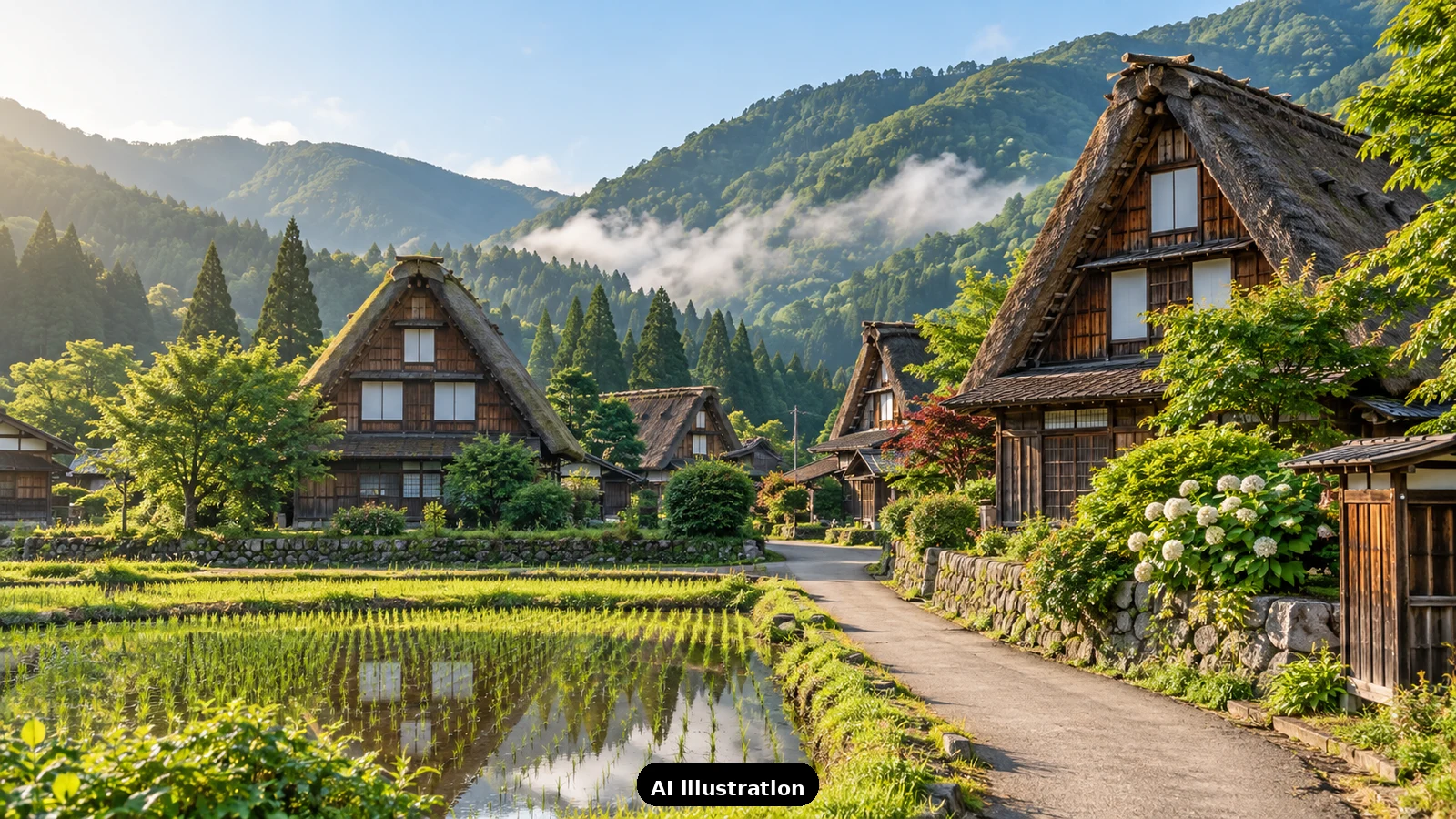
Takayama and Shirakawa-go - the preserved Edo-period town and the thatched-roof UNESCO village - sit in the Hida mountains where trains do not reach. That scares car-free travelers unnecessarily: the region is stitched together by reserved highway buses that are comfortable, punctual and bookable online in English. The catch is simply that seats sell out and timetables are sparse, so the trip rewards planning. Here is how to do it without a car, calmly.
The bus network in one picture. Think of a Y. Kanazawa and Toyama sit at the top-left, Takayama at the bottom, Shirakawa-go at the fork. Nohi Bus (the main operator) runs direct services: Kanazawa to Takayama in about two to two and a half hours, with many buses stopping at Shirakawa-go on the way (roughly 75-85 minutes from Kanazawa, about 50 minutes from Takayama). Nagoya connects to Takayama in about two hours forty-five minutes. Most of these services are reservation-only - seats are booked in advance online, and in foliage and holiday weeks the popular departures genuinely sell out.
Reserve seats the moment your dates are set. Book online through the operators' English booking sites as soon as you know your days - tickets typically open about a month ahead, and the mid-morning departures go first. Keep the confirmation on your phone; boarding is by name list at the counter or directly with the driver depending on the service. In low season you can sometimes buy on the day, but 'sometimes' is not a plan for a village with limited beds.
The overnight strategy that works. Base yourself in Takayama for two nights. Day one: arrive by bus, walk the Sanmachi Suji old town, the morning market by the river, and the Takayama Jinya. Day two: day-trip to Shirakawa-go - a 50-minute bus each way, three to four hours in the village is right for the gassho farmhouses, the viewpoint (a shuttle or a 20-minute uphill walk), and lunch - then back to Takayama for an evening of hida beef and sake breweries. This beats one-night sprints: you get Shirakawa-go in its quiet hours (before 10 AM or after 3 PM, when the day-trip buses thin), and Takayama's lovely early-morning market, which day-trippers from the cities never see.
Doing it as a through-route instead. The elegant alternative is one-way: Kanazawa in, stop at Shirakawa-go mid-route (buses on the Kanazawa-Takayama line stop there), continue to Takayama the same evening, and later exit to Nagoya or back to Tokyo via Matsumoto. This works because luggage is solvable: Japan's takkyubin courier services send bags hotel-to-hotel overnight for a few thousand yen, and both Kanazawa and Takayama stations have coin lockers. Ship the big case ahead, carry an overnight bag, and the village hop becomes painless. Takayama's station-area lockers are sized for carry-ons; ship anything bigger.
Season and weather notes. The region is a four-season destination with real winters. From December to March the gassho roofs under snow are the famous image - buses run through winter and roads are cleared, but allow schedule slack and expect some timetable reductions; the village winter light-ups run on selected dates with advance entry arrangements, so check the official village site for the current system. Autumn (late October-November) is the second peak: book buses and beds early. Summer is green, warm and busy with domestic tourists in August.
Costs and comfort. Bus legs in this region run roughly 2,000-4,000 yen each way depending on the route - far less than a rental car plus tolls and parking, with none of the mountain-road driving. Buses have reclining seats and a restroom or a rest stop; the rides are scenic, through gorges and rice valleys. Buy snacks before boarding; mountain stops are few.
How TripKeeper runs this region. Our team books the bus seats as soon as dates are fixed, sequences Kanazawa-Shirakawa-go-Takayama so no day carries two long legs, arranges takkyubin luggage forwarding between hotels, and holds a weather-margin day on winter trips. Founder-hosted batches travel the same route; independent travelers get the same reserved seats, timings and overnight plan through the trip-planning inquiry - with on-trip help if a snow day reshuffles the buses.

A Miranda House graduate and lawyer who traded courtrooms for slow travel. Cheshta travels with the batches we host ourselves, with a soft spot for travelling alongside elders.
Planning your next trip?
We'll handle insurance, hotels, airport assistance and the itinerary — the same way we do it for every trip.
Questions on this article
asked by readers, answered by us
Was this helpful?
one tap, no sign-up
