




The tattoo question is the onsen anxiety every inked traveler carries to Japan. The rules are real but patchwork: many facilities still refuse tattooed guests, a growing number welcome them, and private baths sidestep the issue entirely. For couples especially, Japan is full of ways to soak together in privacy. Here is how the landscape actually works and how to plan a trip with zero front-desk drama.
Why tattoos are banned at some baths. The association between tattoos and organized crime runs deep in Japan, and traditional bans were aimed at yakuza. Attitudes are shifting - especially toward foreign tourists - but slowly and unevenly. The key fact: there is no national rule. Every onsen sets its own policy, from total bans to total welcome, with plenty in between (small tattoos allowed, covered tattoos allowed, foreign guests exempted). Assume nothing; check each facility's policy on its official site or by message before you arrive.
Towns and facilities known for welcoming tattoos. Some famous hot spring towns have simply decided. Kinosaki Onsen, the willow-lined bathhouse town on the Sea of Japan coast, is the standout: its seven public bathhouses are known for accepting tattooed guests, making it the easiest classic onsen-town experience for inked travelers. Beppu, Japan's hot spring capital, is broadly tolerant, with many facilities welcoming tattoos. Tokyo's modern sento (public bathhouses) increasingly allow them too. For any specific facility, verify the current policy directly - policies change, and third-party lists age fast.
The cover-up route. For small tattoos, cover-up stickers and skin-tone tape - sold in Japanese drugstores - are accepted at many facilities that would otherwise refuse entry. This works for a discreet shoulder or ankle piece; a full sleeve is not getting taped. If you go this route, still confirm the facility's covered-tattoo policy rather than assuming.
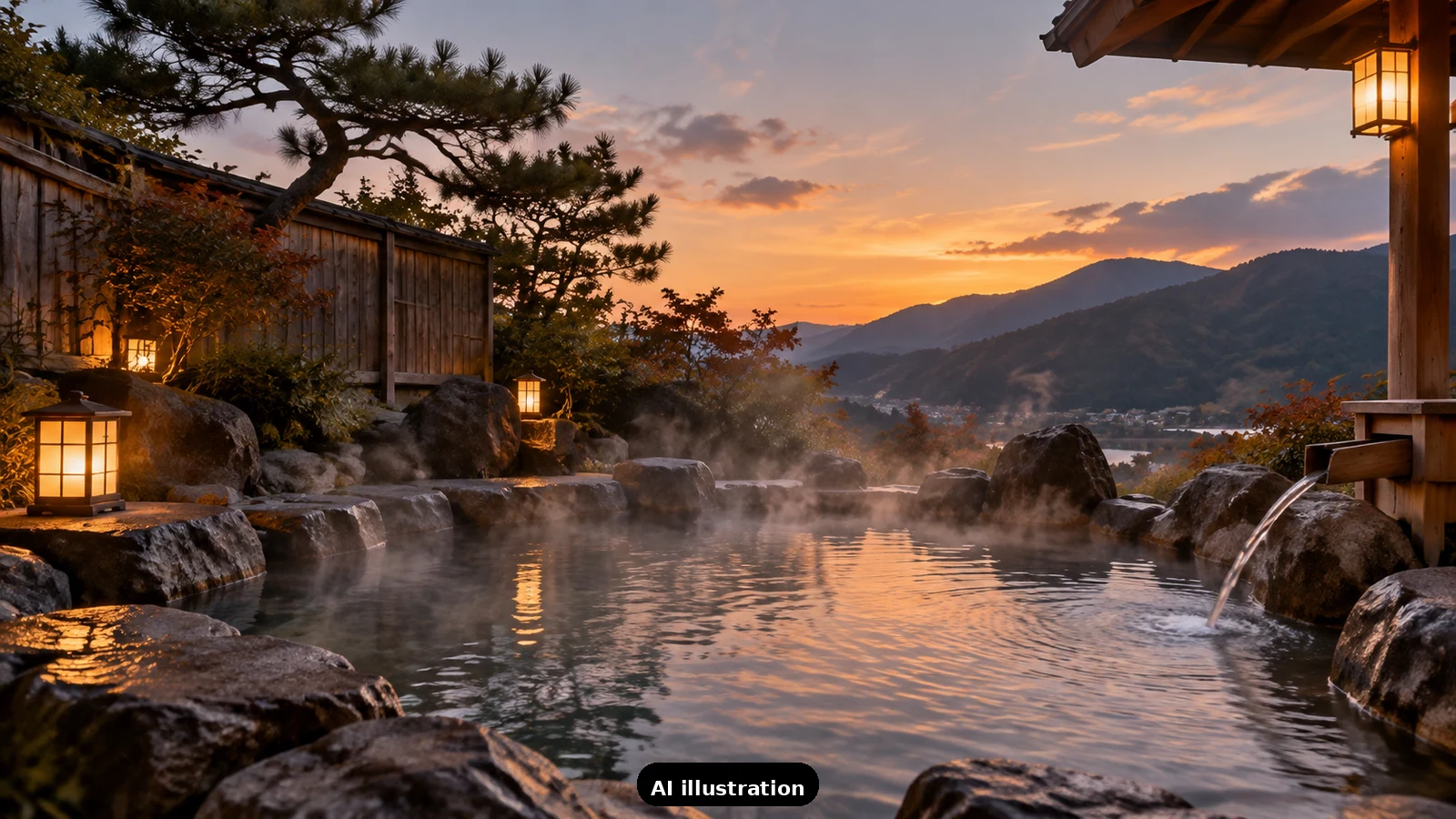
Private baths: the couple's answer. Two formats solve everything. Kashikiri buro are private baths rented by the hour at a ryokan or day facility - a locked door, just your party, no policies to worry about; many towns (Kusatsu, Hakone, Yufuin) have ryokan offering them. Rooms with private open-air baths (rotenburo-tsuki) put the tub on your own balcony: the premium move for couples, and the classic splurge night of a Japan trip. Private baths are also the answer for mixed-gender soaking together, since public baths are gender-separated.
Planning a tattoo-friendly onsen trip. The reliable pattern: anchor the trip on one explicitly tattoo-welcoming town or facility for the communal-bath experience, then add a ryokan night with a private bath for the romantic soak. Check policies in writing (a quick email or message in simple English gets answers), carry cover-up tape for small pieces, and never rely on a blog list from years ago. Onsen etiquette applies everywhere regardless of tattoos: wash thoroughly before entering, no towels in the water, no photos.
How TripKeeper books onsen stays. Our team confirms tattoo policies directly with facilities before recommending them, books ryokan with private baths or kashikiri options for couples and families, and matches guests to towns whose public baths welcome them. Founder-hosted batches stay at properties we have verified; independent travelers get the same policy-checked bookings through the trip-planning inquiry.

A Miranda House graduate and lawyer who traded courtrooms for slow travel. Cheshta travels with the batches we host ourselves, with a soft spot for travelling alongside elders.
Planning your next trip?
We'll handle insurance, hotels, airport assistance and the itinerary — the same way we do it for every trip.
Questions on this article
asked by readers, answered by us
Was this helpful?
one tap, no sign-up
