




- The hidden trap
- Bonito dashi in soups, sauces and noodle broths
- Safe base foods
- Rice, tofu, natto, edamame, pickles
- Guaranteed vegan
- T's TanTan ramen, Tokyo Station Gransta B1F
- Official guide
- gotokyo lists 3 categories; Category 1 fully vegan
- Say this
- Niku, sakana, dashi ga taberaremasen
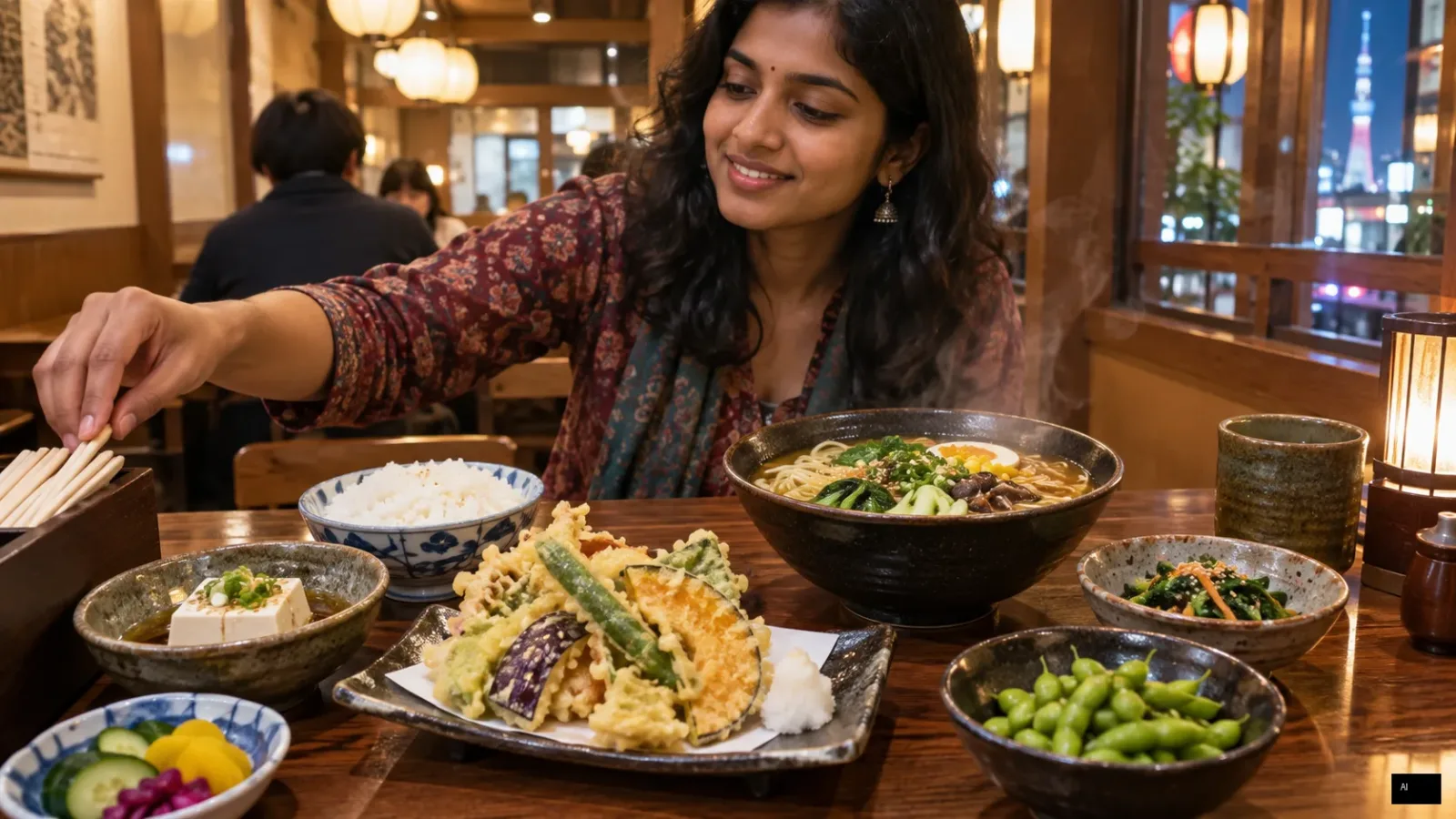
Tokyo has a reputation for being hard on vegetarians, and it is only half earned. There is plenty to eat: rice, tofu in a dozen forms, natto, pickled and seasonal vegetables, edamame. The real problem is invisible: dashi, the stock behind most soups, simmered dishes and sauces, is usually made with bonito (dried fish). A plate can look fully vegetable and still not be vegetarian. Learn one rule and a few anchors, and the city opens up.
The one rule: check the dashi
A standard miso soup is not vegetarian, because its dashi is bonito-based. The same goes for most noodle broths, the dipping sauce with zaru soba or tempura, and many simmered vegetable dishes. Meat- and fish-free dashi exists: kombu (kelp) and shiitake are the usual choices, but you must ask each time. Japan's Tourism Agency told restaurants in its 2024 guidance that bonito dashi should not be served to vegetarian or vegan guests even when no fish appears in the dish, and that kelp or other plant-based dashi should be used instead. Awareness is improving, but the default is still fish stock, so the question is on you.
Dishes that are safe by default (and the ones that only look safe)
Usually safe: plain rice, edamame, most pickles, natto if you can face it, kappa maki (cucumber roll), inari sushi (sweet tofu pockets, check the seasoning liquid), vegetable tempura if the dipping sauce is kombu-based, and plain ume or kombu onigiri from convenience stores. Only looks safe: miso soup, most ramen (tonkotsu and even shoyu broths use fish or pork stock), okonomiyaki and takoyaki (bonito flakes on top and often dashi inside), agedashi tofu (sits in dashi), and tamagoyaki with dashi. Convenience-store onigiri frequently contain tuna, salmon or chicken, so read labels; the ingredient panel lists fish even when the front does not.
The fully safe anchors
T's TanTan, inside Gransta Tokyo on the B1 floor just outside the JR Tokyo Station gates, is a fully vegan ramen specialist: no meat, seafood, dairy or egg in anything, with rich broths built from vegetables and nuts. It is the single most useful address for a vegetarian in Tokyo, and ideal right after a shinkansen ride. Shojin ryori, the Zen Buddhist temple cuisine built on tofu and seasonal vegetables, is the traditional gold standard; in Tokyo you will find it at temple restaurants and specialty houses rather than on every corner. And the Tokyo Convention and Visitors Bureau publishes an official Tokyo Vegan and Vegetarian Restaurant Guide (free PDF on gotokyo.org) that sorts listings into three categories; Category 1 restaurants are entirely vegan, meaning no meat, fish, crustaceans, shellfish, egg, dairy or honey anywhere on the menu. One Category 1 example: joga in Minami-Aoyama, a vegan Chinese spot with lunch around 1,500 yen and dinner around 5,000 yen.
Phrases that actually work
Saying "bejitarian" alone often fails, because the word gets heard as "no visible meat." Name what you cannot eat: "Niku, sakana, to dashi ga taberaremasen" (I cannot eat meat, fish or fish stock). Then confirm the stock: "Kombu dashi desu ka?" (Is it kelp stock?). Staff are almost always willing once the requirement is concrete; vagueness, not unwillingness, causes the surprises. At ryokan and temple stays, write ahead with the same specifics.
Jain and strict vegetarians
Shojin ryori traditionally excludes the five pungent roots (onion, garlic and relatives), which suits many Jain diners, but confirm ginger and root vegetables with each kitchen. Watch egg: dashi-maki tamago and many set meals include it. Fully vegan Category 1 restaurants from the gotokyo guide are the lowest-effort safe choice for strict diets.
Planning the rest of the trip
Food prices for everything else sit in our Tokyo couple budget guide; if you are travelling with parents, the slow 3-day Tokyo itinerary pairs well with temple meals near Senso-ji; and for timing your visit, see Tokyo in March-April.

A Miranda House graduate and lawyer who traded courtrooms for slow travel. Cheshta travels with the batches we host ourselves, with a soft spot for travelling alongside elders.
Planning your next trip?
We'll handle insurance, hotels, airport assistance and the itinerary — the same way we do it for every trip.
Questions on this article
asked by readers, answered by us
Was this helpful?
one tap, no sign-up