




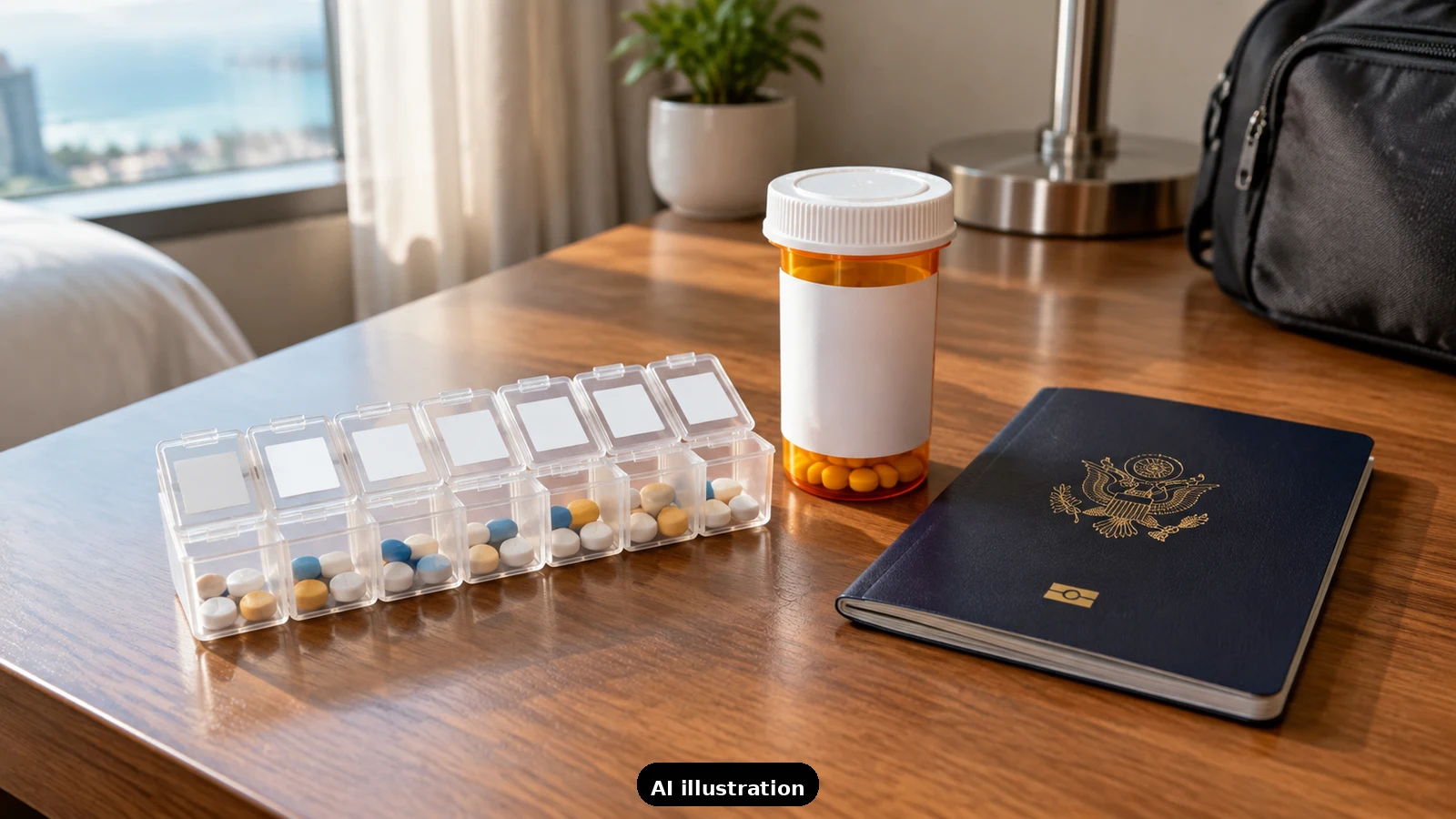
This is the Japan planning topic where a wrong assumption can end a trip at the border - or worse. The US Embassy in Japan puts it bluntly: many common American medications and over-the-counter drugs are illegal in Japan, and a valid US prescription changes nothing. Bring a prohibited substance and you risk arrest and detention. The good news is that the process for doing this legally is clear, free, and run directly by Japan's Ministry of Health, Labour and Welfare (MHLW). It just needs to start weeks before you fly.
Step one: check your exact ingredients, not the brand name. Japan regulates by active ingredient under its Pharmaceutical Affairs Law, and the embassy maintains no list of its own - decisions are solely the Japanese government's. The official route is the MHLW website and its FAQ, or an email to yakkan@mhlw.go.jp with four things: the drug's active ingredients, the medicine's name, your dosage and quantity, and your email address. Do this for every prescription and every OTC product you plan to pack, including vitamins and cold medicine.
Why ADHD travellers must be extra careful. Stimulant medications are the sharpest edge of these rules. Amphetamine-based ADHD medication - Adderall being the common American example - sits on Japan's prohibited list even with a US prescription, and there is no certificate that makes it legal to carry in. Other ADHD medications in different ingredient classes may be permitted in limited quantities or with advance approval, which is exactly why the MHLW email check matters: the answer depends on the molecule, the dose and the amount, not the condition being treated. If your medication turns out to be prohibited, talk to your prescriber well before the trip about alternatives that are legal in Japan.
Step two: if you need more than the approved quantity, get the Yunyu Kakunin-sho. Japan allows personal-use amounts of permitted medications without paperwork, but anything above MHLW's approved quantity requires an importation certificate - the Yunyu Kakunin-sho - obtained before you travel. The embassy warns approval can take several weeks, so apply as soon as your dates are set. Carry the certificate with your prescription and show both to the customs officer on arrival.
Step three: pack and carry the proof. Whatever you bring, keep medications in their original labelled containers, and carry a copy of your doctor's prescription plus a short letter stating the purpose of each drug. The embassy recommends this even for medications that are perfectly legal in Japan - it turns a customs conversation into a two-minute formality.
Common surprises beyond ADHD meds. Some everyday American cold and sinus products (those containing pseudoephedrine, for instance), certain painkillers with codeine, and even some inhalers fall foul of the ingredient rules. The same MHLW check covers all of them - one email listing everything you intend to pack is the efficient move.
If you need care in Japan. Japanese doctors cannot refill US prescriptions, but clinics accustomed to international patients exist in every large city, and the US Embassy maintains lists of English-speaking doctors and mental-health resources. Bring enough of any permitted medication for the whole trip - do not plan to restock mid-travel.
How TripKeeper handles this. When a traveller tells us they take regular medication, the plan builds in the paperwork runway: we flag the MHLW check at booking time, not at the airport, keep the certificate timeline inside the trip countdown, and share the embassy's English-speaking doctor lists for your destination cities as part of pre-departure notes. It is the unglamorous part of the service, and the part that matters most on arrival day.

A Miranda House graduate and lawyer who traded courtrooms for slow travel. Cheshta travels with the batches we host ourselves, with a soft spot for travelling alongside elders.
Planning your next trip?
We'll handle insurance, hotels, airport assistance and the itinerary — the same way we do it for every trip.
Questions on this article
asked by readers, answered by us
Was this helpful?
one tap, no sign-up
