




Reviewed 18 November 2026. A focused water-architecture guide using district and Gujarat Tourism descriptions. Check current official visitor information.
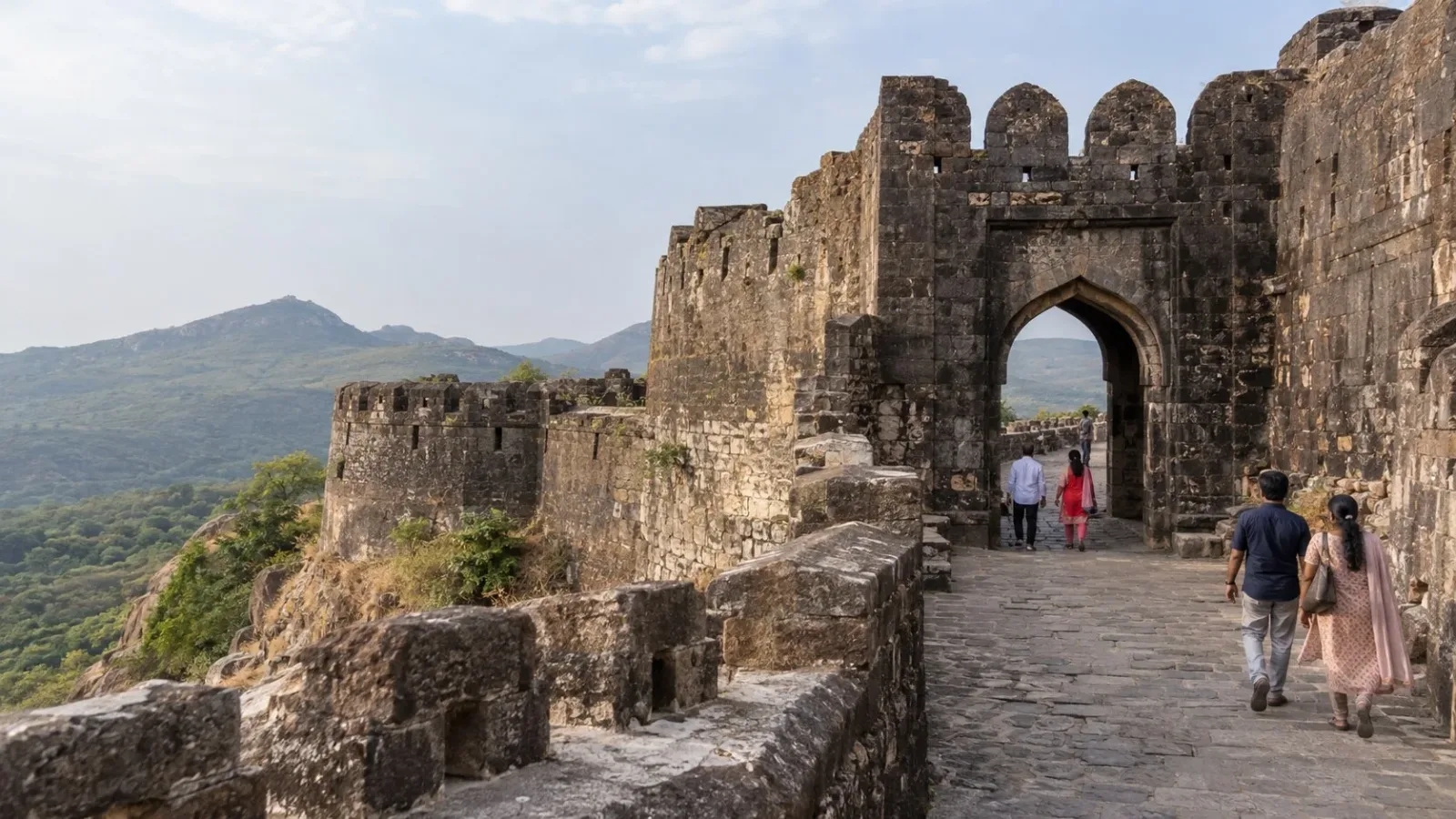
AI illustration: a fictional fort scene inspired by Junagadh. Not an actual location, person, route inspection or service.
Give the fort one architectural question
How did water shape a fortified place? Adi Kadi Vav and Navghan Kuvo give a focused Uparkot subject through two different relationships between stairs, rock and well shafts.
Our recommendation is one architectural comparison, not a challenge to complete every structure. Check current official visitor information and keep a meal, a break and the return.
At Adi Kadi Vav, consider the cut through rock
Junagadh district describes Adi Kadi Vav as carved out of hard rock, with a narrow stairway meeting the well shaft. That relationship between a long approach and the opening gives a clear looking subject.
Think about the shape created by removing rock rather than expecting an identical decorative pattern at every stepwell. The district’s description gives a way to understand the structure, not a reason to turn the outing into a physical target.
Keep the name’s traditions as traditions
The district records two different stories about Adi and Kadi and the well’s name. Their coexistence is a reason to preserve uncertainty rather than choose the most dramatic version as established history.
A place-name story can be discussed as local tradition without claiming proof of a particular event. Keep what the source describes separate from what the story asks a listener to believe.
At Navghan Kuvo, compare the spiral arrangement
The district describes Navghan Kuvo as partly hewn from soft rock and partly built, with stairs spiralling around the well shaft. This differs from the narrow approach described at Adi Kadi Vav.
Compare how the stair arrangement relates to the shaft and to the rock-cut and built portions. Calling both places wells should not flatten them into identical architectural solutions.
Separate historical purpose from a single founding date
The district qualifies Navghan Kuvo’s date and notes accounts that consider it older. Gujarat Tourism also presents the fort’s ancient origin as a belief and describes later extensions.
Do not assign every wall and water structure to one founder in one year. The sources connect water with the fort’s ability to withstand sieges; that historical role is different from a statement about a present-day water supply.
Leave the other fort subjects as separate choices
Gujarat Tourism describes other remains, including a former mosque and Buddhist caves, within the wider fort account. They raise different historical questions from the two water structures.
Choose another subject only if the group still wants it. Check current official visitor information and keep food, rest and the real return. A comparison of two water arrangements can be enough for one outing.
Sources
Questions people ask at the gate
What is our suggested main subject?
Water architecture: compare Adi Kadi Vav with Navghan Kuvo.
How does the district describe Adi Kadi Vav?
As cut from hard rock, with a narrow stairway meeting the well shaft.
Is the name’s most dramatic story proven history?
The district records different traditions. We keep them as traditions rather than selecting one as proven fact.
What distinguishes Navghan Kuvo’s form?
The district describes stairs spiralling around its well shaft, with rock-cut and built portions.
Does one founder’s date explain every structure?
No. The sources describe uncertainty and later extensions, not every structure as one moment of work.
Must the caves and every fort remain be added?
No. Choose a focused subject, check current official visitor information and keep food, rest and the return.
Next walk starts at a new gate.
Was this helpful?
one tap, no sign-up

A Miranda House graduate and lawyer who traded courtrooms for slow travel. Cheshta travels with the batches we host ourselves, with a soft spot for travelling alongside elders.