




Reviewed 18 November 2026. A focused art-and-history guide using the institution’s own collection pages. Check current official visitor information.
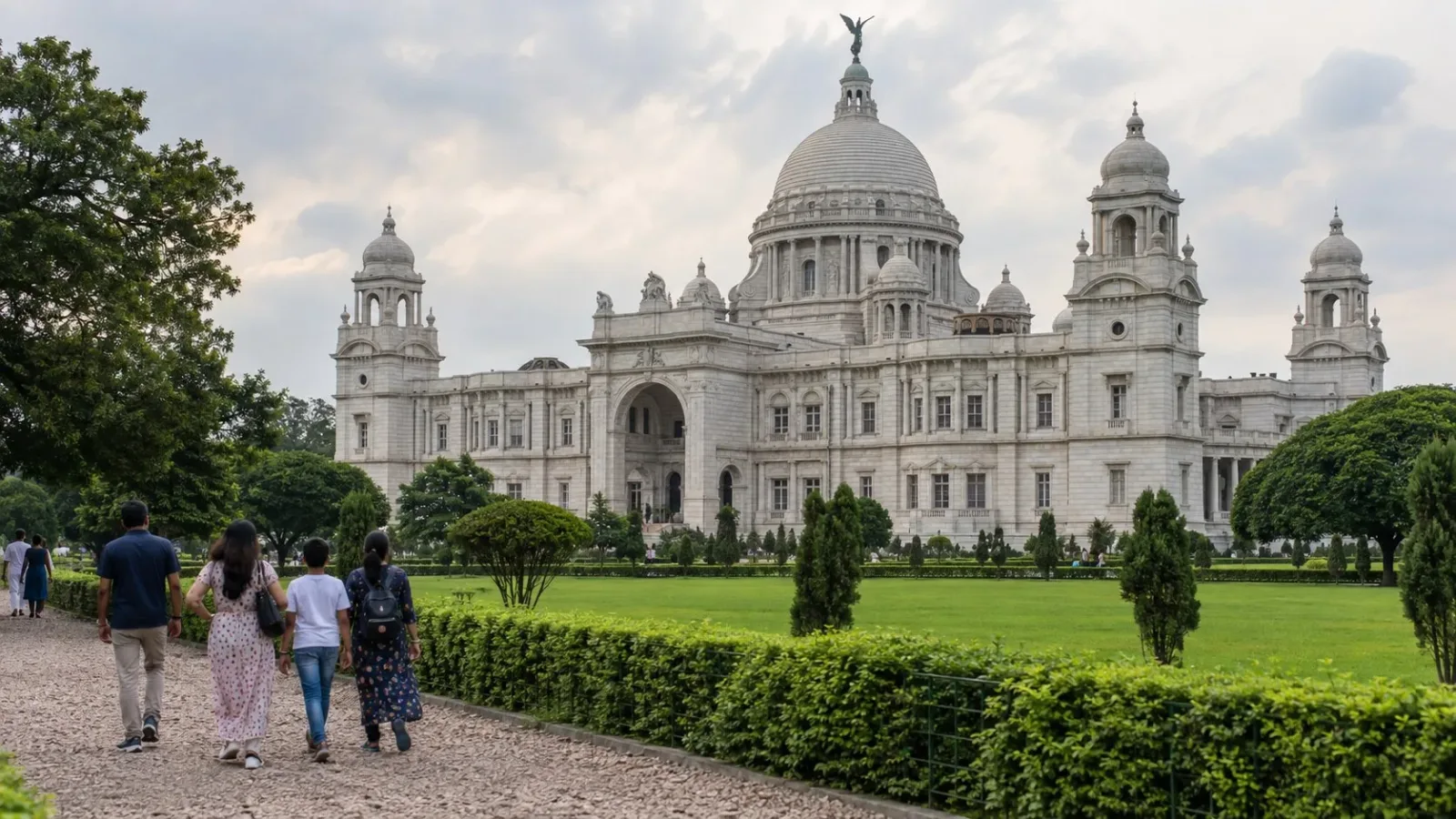
AI illustration: a fictional memorial scene inspired by Kolkata. Not an actual location, person, object record, route inspection or service.
Choose art and history beyond the landmark photograph
Victoria Memorial describes a collection of art objects, historical relics and documents relating mainly to Indian history in the eighteenth, nineteenth and twentieth centuries. That gives a purpose beyond collecting a photograph of the building.
Our recommendation is a few paintings and the relationship between art and space in the Central Hall. Check current official visitor information and keep a meal, a break and the return.
Begin with one Royal Gallery scene
The Royal Gallery page names Thomas and William Daniell, Johann Zoffany and other painters. It identifies a painting by Vassili Vereshchagin of the Prince of Wales’s entry into Jaipur in 1876.
Choose a scene and compare the arrangement of figures, procession and setting. Read maker, title and context rather than treating a royal event as a neutral account of everyone’s experience.
Compare different subjects in the collection
The same page identifies a Taj Mahal painting, a Durga Puja immersion scene and a pianoforte associated with Queen Victoria’s childhood. These offer different subjects within one collection account.
Compare what a painting depicts with what a historical object’s description tells you. A scene of a ceremony and an instrument associated with a person are different kinds of evidence, not interchangeable records.
In the Central Hall, consider the space
The institution describes the Queen’s Hall, also called the Central Hall, as circular and beneath the main dome. Its account identifies a marble statue of Queen Victoria by Thomas Brock at the centre.
Consider the relationship between the figure and the surrounding architectural space. This asks a different kind of attention from reading a framed painting: how does the building present the person it commemorates?
Read inscriptions and canvases in context
The Central Hall account describes proclamation extracts in different languages and twelve semicircular canvases by Frank Salisbury depicting events in Victoria’s life. Text and image work together in this commemorative setting.
Look at the viewpoint as well as the subject. Understanding imperial commemoration does not require endorsing it. Keep the historical voice of an inscription separate from your own conclusions about the period.
Let a few works be enough
The institution describes Italian Renaissance architecture blended with Indian influences. The building and collection can raise questions about art, power and historical memory without every work becoming a compulsory stop.
Choose what the group wants to understand, check current official visitor information and leave room for food and rest. A conversation about a painting and a hall can be enough before the real return.
Sources
Questions people ask at the gate
What is our suggested collection thread?
A few Royal Gallery paintings and the relationship between art and space in the Central Hall.
Which Jaipur event does the Royal Gallery page identify?
The Prince of Wales’s entry into Jaipur in 1876, painted by Vassili Vereshchagin.
What is another name for the Central Hall?
The institution also calls it the Queen’s Hall.
Who made the central Victoria statue?
The institution attributes the marble statue to Thomas Brock.
What do the Salisbury canvases depict?
The Central Hall account describes events in Queen Victoria’s life.
Must the visit become every gallery and another city attraction?
No. Choose a few works, check current official visitor information and keep food, rest and the return.
Next walk starts at a new gate.
Was this helpful?
one tap, no sign-up

A Miranda House graduate and lawyer who traded courtrooms for slow travel. Cheshta travels with the batches we host ourselves, with a soft spot for travelling alongside elders.