




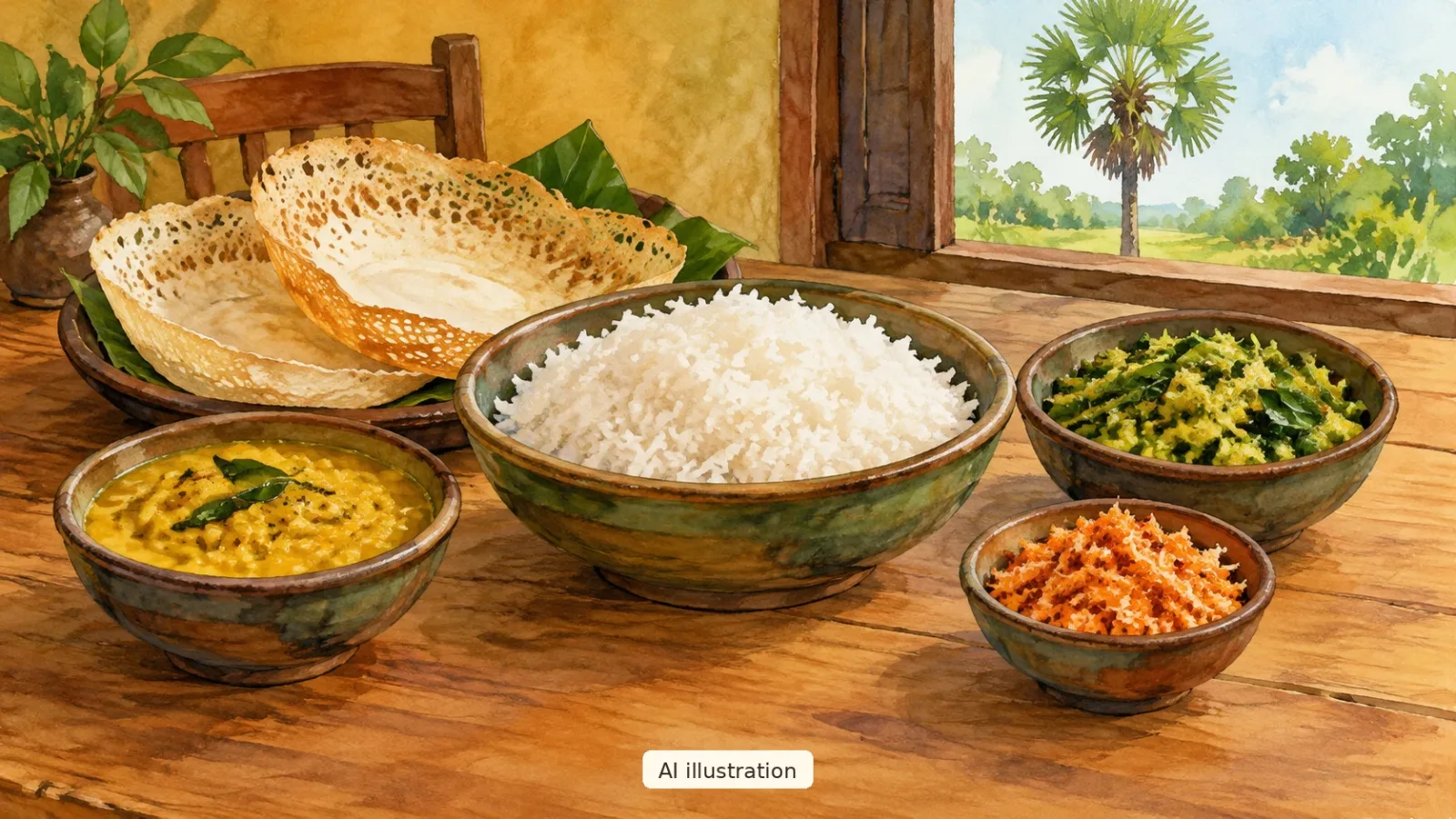
Vegetarian food in Jaffna is not limited to searching for an Indian restaurant. Start with a vegetarian rice-and-curry meal, dosai, string hoppers or pittu, then check the curries, sambol, stock and cooking method. A familiar starch does not certify everything served beside it.
Checked on 30 October 2026. The options below are grounded in a provincial tourism listing and current supplier pages. They are not kitchen inspections, allergy certification or a ranking of the best restaurants. Confirm your own dietary requirements and the day's service before travelling.
Two useful starting points, with different limits
Ammachchi Authentic Food Center, Kaithady: Northern Province Tourism describes it as a vegetarian food centre near the Northern Provincial Council Secretariat. The listing names dosai, vadai, milk hoppers, string hoppers, piddu and kurakkan rotti, and gives daily hours of 06:30-19:00. Treat those as published listing hours, not proof that every dish is available throughout the day. Kaithady is a separate destination, not a claim that the centre is beside Nallur temple.
Confirm the current opening, exact pin and meal choices before making a special trip. The listing's contact number is the same as the tourism bureau hotline, so do not present it to your family as a verified restaurant reservation desk. Step-free entry, seating layout, accessible toilets and parking were not checked.
Taste of Jaffna, Thirunelveli: its own page lists a Vegetarian Banana Leaf Meal with red rice, brinjal moju, pumpkin curry, dhal, rasam, pappadam and palmyrah jaggery payasam. The same menu advertises crab, mutton, prawns and seafood odiyal kool. It is therefore a named vegetarian meal in a mixed menu, not evidence of an exclusively vegetarian kitchen.
The supplier publishes 173 Palaly Road, Thirunelveli and Tuesday-Sunday 11:00-22:00, closed Mondays. Ask whether the meal is available for your time, which accompaniments are included, and whether your preparation requirements can be met. No final bill, delivery coverage or current table availability is verified here.
Know what the dish name does not tell you
- Rice and curry: ask for a vegetarian set and confirm every curry, gravy, stock and garnish. A vegetable on the plate is not the recipe.
- String hoppers and pittu/piddu: Sri Lanka Tourism describes these as steamed rice noodles and a flour-coconut preparation respectively. Check what comes with them; the accompaniment can change the meal.
- Hoppers: distinguish plain, egg and milk versions. If you avoid eggs or dairy, say so explicitly rather than assuming “vegetarian” answers both questions.
- Dosai and vadai: ask about fillings, chutneys, sides, fat and shared cooking equipment if those matter to you.
- Sambol and sauces: ask whether fish, dried fish, seafood, meat stock or any other animal ingredient has been used. Do not rely on colour or coconut as proof.
- Payasam, milk hoppers and sweets: ask about milk, ghee and egg for your specific diet. Vegetarian, vegan and dairy-free are different requests.
These are questions to put to the cook, not claims that every local version contains a hidden ingredient. Let the answer determine the order. The word “traditional” is a description, not a dietary certificate.
Odiyal kool is the wrong dish to guess about
Taste of Jaffna explicitly describes its odiyal kool as a palmyrah-root-flour seafood broth with crab, prawns and cuttlefish. Jetwing Jaffna's dining page also places local dishes in a menu that includes seafood specialties. A regional speciality is not automatically vegetarian because the name is unfamiliar.
If a restaurant offers a separately prepared vegetarian version, ask exactly what replaces the broth and seafood and how it is cooked. Do not request the ordinary seafood dish with visible pieces removed and assume the broth has become vegetarian.
Clear words to show the server
Use plain English if that is a shared language, and ask for help from someone who can explain your needs accurately if it is not:
“I eat vegetarian food. No meat, chicken, fish or seafood, including stock, dried fish and garnishes. Please tell me which dishes can be prepared this way.”
Add only what applies: “No eggs.” “No milk, butter, ghee or other dairy.” “No onion or garlic.” If you need separate utensils, a separate pan or an exclusively vegetarian kitchen, state that separately. An allergy needs its own clear conversation about ingredients and cross-contact; this guide does not certify any kitchen as allergy-safe.
For a shared meal, confirm the whole set rather than checking only the main dish. Ask what will arrive in each small bowl. If staff cannot confidently answer a requirement that matters to you, choose another dish or another place. You do not need to turn lunch into a detective series.
Plan the meal around the day
Save the restaurant pin, check that your meal is actually served at the chosen time, and allow a fallback if the kitchen is closed or sold out. Do not send a hungry family across town based on an old opening-hours snippet. Ask about spice level without expecting “vegetarian” to mean mild.
If parents need easy access, verify the entrance, chair seating, toilet and vehicle drop-off directly. Neither a vegetarian listing nor a glossy food photograph establishes those details. Temple visiting arrangements and restaurant hours also need separate checks.
Sources and limits
Sources: tourismnorth.lk (Ammachchi listing); jaffnatastes.com (supplier's own vegetarian meal, mixed menu and hours); jetwinghotels.com (mixed regional dining context); srilanka.travel (staple-food descriptions); moganddogtravels.com (independent recipe context, not current prices or certification). No named kitchen is certified pure-vegetarian, vegan, allergen-free or step-free by this article.

A Miranda House graduate and lawyer who traded courtrooms for slow travel. Cheshta travels with the batches we host ourselves, with a soft spot for travelling alongside elders.
Planning your next trip?
We'll handle insurance, hotels, airport assistance and the itinerary — the same way we do it for every trip.
Questions on this article
asked by readers, answered by us
Was this helpful?
one tap, no sign-up