




You planned for the flight, kept the medicine cold, and now the hotel room has no fridge. This is common - budget hotels, homestays and older properties across Asia often skip in-room refrigeration. The fix is usually one phone call, but it helps to know all five options and the one trap.
First, check whether you need cold at all. A pen or vial of insulin already in use is stable at room temperature - below about 25-30 degrees Celsius - for up to 4 weeks depending on the brand. In an air-conditioned room, the in-use supply may need nothing more than a drawer away from the window. Refrigeration matters for the unopened backup stock, which needs 2-8 degrees.
Fix one: the hotel's own fridge. Every hotel with a kitchen or bar has refrigeration, and most will store labelled medication for a guest on request - it is a routine ask at reception. Put the medicine in a zip bag with your name and room number on it, hand it over at the front desk, and confirm collection hours. On checkout day, ask them to hold it until you actually leave.
Fix two: request a room fridge for medical reasons. Many hotels keep a few small fridges for guests with medical needs and will place one in the room, often free when you explain why. Ask at booking if you can, and again at check-in - the magic words are "for medication", not "for drinks".
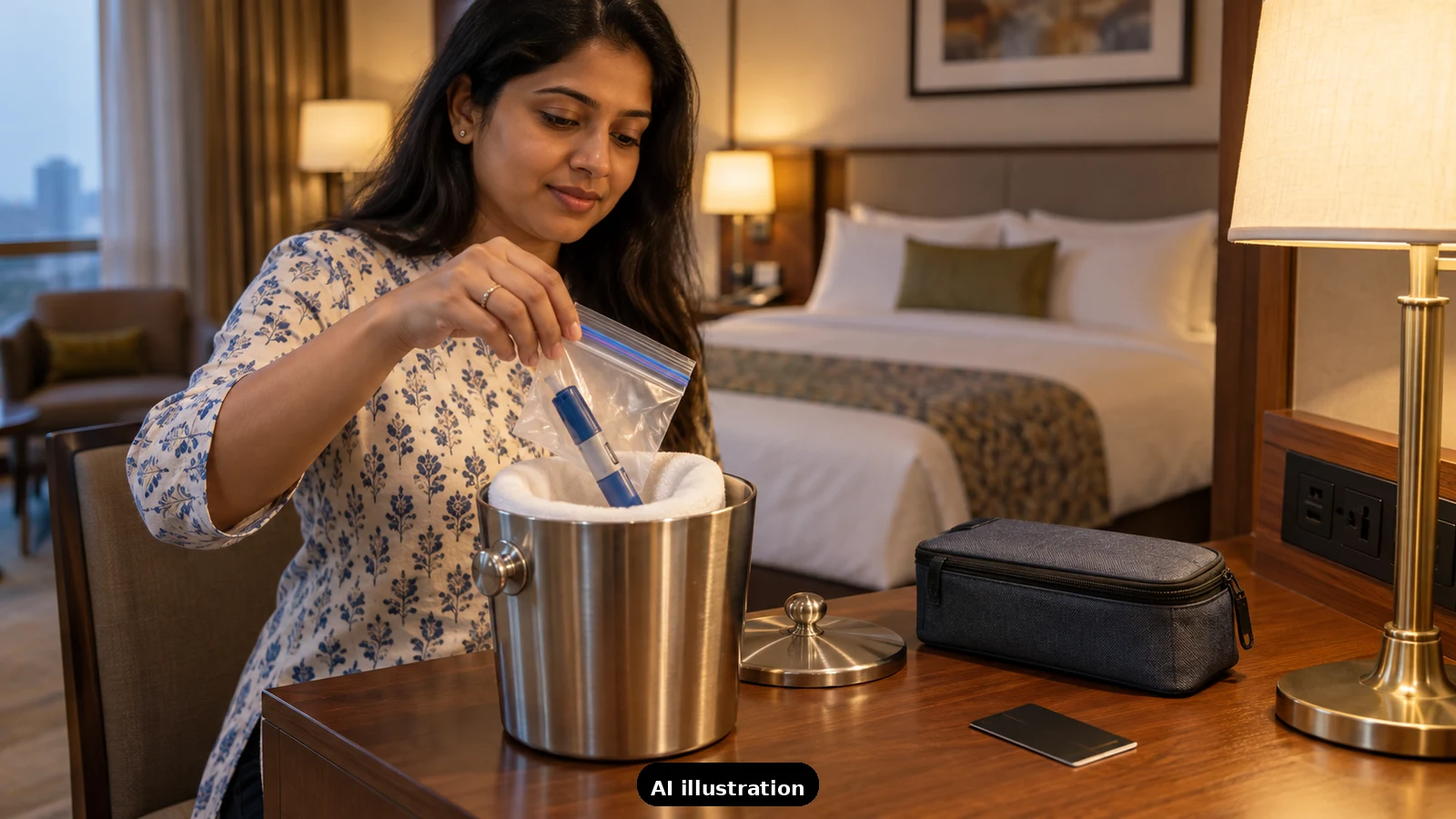
Fix three: the ice-bucket rotation. The standard fallback. Line the ice bucket with a towel, fill with ice from the hotel's ice machine or bar, and stand the medicine - double-bagged in zip bags - upright in it, never touching bare ice. Freezing destroys insulin as surely as heat. Replace the ice morning and evening, and park the bucket on the bathroom floor, the coolest spot in most rooms.
Fix four: the evaporative cooling wallet. If you travelled with a wallet like Frio, re-soak it in the room and it keeps contents cool for a minimum of 45 hours per activation - no fridge, no ice, no electricity. For multi-stop trips with uncertain rooms, it is the most independent option you can carry.
The minibar trap. A minibar is not a medical fridge. Many run warm, and the small freezer shelf or cold plate at the back can freeze anything touching it. If the minibar is all you have, keep the medicine away from the back wall and the freezer compartment, and verify with a cheap fridge thermometer strip - a two-gram device that ends every guessing game. Aim for 2-8 degrees, and never let the reading touch zero.
If the worst happens. Clear insulin that turns cloudy, or any brownish discolouration, means the dose is damaged - do not use it. The same goes for medicine you know froze against ice. A local pharmacy can usually help with your prescription copy, which is one more reason the prescription travels in the cabin bag, not the suitcase.
How TripKeeper supports this. We ask about refrigeration when we book rooms for travellers with temperature-sensitive medicine - a confirmed fridge, or the storage plan if there is none, goes into the itinerary before you fly. Send us a trip-planning inquiry and skip the front-desk improvisation.

A Miranda House graduate and lawyer who traded courtrooms for slow travel. Cheshta travels with the batches we host ourselves, with a soft spot for travelling alongside elders.
Planning your next trip?
We'll handle insurance, hotels, airport assistance and the itinerary — the same way we do it for every trip.
Questions on this article
asked by readers, answered by us
Was this helpful?
one tap, no sign-up