




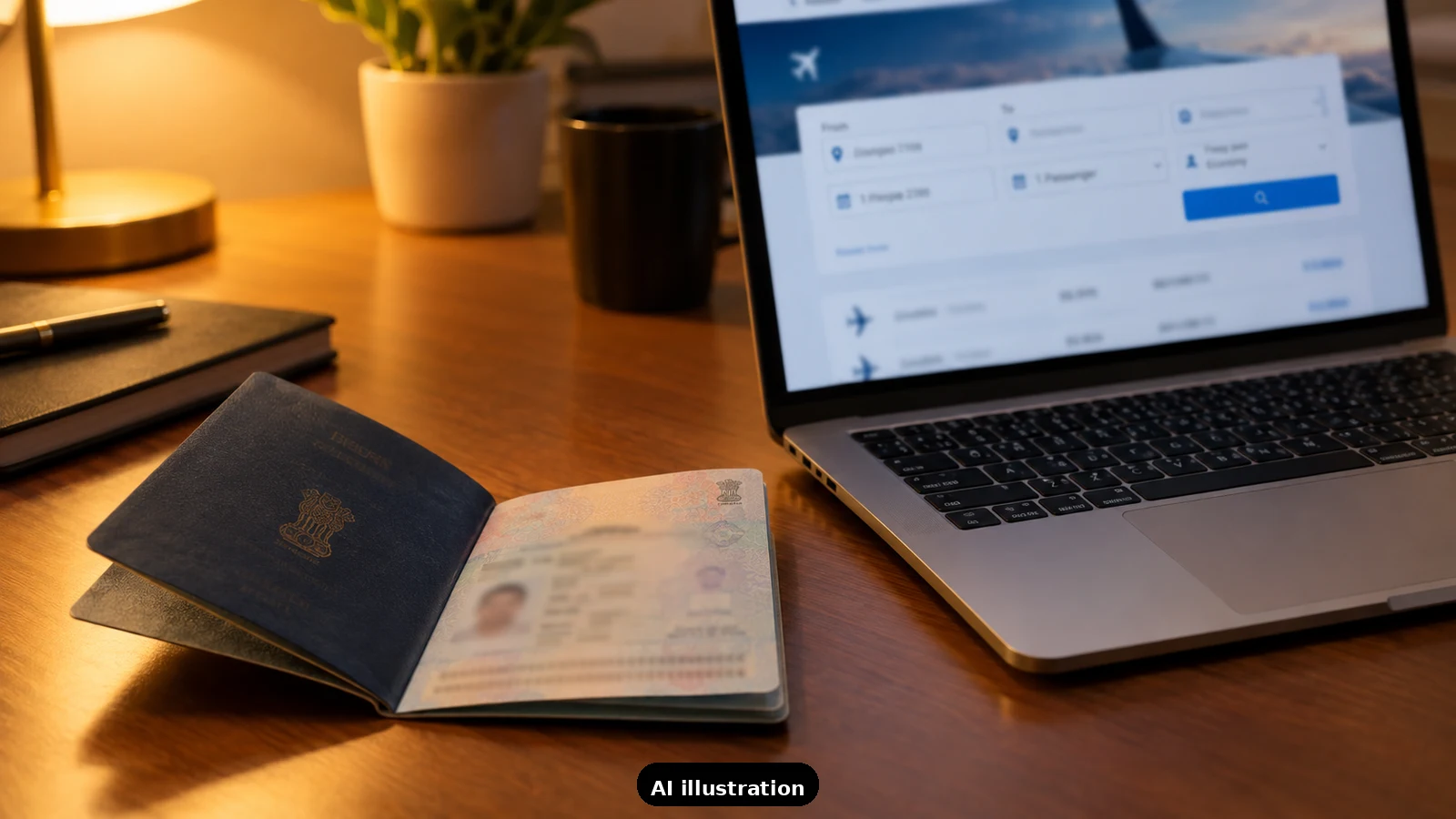
Short answer: many Indian passports - especially from the South, and plenty from Punjab, Haryana and elsewhere - carry only one name, printed entirely in the 'Given name' line with the surname field blank. Airlines know this and have a standard booking format for it. Air India's official guideline: when the surname is not available and all names are under the given-name header of the travel document, enter the given name(s) in the LAST name field and FNU (First Name Unknown) in the first name field, followed by the title. So a passport that reads only 'Lakshmi' becomes LAKSHMI/FNU MS on the ticket. The booking then matches the passport, which is the only thing check-in and immigration verify.
What FNU means and why it is safe. FNU is not a mistake or a red flag - it is a standard airline placeholder meaning the traveller's documents carry no separate first name. Visa sections and airline systems across the world see it constantly on Indian, Indonesian and other single-name documents. The ticket, the passport and the visa all end up telling the same one-name story, which is exactly what every counter checks for.
The exceptions that change the format. Three worth knowing before you book. Canada: on itineraries with an Air Canada-operated segment, the format flips - LNU (Last Name Unknown) goes in the last-name field and the given name in the first-name field. UAE: a passport bearing a single name is not accepted for entry at all - the document must show at least two names (with narrow exemptions, such as a UAE employment visa or a parent's name listed on the document), so a single-name passport holder needs a passport reissue with the name split before booking to Dubai or Abu Dhabi. Australia and New Zealand: on Virgin Australia or Air New Zealand domestic segments, the single name is repeated in BOTH fields - LAKSHMI/LAKSHMI MS.
How to read your own passport before booking. Look at the MRZ - the two lines of chevrons at the bottom of the bio page. After P
Mistakes that get single-name travellers stopped. Splitting the given name on your own - putting half of 'Lakshmi Priya' as a surname the passport does not show - creates a ticket that matches no document. So does adding a family name 'because everyone has one'. And a name correction after ticketing is not always free: Air India, for example, corrects genuine typos of up to three characters and surname/first-name interchanges without charge, but charges for other name changes. Getting the FNU format right at booking time costs nothing.
One more check: the visa. Apply for the visa with the same one-name structure the passport shows, so the visa, the passport and the FNU-format ticket agree. Countries have their own conventions for single-name applicants (US visas, for instance, print FNU as the given name), and that is normal - what matters is that the three documents are consistent.
Where TripKeeper fits in. When we book international travel for a family, we read each passport's MRZ before a single ticket is issued, apply the airline's own name format for that route, and flag cases - like the UAE's two-name rule - where a passport needs reissue before anything can be booked. Send us a trip-planning inquiry if you would like that done for your family.

A Miranda House graduate and lawyer who traded courtrooms for slow travel. Cheshta travels with the batches we host ourselves, with a soft spot for travelling alongside elders.
Planning your next trip?
We'll handle insurance, hotels, airport assistance and the itinerary — the same way we do it for every trip.
Questions on this article
asked by readers, answered by us
Was this helpful?
one tap, no sign-up