




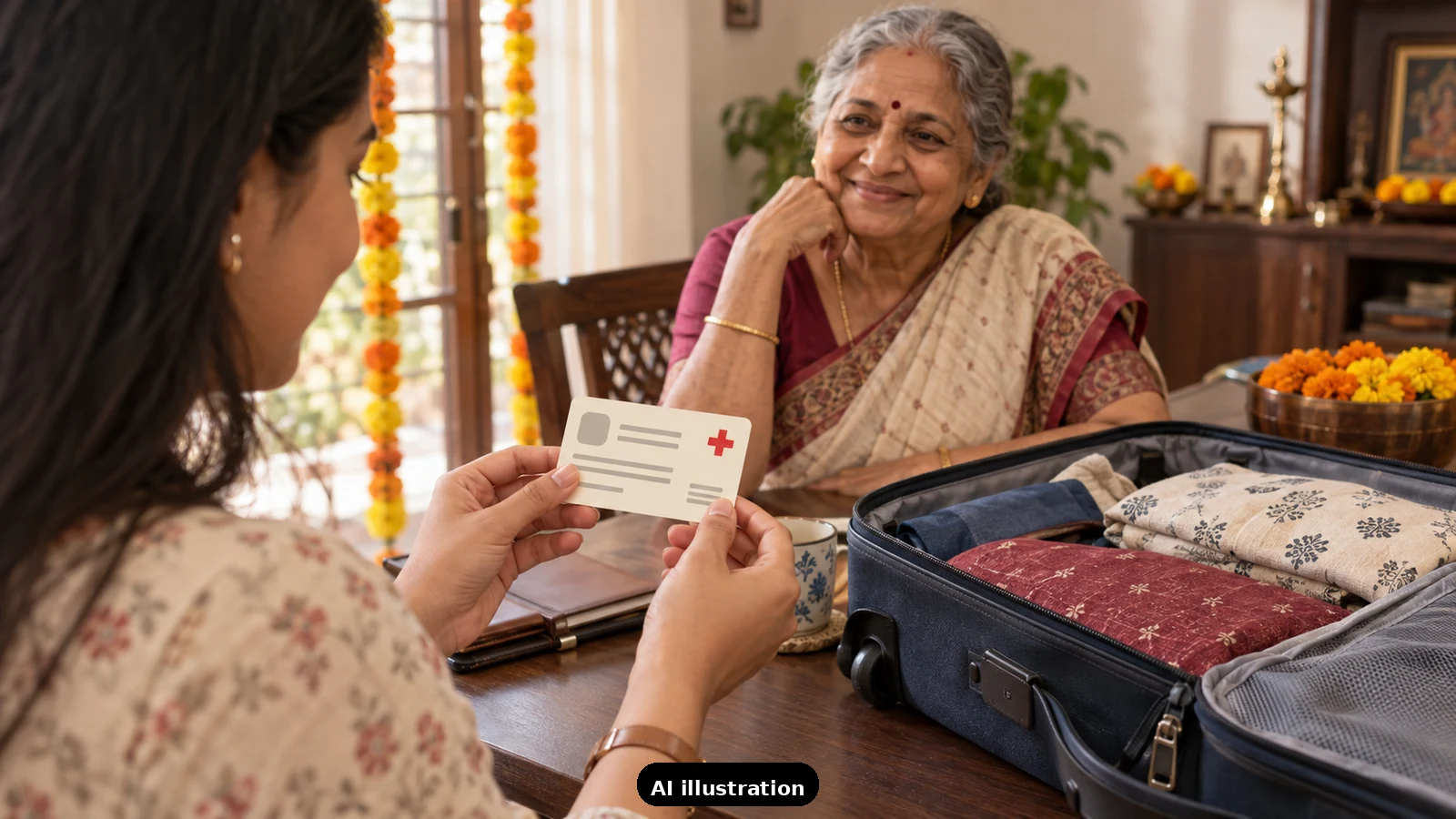
Short answer: the card is written for the stranger who finds it, not for your parents. That means it lives in two languages - English plus the local language of the destination - and it says, in order: this person speaks Hindi, here is who to call, here is where they are staying, here is the medical minimum. Everything on it should be usable by a hotel receptionist, a nurse or a police officer within five minutes of picking it up.
Line 1 and 2: name and language. Your parent's full name as in the passport, and immediately below it, in English and the local language: "I speak Hindi. I do not speak English well. Please call my family." That one sentence changes everything about how a stranger responds - it explains the silence, invites a phone call instead of a conversation, and does it before anyone gets frustrated.
Lines 3 to 5: the contact ladder. Three numbers, in the order a stranger should try them, each with the country code spelled out: first your number in India (+91...) labelled "My son/daughter - India", second a travel companion or the tour contact if there is one, third the hotel's direct line. Strangers call the first number on a card; make sure the first number is one that is answered at 3 AM. Add one more line that many families forget: the travel insurer's 24x7 assistance number and the policy number, because a hospital will want it before anything else.
Line 6: where they are staying. The hotel name and address in the local language, exactly as a taxi driver or police officer would need it. This single line turns a lost, confused parent into a ten-minute cab ride back to safety. If the trip has multiple stops, either make a card per city or list the itinerary dates against each hotel.
Lines 7 and 8: the medical minimum. Not a diagnosis essay - the few facts that keep a first responder safe: blood group, major allergies ("allergic to penicillin" in both languages), and critical ongoing medication ("takes insulin daily"). Anything more belongs on the full medical card or in the phone, not here.
What deliberately stays off. No home address in India - it helps no one abroad and advertises an empty house. No full passport number on the card itself. No bank or card details, obviously. And no long lists: eight short lines that fit on one side of a credit-card-sized laminate beat a folded essay nobody reads.
Make it real: the production details. Print in a large font - your parents' eyes and a stranger's patience both demand it - laminate it, and put copies in three places: wallet or purse, phone case, and the front pocket of the suitcase or handbag. Make one per parent, personalised, not one shared card. And reprint for every trip: the hotel line and the local language change each time, and a stale card teaches the family to ignore the idea.
A layout you can copy. Front side: name; "I speak Hindi / please call my family" in English and the local language; contact ladder with labels; hotel name and address. Reverse side: insurer assistance number and policy number; blood group; allergies; critical medication; and one closing line - "Thank you for helping my parent" - in the local language. Get the translations done by a person or verified twice through two different translation tools, then read back by someone who knows the language if possible; a mistranslated allergy line is worse than none.
The card works best inside a system. Teach your parents one habit: if anything goes wrong, hand the card to the nearest person in uniform or behind a desk. Pair it with the family emergency plan - who calls whom, in what order - and the card stops being a talisman and becomes a working tool.
How we do it at TripKeeper. Every parent trip we plan includes destination-language emergency cards prepared before departure - translated, laminated, one per traveller, per city - along with the family contact plan that makes them work. Send us a trip-planning inquiry if you would like this handled for your parents' next trip.

A Miranda House graduate and lawyer who traded courtrooms for slow travel. Cheshta travels with the batches we host ourselves, with a soft spot for travelling alongside elders.
Planning your next trip?
We'll handle insurance, hotels, airport assistance and the itinerary — the same way we do it for every trip.
Questions on this article
asked by readers, answered by us
Was this helpful?
one tap, no sign-up