




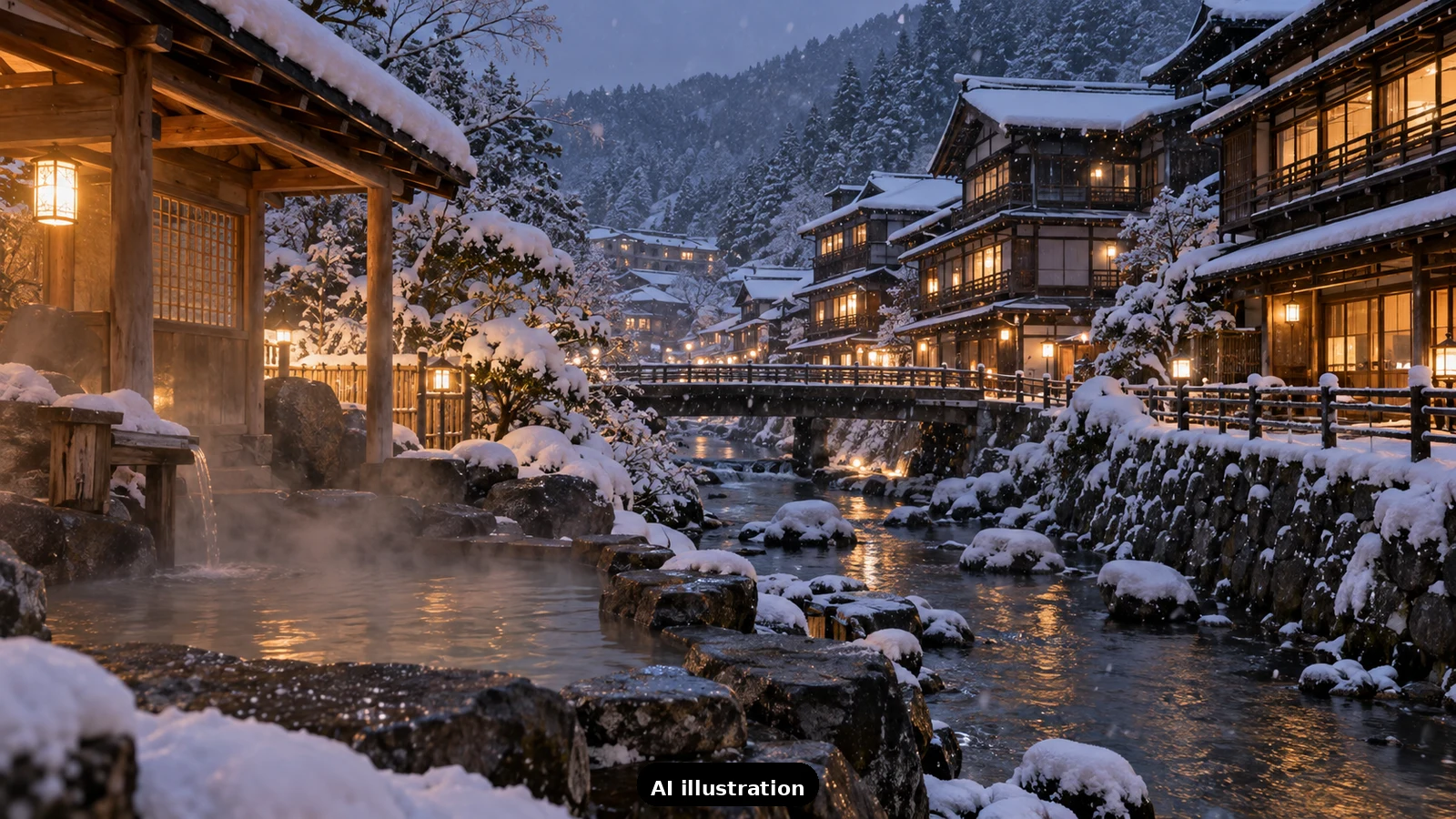
Japan's snow is famous - the Sea of Japan coast is among the snowiest inhabited places on Earth - but most of the best snow experiences need no skis at all. From December to February you can watch monkeys soak in hot springs, walk through lantern-lit villages buried under meters of snow, and visit one of the world's great winter festivals. Here is where the snow is, when each place is at its best, and how to keep a winter trip running smoothly.
Hokkaido: the headline act. Sapporo gets reliable snow from December, and the city leans into it. The Sapporo Snow Festival - the 77th edition is officially set for February 4-11, 2027 - fills Odori Park with huge snow and ice sculptures and is worth planning a trip around by itself; book Sapporo hotels well ahead for those eight days. Nearby Otaru, a canal town thirty minutes away by train, usually runs its candle-lit Snow Light Path festival in the week after, and Asahikawa's winter festival follows in early February. Hokkaido is the surest bet in Japan for a true deep-winter trip.
The snow monkeys. Jigokudani Monkey Park in the mountains of Nagano is open year-round, but the famous scene - wild macaques bathing in a steaming hot spring - is at its best from December to March when the valley is white. It is a real mountain walk: a forest trail of about thirty minutes that can be icy, so proper boots matter more than any other gear you pack. Combine it with Nagano's temple town or an onsen stay in nearby Yudanaka or Shibu Onsen, whose narrow streets are lovely in snow.
Shirakawa-go and the gassho villages. The UNESCO-listed farmhouses of Shirakawa-go, with their steep thatched roofs built for heavy snow, look like a fairy tale in winter. The village stays open through the season and is reached by bus from Takayama or Kanazawa; the roads are kept clear but services are fewer in winter, so reserve seats ahead. Winter light-up evenings are held on selected dates with advance booking and entry controls - confirm the current year's arrangements on the official village site before promising it to your itinerary.
Onsen towns in deep snow. Two stand out. Ginzan Onsen in Yamagata is the postcard: Taisho-era wooden inns along a river, gas lamps, and snow falling into the gorge - so popular that the town has been managing winter visitor numbers, including evening entry rules for day-trippers, so check access arrangements before you go. Zao Onsen, also in Yamagata, adds the 'snow monsters' - trees encased in ice and snow, best from late January into February and viewable by ropeway day and night. Kusatsu, Nozawa and Kinosaki are further classic onsen towns that wear snow beautifully.
Traveling through snow without drama. Japan's winter transport is good but not magic. Shinkansen main lines (Tokyo-Nagano-Kanazawa, Tokyo-Hokkaido) run through winter with occasional weather delays; local lines on the Sea of Japan side and mountain highway buses are the weak links and can suspend in storms. Build buffer: avoid same-day tight connections in January-February, keep one flexible evening in any northern leg, and check forecasts the night before travel days. In cities, the practical kit is waterproof shoes with grip, layered clothing, and gloves - station floors and temple steps get slick.
Where the snow is not. Tokyo and Kyoto get only occasional light snow, mostly January-February, and it rarely settles for long - do not plan a snow trip around them. Osaka, Hiroshima and Kyushu are similar. If your dates only allow the classic Tokyo-Kyoto route, the snow monkeys or an onsen town make the easiest snow add-on: both are a half-day of trains from the main route.
How TripKeeper builds winter trips. Our team sequences winter itineraries the cautious way: snow-country legs early in the trip with buffer days before fixed flights, festival dates locked only against official announcements, and hotels and intercity seats reserved ahead for the festival weeks. Founder-hosted winter batches run with that weather margin built in; independent travelers get the same structure - plus on-ground help if a storm reshuffles a day - through the trip-planning inquiry.

A Miranda House graduate and lawyer who traded courtrooms for slow travel. Cheshta travels with the batches we host ourselves, with a soft spot for travelling alongside elders.
Planning your next trip?
We'll handle insurance, hotels, airport assistance and the itinerary — the same way we do it for every trip.
Questions on this article
asked by readers, answered by us
Was this helpful?
one tap, no sign-up
