




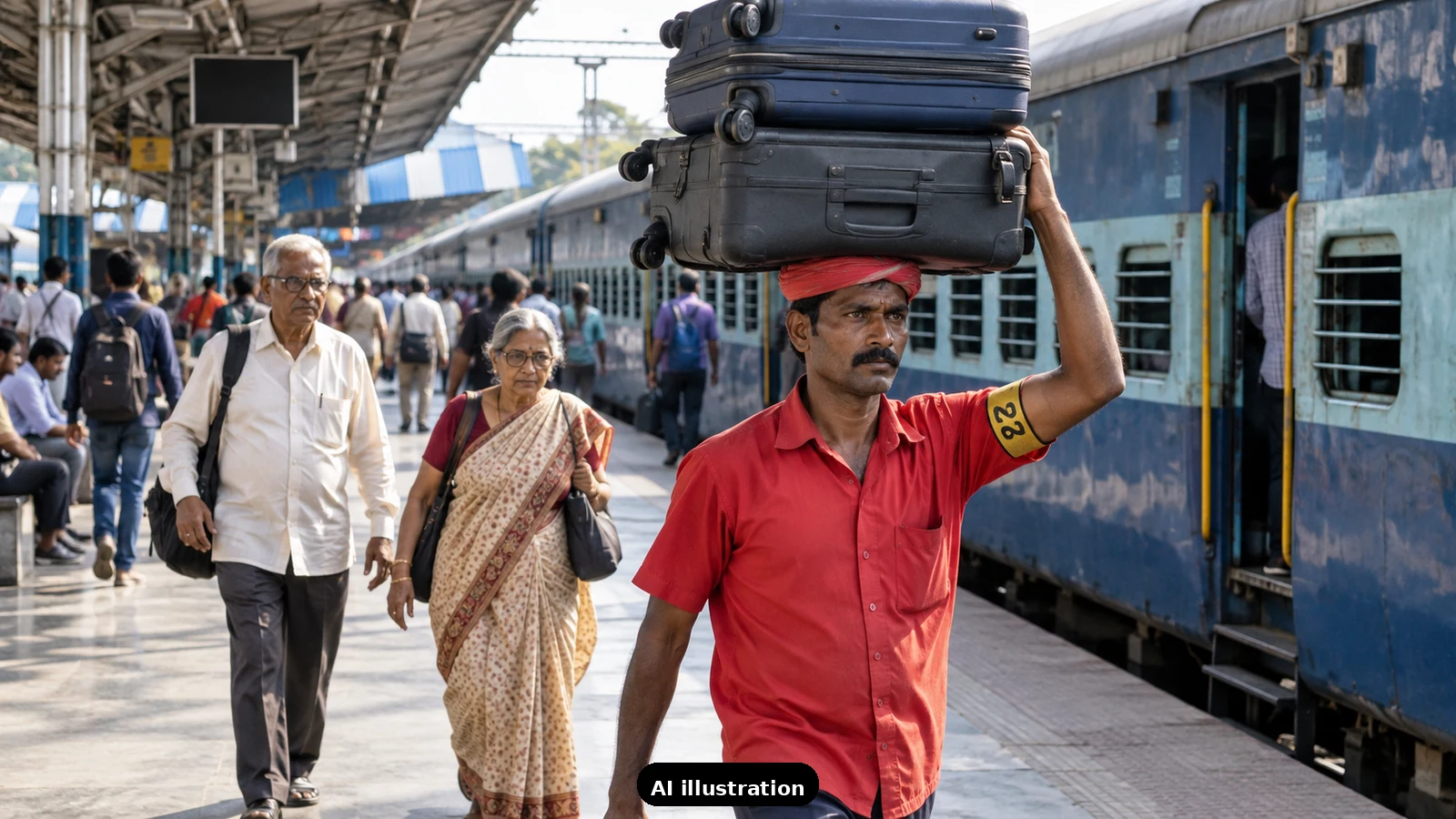
Short answer: yes. A licensed railway porter (the red-shirted 'coolie' with a numbered armband) will carry luggage from wherever the parents arrive - the station entrance, the parking, the cab drop point - across the footbridge or by the lift, right up to the coach door, and place the bags inside the compartment. For elderly parents with two suitcases and a long platform ahead, a porter is not a luxury; it is the difference between a calm boarding and an exhausting one.
How to get a licensed porter. Porters wait at the station entrances and on the platforms - approach one, or ask at the enquiry counter to point one out. Two checks make it safe: the porter should wear the licensed red shirt with a numbered badge or armband (note the number), and the fare should be settled before a single bag moves. Every station displays its official porter tariff, and the rates are fixed by the railway zone and station category - recently revised tariffs run roughly from Rs 40 to Rs 130 depending on the station class and whether it is a head load, a trolley load or heavier work. A licensed porter quoting a wildly higher number should be shown the rate board or simply replaced.
What 'to the coach door' means in practice. Tell the porter the train number and coach - from the PNR or the ticket - and he will know where the coach is expected to stop. Porters track platform announcements better than any passenger; if the platform changes, the porter simply reroutes, luggage and all. At the coach, he places the bags inside - under the berth if asked. Pay him there, once the luggage is in, not at the entrance.
Safety habits worth teaching parents. Keep small valuables - purse, phone, medicines pouch - with the passenger, never in the portered bags. Note the porter's badge number before handing over luggage (a photo of the armband takes a second). Stay within sight of the bags on the walk to the platform. And a practical tip: families often book the same return help - many porters will give their number and meet the parents' train on the way back, which is perfectly fine as long as the tariff conversation happens again upfront.
Pairing a porter with other assistance. A porter carries luggage, not people - for a parent who also struggles to walk, combine the porter with a wheelchair from the station's assistance desk (free at many stations, bookable online at nominated ones through IRCTC's e-wheelchair service). The two together - wheelchair for the parent, porter for the bags - is the standard arrangement for elderly train travel in India, and station staff see it every day.
How TripKeeper handles station days. Porter, wheelchair, platform tracking, and a buffer that absorbs delays - we arrange all of it for parents' train journeys, and stay on call until they are seated in the coach. If you would like that, send us a trip-planning inquiry.

A Miranda House graduate and lawyer who traded courtrooms for slow travel. Cheshta travels with the batches we host ourselves, with a soft spot for travelling alongside elders.
Planning your next trip?
We'll handle insurance, hotels, airport assistance and the itinerary — the same way we do it for every trip.
Questions on this article
asked by readers, answered by us
Was this helpful?
one tap, no sign-up