




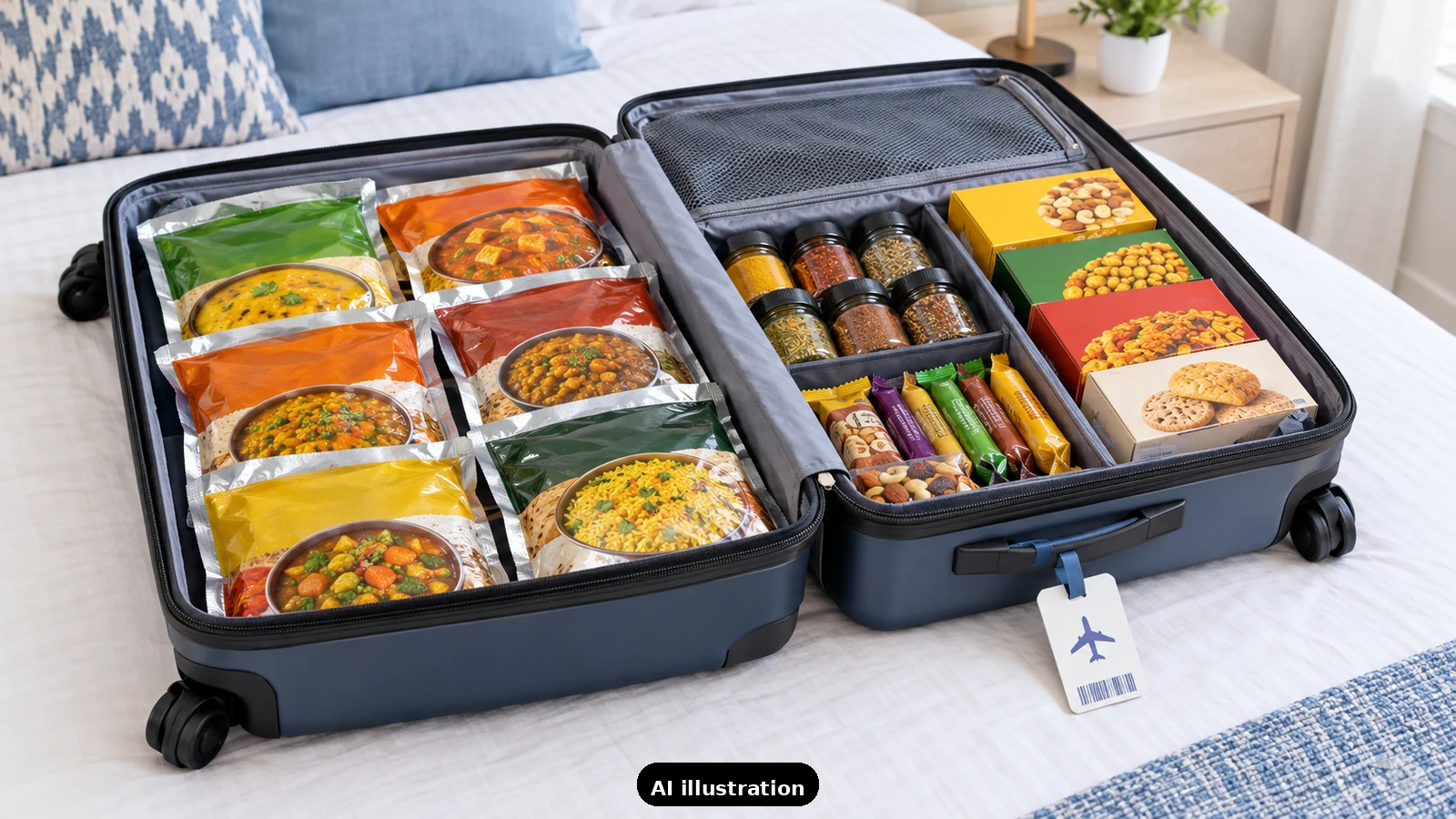
Every Indian family flying to Japan has the same suitcase debate: how much food to carry. Vegetarian families carry more - ready-to-eat packets, theplas, pickle jars, masalas - because Japanese convenience food is a label-reading exercise. The honest answer is that most of it is fine, some of it is risky, and a few things can genuinely get you in trouble at the airport. Japan's Ministry of Agriculture runs two separate checks - animal quarantine and plant quarantine - and the rules below come from their official guidance. Rules change, so check the current MAFF pages before you fly.
The hard rule: no meat products, period. Japan's animal quarantine applies to meat and organs in any form - raw, cooked, dried, vacuum-packed, heat-processed - plus eggs and products made from them. Without a government inspection certificate from the exporting country (which individuals cannot practically get), these items cannot be brought in, and this applies equally to home food, gifts, airport purchases and tiny personal quantities. Penalties are serious: the law provides for up to three years' imprisonment or a fine of up to 3 million yen, and there have been actual arrests. For vegetarians the practical meaning is: check your ready-to-eat packets for chicken extract, meat powder or egg in the ingredients. Many "veg" instant noodles and soup mixes contain them. Anything with meat or egg content stays home.
Dairy is treated more softly - still check. The animal quarantine list covers raw milk and dairy products, but specifically excludes dairy imported in passenger baggage. Ghee, milk powder and paneer-based sealed packets therefore sit in a greyer, generally permitted zone for personal luggage - but if a packet also contains egg or meat-derived ingredients, the hard rule above applies. Read ingredient lists at home, not at the airport.
Spices, atta and pickles: mostly fine, with conditions. Dried, commercially packed spices, masalas and flours for personal use are routinely carried in without issue. Plant quarantine gets involved with fresh produce and things that can grow: fresh fruits and vegetables, seeds, seedlings and bulbs legally require a phytosanitary certificate and import inspection, and some items are banned outright depending on origin. So: your jeera and haldi are fine; a bag of raw whole seeds for planting or fresh curry leaves from the garden are not worth the risk. Homemade pickles in properly sealed jars generally pass as processed food, but keep them in checked baggage (liquid limits in cabin) and be ready to show them.
Sealed and labelled beats homemade and loose. The pattern that works: factory-sealed, clearly labelled packets - the MTR, Haldiram's and Gits type ready-to-eat range, verified vegetarian with no egg - pass through every day. Loose powders in unlabelled bags invite questions. Keep everything in its original packaging, keep quantities personal (a week or two of travel, not a shop), and pack it all in checked luggage.
Declare, always. Japan asks you to declare what you are carrying on the customs declaration - done through Visit Japan Web before landing or on the paper form. If you are carrying food, declare it. Quarantine officers can inspect luggage and ask directly about animal and plant products, and sniffer dogs work the baggage halls. A declared packet that turns out problematic gets confiscated; an undeclared one can mean fines and a much longer day. Honesty here costs nothing.
And if you carry nothing? You will manage. Our guides on vegetarian konbini shopping, veg ramen and curry, and Indian restaurants in Tokyo and Kyoto cover the food side once you land - Japan takes a day or two to learn, then it feeds you well.
How TripKeeper helps. Before every founder-hosted Japan departure, our team sends travellers a current packing brief - what food items are passing quarantine that season, what to leave behind, and the Japanese dietary card for the trip. Our crew meets you at the airport, so even the arrival shuffle is handled. If you are planning your own dates, a "Plan your trip" inquiry gets you the same brief for your travel month.

A Miranda House graduate and lawyer who traded courtrooms for slow travel. Cheshta travels with the batches we host ourselves, with a soft spot for travelling alongside elders.
Planning your next trip?
We'll handle insurance, hotels, airport assistance and the itinerary — the same way we do it for every trip.
Questions on this article
asked by readers, answered by us
Was this helpful?
one tap, no sign-up
