




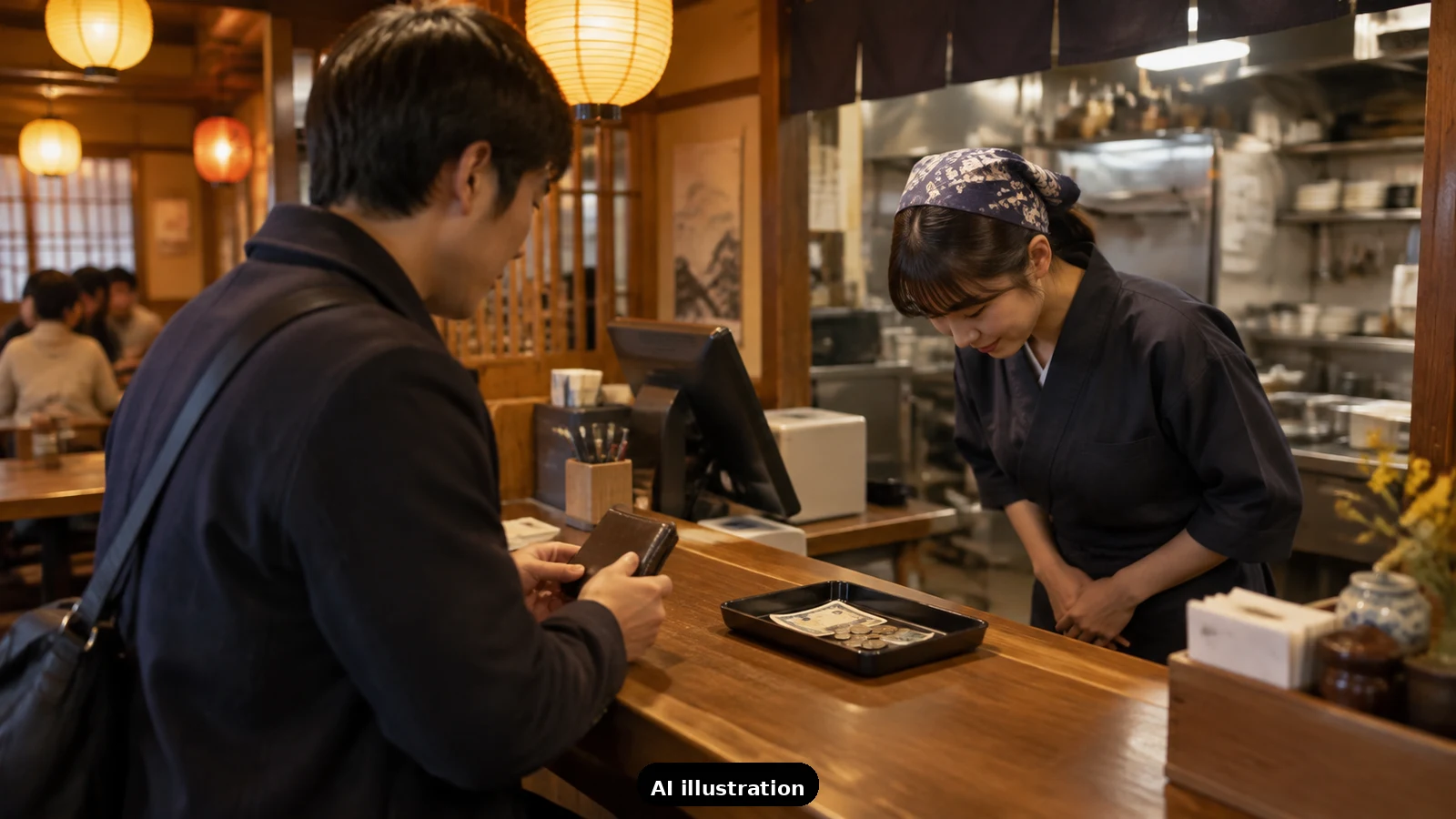
For Americans, Japan's dining etiquette starts with unlearning the most automatic gesture in US restaurant life: leaving a tip. Japan's official tourism organization is blunt - tipping is not common practice for services here, and Tokyo's own visitor guide says there is simply no custom of tipping in restaurants. Excellent service is the baseline, priced into the meal. Leave cash on the table and you will likely be chased down the street by a server returning your "forgotten" money.
Where the no-tip rule covers. Everywhere, essentially: restaurants from ramen counters to high-end kaiseki, taxis, hotel staff, tour guides, hairdressers. The rare exception is a private tour guide or interpreter working with foreign clients, where a tip is sometimes accepted - but even then, presenting it in an envelope with both hands matters more than the amount. When in doubt, a heartfelt "arigatou gozaimashita" and a small bow is the correct gratuity.
How paying actually works. In most casual restaurants you do not pay at the table at all. The server brings the check (often face-down on a clipboard or in a small folder) or it sits at the table's edge from the start; you carry it to the register by the door and pay there. At the register, place cash or your card in the little tray - money changes hands via the tray, not palm to palm - and your change returns the same way, often counted out with both hands.
Splitting the bill. Americans love itemized splits; Japan generally does one check. Asking the register to divide a bill five ways is possible at some places but mildly awkward, especially at small independent spots. The local pattern: one person pays, friends settle up among themselves afterward. Some modern chains have self-pay kiosks that make splitting easy - ticket-vending restaurants (buy your meal ticket first at the machine) sidestep the issue entirely.
The table manners that actually register. A handful matter more than the rest. Say "itadakimasu" before eating and "gochisousama deshita" after - staff hear the respect instantly. Never stick chopsticks upright in rice or pass food chopstick-to-chopstick (both echo funeral rites). Pour drinks for others, not yourself. Slurping noodles is fine - even appreciative. And do not rub disposable chopsticks together; it implies the restaurant buys cheap ones.
Ordering expectations. Many izakaya expect at least one dish per person, and some seat you with a small automatic appetizer (otoshi) that lands on the bill as a cover charge of a few hundred yen - it is not a scam or a tip, just how the house works. Last order ("lasuto oodaa" - you will hear the English words) typically comes 30-60 minutes before closing.
The bill ritual, end to end. To call a server, raise a hand and say "sumimasen" - never snap or shout across the room; many tables have a call button. When you are ready, ask "okaikei onegaishimasu" (the check, please), take the slip to the register, pay via the tray, and you are done - no percentage math, no line for a tip, no guilt. It is the most relaxing part of eating in Japan once the reflex fades.
How TripKeeper diners do it. On team-planned trips, restaurant etiquette is a two-minute pre-departure briefing rather than a week of anxiety, and for hosted groups the founder walks the table through the first izakaya order in person - how the otoshi works, who pours for whom, when the check arrives. After one meal it is second nature, and the rest of the trip's dinners are pure pleasure.

A Miranda House graduate and lawyer who traded courtrooms for slow travel. Cheshta travels with the batches we host ourselves, with a soft spot for travelling alongside elders.
Planning your next trip?
We'll handle insurance, hotels, airport assistance and the itinerary — the same way we do it for every trip.
Questions on this article
asked by readers, answered by us
Was this helpful?
one tap, no sign-up
