




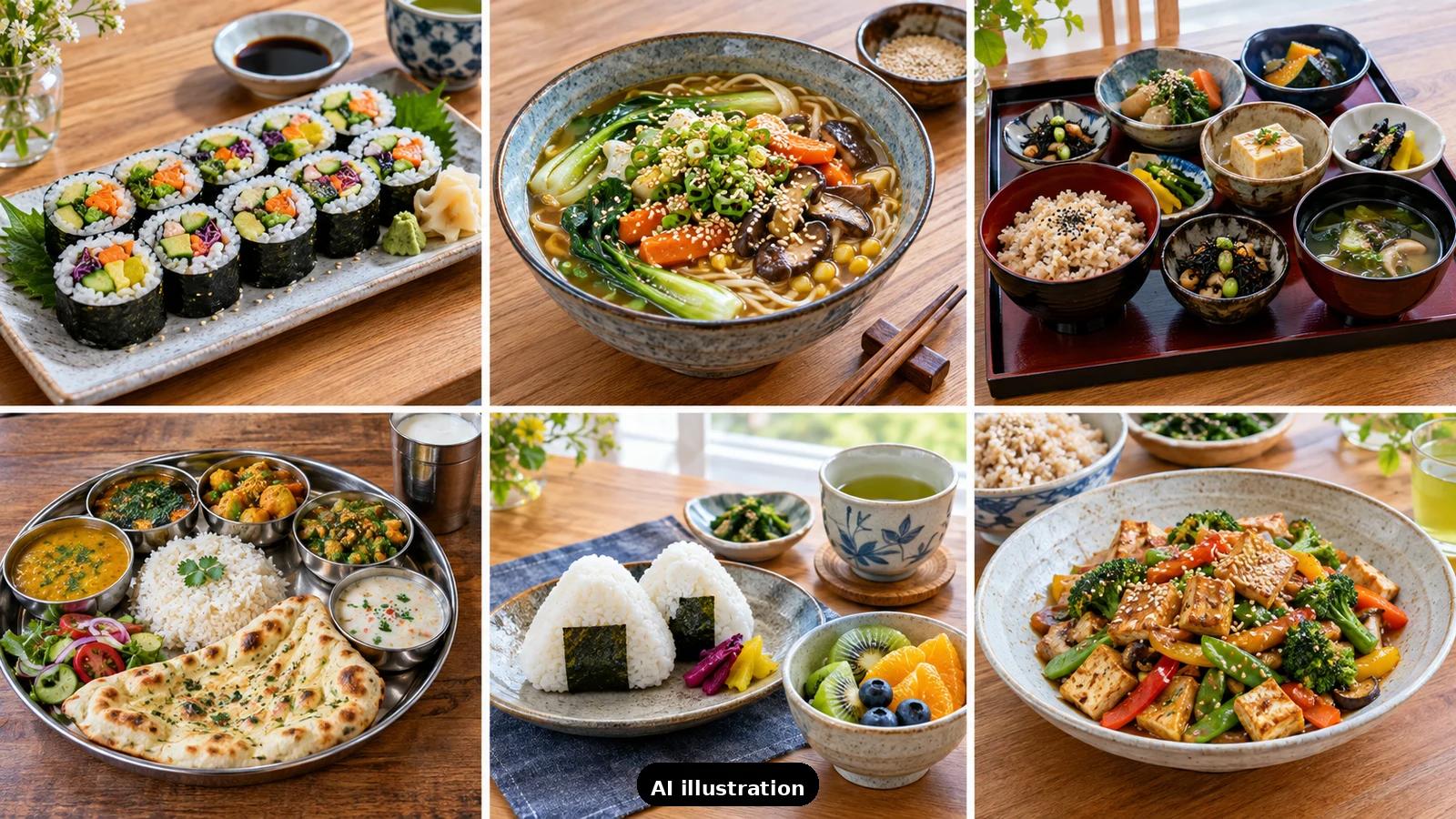
The classic first Japan trip for an Indian family is a week: three nights Tokyo, two Kyoto, two Osaka. The food question is always the same - can we actually eat well as vegetarians for seven straight days? Yes, and comfortably, if the week is planned rather than improvised. Here is the realistic meal plan we would give our own families, built city by city, with an Indian-meal cadence that keeps everyone happy and a fallback for every day.
The rhythm that works. Two principles drive the whole week. First, breakfast comes from the hotel buffet (the safe spread: rice, breads, fruit, yogurt, salad) or a konbini run - never hunt for breakfast restaurants. Second, plan one proper sit-down vegetarian meal a day, and let the other meal be flexible: konbini, a bakery, or a snack trail. Children and elders both do better with this rhythm than with three restaurant hunts a day.
Days 1-3, Tokyo. Day 1 arrival: dinner at an Indian restaurant near your hotel - the Shinjuku cluster (Mumbai in the Sumitomo Building, Masala Dining and neighbours) is the reliable start, and nobody argues with dal-naan after a long flight. Day 2 sightseeing: lunch is vegan ramen at T's TanTan inside Tokyo Station - bookending a station visit you will make anyway - and dinner at an Indian or Asian veg-friendly place near Asakusa if you end the day there, such as Ganga toward Asakusabashi. Day 3: a conveyor-belt sushi lunch (cucumber rolls, pickled-vegetable rolls, natto if brave, edamame), a convenience-store snack restock, and dinner wherever the day ends - Tokyo has enough marked-vegetarian menus now that a Google Maps check plus a dietary card covers most neighbourhoods.
Days 4-5, Kyoto. Day 4: arrive, drop bags, and lunch near Kyoto Station - Soniya on the Hachijo side is the closest solid Indian meal to the station. Dinner is the week's highlight: shojin ryori, Buddhist temple cuisine, at a temple restaurant - the one meal that is both fully plant-based and a cultural experience in itself. Day 5: if it is not a Thursday, Vegetarian Indian Restaurant Shama (fully veg Indian, closed Thursdays) fits beautifully around a Higashiyama day; if it is Thursday, swap in VOG Kyoto - which explicitly caters to Jain diners, with a call ahead - or return to the station area.
Days 6-7, Osaka. Day 6: a Namba evening - vegan okonomiyaki at Vim (check its closed days, it has kept Thursdays and Fridays off) or the vegetarian menu at OKO or CHIBO in Dotonbori, then the canal walk for the neon. Day 7: a relaxed lunch - Paprika Shokudo Vegan or the vegetarian Chinese spot near Nipponbashi - and a final family dinner back at a favourite, or a brave second round of vegan ramen at Gyumon on Dotonbori if it became the kids' favourite.
The every-day fallback. Any day can be rescued by the konbini: label-check a few safe items on day one (plain onigiri, edamame, fruit cups, yogurt, nuts), keep them in the day bag, and no schedule slip becomes a hunger crisis. Sealed ready-to-eat packets from India, reheated via the lobby microwave or kettle-bath, cover the rainy evening nobody wants to go out in.
For Jain families. The plan holds with two adjustments: call ahead everywhere (no-onion-no-garlic is an unusual request and kitchens need notice), and lean harder on the fully vegetarian kitchens - Shama, VOG, temple cuisine - where the conversation is shortest. Carry the Japanese dietary card that lists every restriction, and show it before sitting down, not after ordering.
How TripKeeper helps. This is more or less the week our founder-hosted Japan departures run: the tour leader books the vegetarian tables before the group lands, keeps dietary cards for every traveller, and adjusts the plan when a child just wants pasta. Our team handles the hotels, transfers and airport assistance around it. Want this week without the planning? Send a "Plan your trip" inquiry and we will build it around your dates and your family's exact food rules.

A Miranda House graduate and lawyer who traded courtrooms for slow travel. Cheshta travels with the batches we host ourselves, with a soft spot for travelling alongside elders.
Planning your next trip?
We'll handle insurance, hotels, airport assistance and the itinerary — the same way we do it for every trip.
Questions on this article
asked by readers, answered by us
Was this helpful?
one tap, no sign-up
