




The Trip Keeper The Trip Keeper
three doors, pick the one that fits your family How do you want to travel?
Cheshta Agarwal, founder and host of The Trip Keeper, smiling on a green country road
Hosted by Cheshta

Founder-Hosted Group Tour

the trips where Cheshta travels with you

Our own exclusive group trips. Cheshta is on the trip, from the first flight to the last dinner.

  • Cheshta travels with the group
  • One clear price, inclusions listed
  • Meet your travel family
Next up: Vietnam, 17 DecView →
See founder trips →
A fixed-departure batch on tour

fixed dates, fixed flights

Join a batch of fellow travellers on set dates. Limited seats, flights included, with options. Our team doesn't travel on these.

  • Fixed dates and flights
  • Limited seats per batch
  • Flight options available
See departures →
A private family trip

Private Tour

your dates

just your family, nobody else

Trips planned around your family, your pace and your dates. Milestone birthdays and anniversaries.

  • Travel on your own dates
  • Route shaped around you
Ask for a quote →
← Journal ☏
Food & Dining 3 min read

Hot Water, Microwaves and Hotel Breakfasts: Japan Food Hacks for Indians

The room kettle, the konbini microwave, the lobby's shared oven and the hotel breakfast buffet - four small machines and habits that turn Japan into an easy country for Indian eaters, vegetarian or not.

share WhatsApp Facebook X
Text size
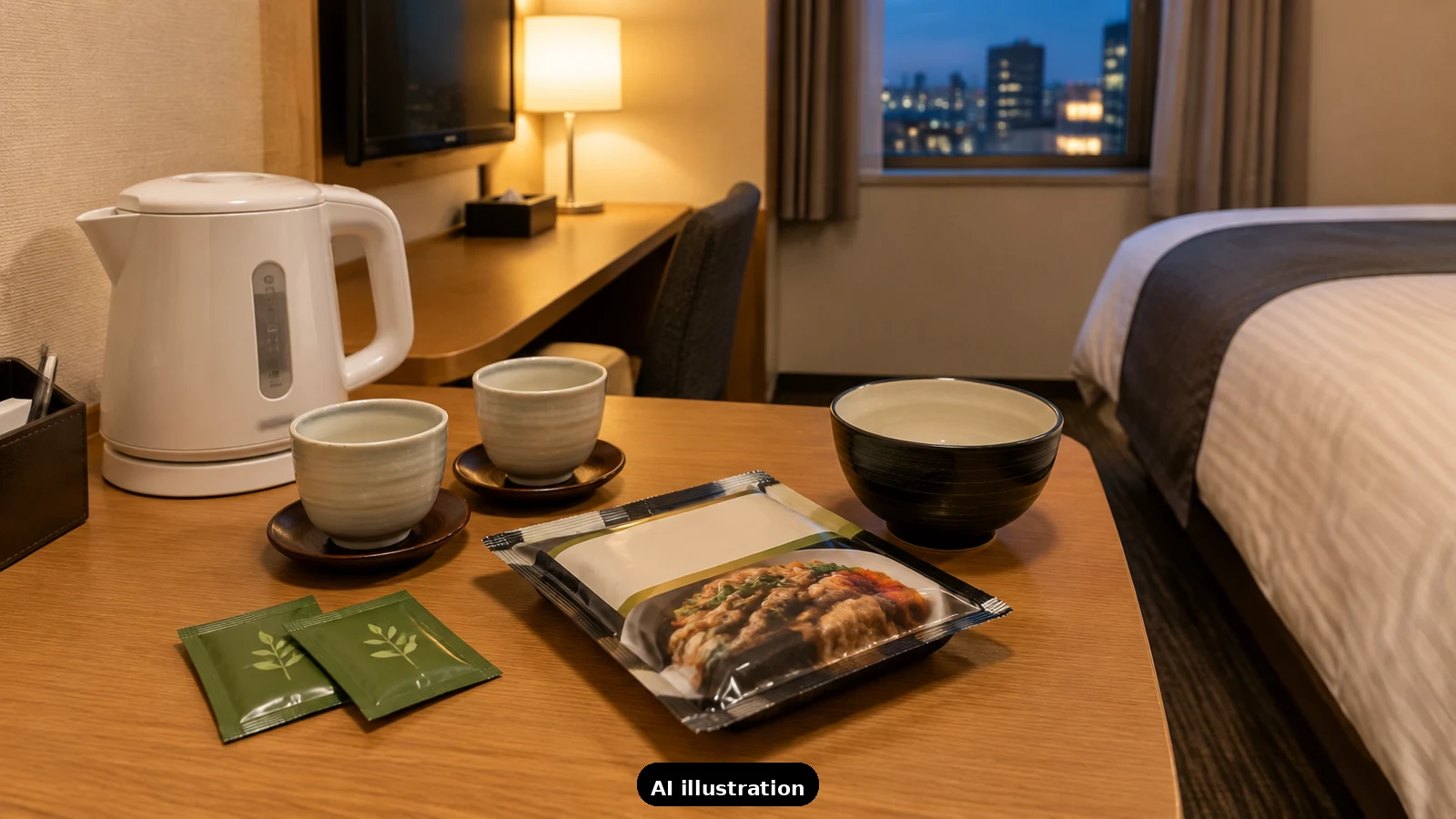
Electric kettle, tea cups and a sealed ready-to-eat packet on a Japanese hotel room desk
Send to Mummy-Papa Opens WhatsApp with a short summary — pick who to send it to.

The difference between an Indian traveller who struggles with food in Japan and one who eats happily is rarely about finding restaurants. It is about four small habits: the kettle in the room, the microwave at the convenience store, the shared oven in the hotel lobby, and the breakfast buffet done right. Master these and Japan stops being a food problem - vegetarian or otherwise.

Hack 1: the room kettle is your kitchen. Nearly every Japanese hotel room, from business chains to ryokan, comes with an electric kettle, cups and tea sachets. That one appliance runs your mornings and late nights: boil water for your ready-to-eat poha or upma cups, instant miso-style soups you have verified, chai you carry from home, Maggi-style noodles you have checked for a vegetarian variant, and simply hot drinking water, which Japanese tap water makes safe everywhere. Rinse the kettle once before first use and you are set for the trip.

Hack 2: konbini will heat almost anything you buy there. This is the habit Indians use least and should use most. When you buy a bento, onigiri or any microwaveable item at 7-Eleven, Lawson or FamilyMart, the staff will offer to heat it - or you can simply point and ask. Hot food, no restaurant, any hour. Some larger stores also keep hot-water dispensers for cup noodles, which doubles as free boiling water for your own verified cup meals. The rule is simple: heating is for items bought at that store, so shop first, then ask.

Hack 3: find the hotel's shared microwave. Japanese hotels rarely put microwaves in rooms - fire-safety and housekeeping rules keep them out - but many business-hotel chains (APA, Super Hotel and similar) keep one shared unit near the lobby, restaurant or lift lobby. Ask at check-in: "maiku-ro wa doko desu ka" or just "microwave?" with a questioning face works. Dinner time can mean a short queue, so reheat your sealed Indian ready-to-eat dinner a little early or a little late. This one machine is why carrying sealed RTE packets from India (per the quarantine rules we covered in our food-packing guide) works so well in Japan.

Hack 4: the breakfast buffet, worked properly. Most mid-range and better hotels serve a Japanese-and-Western buffet. The vegetarian's map of it: plain rice, breads, jam, fruit, yogurt, salads (check dressings), cereals, juices, coffee and often eggs for those who eat them. The caution list: miso soup (dashi), most simmered dishes (dashi), and anything in a sauce you cannot identify. Eat the safe spread generously - it carries you through a temple morning - and skip gambling on the rest. Some newer hotels advertise vegetarian-friendly stations; worth a question at check-in.

Etiquette that keeps you welcome. Japanese hotels and konbini extend these conveniences quietly, and they stay pleasant as long as guests are tidy: wipe the shared microwave if you spill, do not heat strong-smelling fish or meat curries in a crowded lobby at rush hour, return trays, and keep your in-room cooking to boiling-water jobs rather than anything that smokes. A little consideration here buys a lot of goodwill.

How TripKeeper helps. On our founder-hosted Japan departures, the hotels on your route are already chosen with these habits in mind - kettles in rooms, known lobby microwaves, breakfast spreads our team has walked through - and the tour leader points each one out on arrival day. Our crew also handles the airport transfers and check-ins, so day one is easy. Planning your own dates? A "Plan your trip" inquiry gets you a hotel plan built around how Indian families actually eat.

Send to Mummy-Papa Opens WhatsApp with a short summary — pick who to send it to.
Cheshta Agarwal
Founder · Travel Creator · Lawyer

A Miranda House graduate and lawyer who traded courtrooms for slow travel. Cheshta travels with the batches we host ourselves, with a soft spot for travelling alongside elders.

or let us do all of it

Planning your next trip?

We'll handle insurance, hotels, airport assistance and the itinerary — the same way we do it for every trip.

Questions on this article

asked by readers, answered by us

Do Japanese hotel rooms have a kettle?

Yes, nearly all of them. Japanese hotel rooms - business chains, mid-range hotels and ryokan alike - almost always include an electric kettle with cups and tea sachets. It is enough for hot water, tea, and boiling water for ready-to-eat cup meals you have brought or bought. Rinse it once before first use.

Will a Japanese convenience store heat food for me?

Yes. When you buy a bento or other microwaveable item at 7-Eleven, Lawson or FamilyMart, staff routinely offer to heat it, and you can ask by pointing. Heating applies to items bought at that store. Larger stores also have hot-water dispensers for cup noodles, which provide free boiling water for your own cup meals.

Why is there no microwave in my Japanese hotel room?

Fire-safety rules, electrical-load limits and housekeeping concerns keep microwaves out of most Japanese hotel rooms. Many business-hotel chains instead keep a shared microwave in the lobby or near the restaurant - ask the front desk at check-in. It can get busy at dinner time, so reheat early or late.

What can vegetarians eat at a Japanese hotel breakfast buffet?

The safe spread: plain rice, breads, jam, fruit, yogurt, salads (check dressings), cereals, juices and coffee - plus eggs if you eat them. Be careful with miso soup and simmered dishes, which usually contain dashi (fish stock), and with any unidentified sauce. Eat the reliable items well and it comfortably carries you through a morning of sightseeing.

Can I reheat Indian ready-to-eat packets in Japan?

Yes. Use the hotel's shared lobby microwave or the kettle-bath method (place the sealed pouch in a bowl of boiled water for a few minutes). Sealed vegetarian RTE packets that comply with Japan's quarantine rules travel well, and reheating them in your hotel covers late nights and rainy evenings when you do not want to go out.

Is Japanese tap water safe to drink and boil?

Yes, Japanese tap water is safe to drink throughout the country, so your hotel kettle gives you safe boiling water for tea, cup meals and baby food. Many Indian travellers still prefer bottled water for taste in some cities, but there is no health reason to avoid tap water in Japan.

Was this helpful?

one tap, no sign-up

Trips this applies to

Read next

← Journal See our trips