Chiang Rai is quietly good for vegetarians
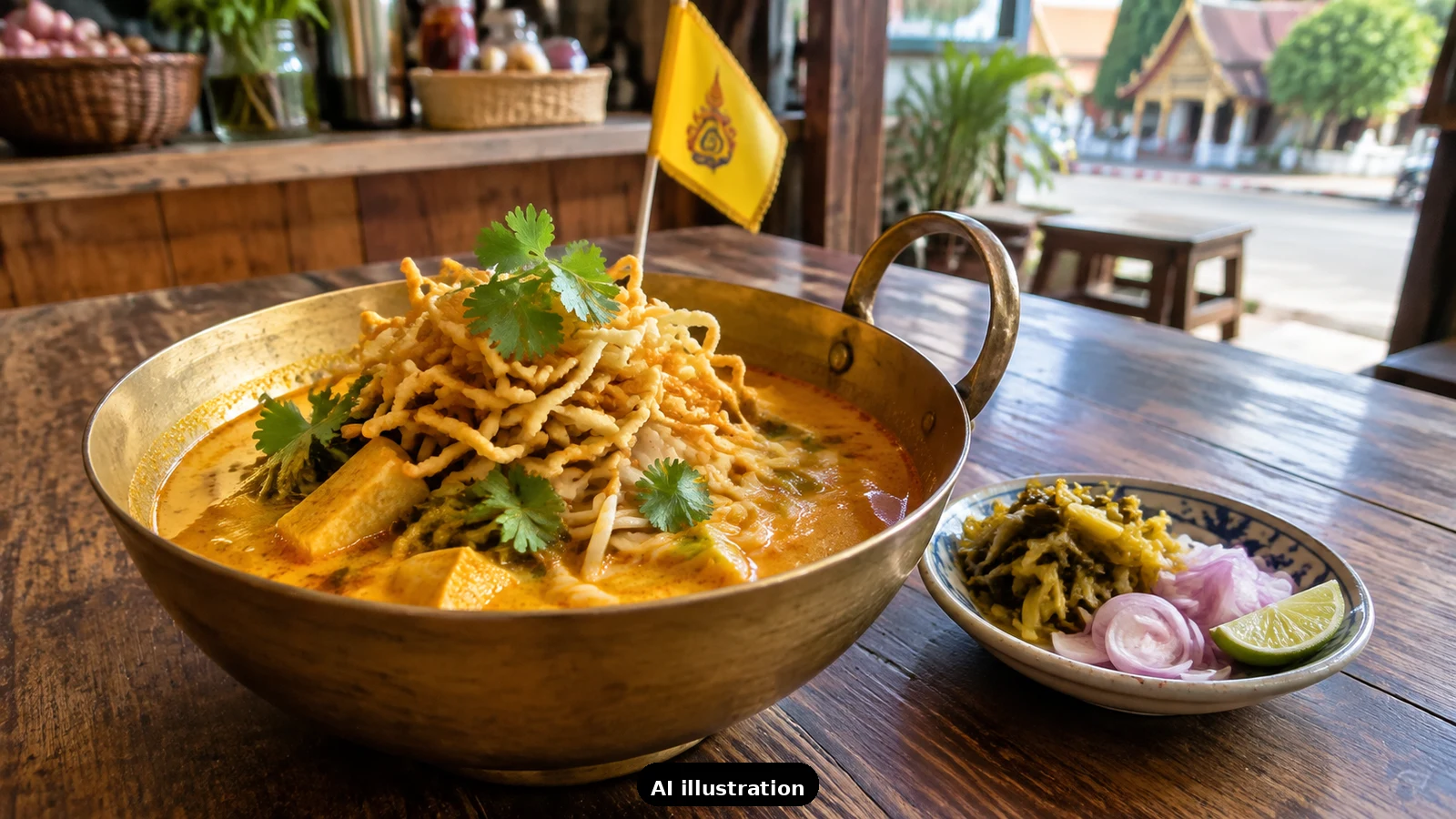
Chiang Rai's food scene is smaller than Chiang Mai's, but the same Northern Thai kitchen rules apply - and the same rescue system exists: jay (เจ), the Chinese-Thai vegan tradition whose yellow flags mark eateries that cook no meat, no fish sauce, no shrimp paste and no egg. Between the jay shops, the municipal market and a few ordering habits, vegetarians eat well here. The work is knowing which Northern dishes are safe by design and which hide fish or pork.
The dishes to look for
- Vegetarian khao soi: the golden coconut-curry noodle bowl is Chiang Rai's signature - its version runs slightly less sweet than Chiang Mai's, with cleaner spice. Veg versions exist at jay shops and veg-friendly cafes; the default is egg noodles, so strict vegetarians and vegans should ask for rice noodles or confirm.
- Kanom jeen nam ngiao (veg version): rice noodles with a tomato-based northern curry - at jay shops it comes without the usual pork and dried shrimp.
- Som tam (green papaya salad): order it 'jay' or without fish sauce and dried shrimp - the default dressing uses both.
- Sticky rice with grilled mushrooms, grilled banana, and market fruit: Chiang Rai province's glutinous rice is famously good, and the market grills make a full vegetarian breakfast.
- Khao niao mamuang (mango sticky rice): March to May the local mangoes are exceptional - a safe default dessert everywhere.
- Nam prik ong (veg version): a tomato-mince dip normally made with pork - jay kitchens make a tofu-mushroom version with raw vegetables.
The traps, named
- Fish sauce (nam pla): the default seasoning in nearly every Thai kitchen, including 'vegetable' stir-fries and papaya salad. Ask for it to be left out every time.
- Shrimp paste (kapi): inside most curry pastes and nam prik dips - even a 'vegetable curry' can be built on a shrimp-paste base. Jay shops are the reliable fix.
- Oyster sauce: standard in stir-fried vegetables at mixed restaurants.
- Sai ua and larb: the famous Northern herb sausage and minced-meat salad are pork dishes - they appear beside vegetable dishes on market stalls and share grills and woks.
- Egg noodles: khao soi's default noodle contains egg - vegans should specify.
Phrases that do the work
- "Gin jay" - I eat vegan/strict vegetarian (the magic phrase; it switches the whole kitchen logic).
- "Mai sai nam pla" - no fish sauce.
- "Mai sai kapi" - no shrimp paste.
- "Mai sai kai" - no egg.
- "Mai sai neua sat" - no meat.
These are language guidance, not certified quotes - speak slowly and confirm with a smile. At a yellow-flag jay shop you need none of them.
Where the eating is easiest
- Jay eateries: look for the yellow เจ flag, usually near temples and the older market streets - buffet-style trays at lunch, gone by mid-afternoon.
- The municipal market (morning): grilled mushrooms, sticky rice, fruit, fresh soy milk - a vegetarian breakfast circuit.
- Night Bazaar area: mixed tourist stalls - workable if you use the phrases, with fruit, roti and juice stalls as fallbacks.
For Jain travellers
Jay food is vegan but not onion-garlic free - in fact the jay tradition often uses both. Ask "mai sai hom, mai sai krathiam" (no onion, no garlic) and lean on plain sticky rice, grilled mushrooms, fruit and plain rice-noodle soups where you can see the pot.

A Miranda House graduate and lawyer who traded courtrooms for slow travel. Cheshta travels with the batches we host ourselves, with a soft spot for travelling alongside elders.
Planning your next trip?
We'll handle insurance, hotels, airport assistance and the itinerary — the same way we do it for every trip.
Questions on this article
asked by readers, answered by us
Was this helpful?
one tap, no sign-up