




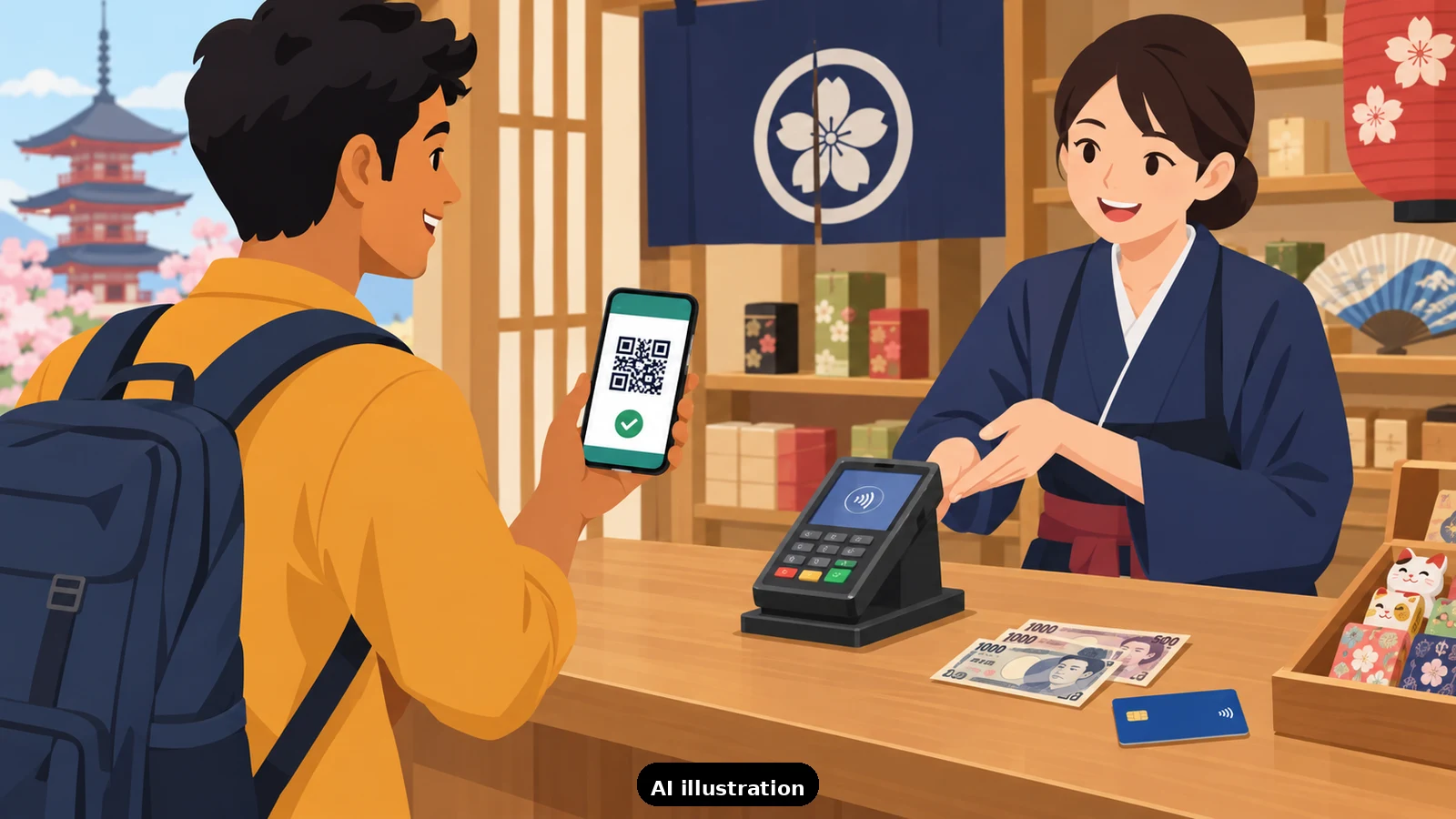
Short answer: not yet, at least not in any way you can rely on. UPI is on its way to Japan - NPCI International and NTT DATA signed an MoU in October 2025 to enable UPI acceptance at Japanese merchants, with a trial rollout expected to follow - but a trial is not a payment network. If you are travelling in the coming season, plan as if UPI does not exist in Japan, and treat any UPI QR you happen to spot as a pleasant bonus rather than a plan.
Why UPI will not replace your wallet this trip. UPI works in India because every merchant, from a metro station to a chai stall, is on one interoperable QR standard. Japan has no equivalent for Indian bank accounts. The NTT DATA partnership aims to place UPI acceptance at tourist-facing merchants, but even when trials go live, coverage will start at selected stores, not at ramen counters, temple stalls, ticket machines or rural buses. Building a money plan around a trial would leave you stranded at exactly the places that make Japan fun.
What actually works, in order of usefulness. First, a zero-forex or low-markup international debit or credit card on the Visa or Mastercard network: accepted at hotels, department stores, convenience stores and most restaurants in cities. Second, yen cash from Seven Bank or Japan Post Bank ATMs: still essential for small eateries, shrines, markets and anywhere outside the big cities. Third, an IC transit card - Suica or PASMO, physical or in Apple Wallet - which doubles as a tap-to-pay wallet at konbini, vending machines, station shops and many taxis. Between these three, you can pay for roughly everything on a typical itinerary.
Where Indian travellers get caught out. Assuming "Japan is high-tech, so QR will work" is the classic mistake. Japan's own QR services - PayPay and friends - are built for Japanese bank accounts and do not accept UPI handles from India. Likewise, do not count on card acceptance at ticket machines for some private railways, older attractions and many family-run restaurants; this is why the cash layer is non-negotiable rather than old-fashioned. A sensible split for most trips: card for hotels and big spends, IC card for daily taps, cash for everything small or rural.
Set up before you fly. Enable international usage on your cards, load Suica into Apple Wallet if you carry an iPhone, and buy a modest starter pack of yen in India for day one. Keep UPI apps installed for their real job: paying people back home, and scanning any UPI trial QR you genuinely find at a participating store once the rollout reaches you.
The TripKeeper angle. On our founder-hosted Japan departures, payment setup is part of the pre-departure briefing - which cards the group should carry, how much cash each family should hold, and how the tour leader handles situations where a place is cash-only. If you are travelling independently, the "Plan your trip" inquiry gets you the same checklist tuned to your route, and our support team is a message away if a payment issue crops up mid-trip.

A Miranda House graduate and lawyer who traded courtrooms for slow travel. Cheshta travels with the batches we host ourselves, with a soft spot for travelling alongside elders.
Planning your next trip?
We'll handle insurance, hotels, airport assistance and the itinerary — the same way we do it for every trip.
Questions on this article
asked by readers, answered by us
Was this helpful?
one tap, no sign-up