




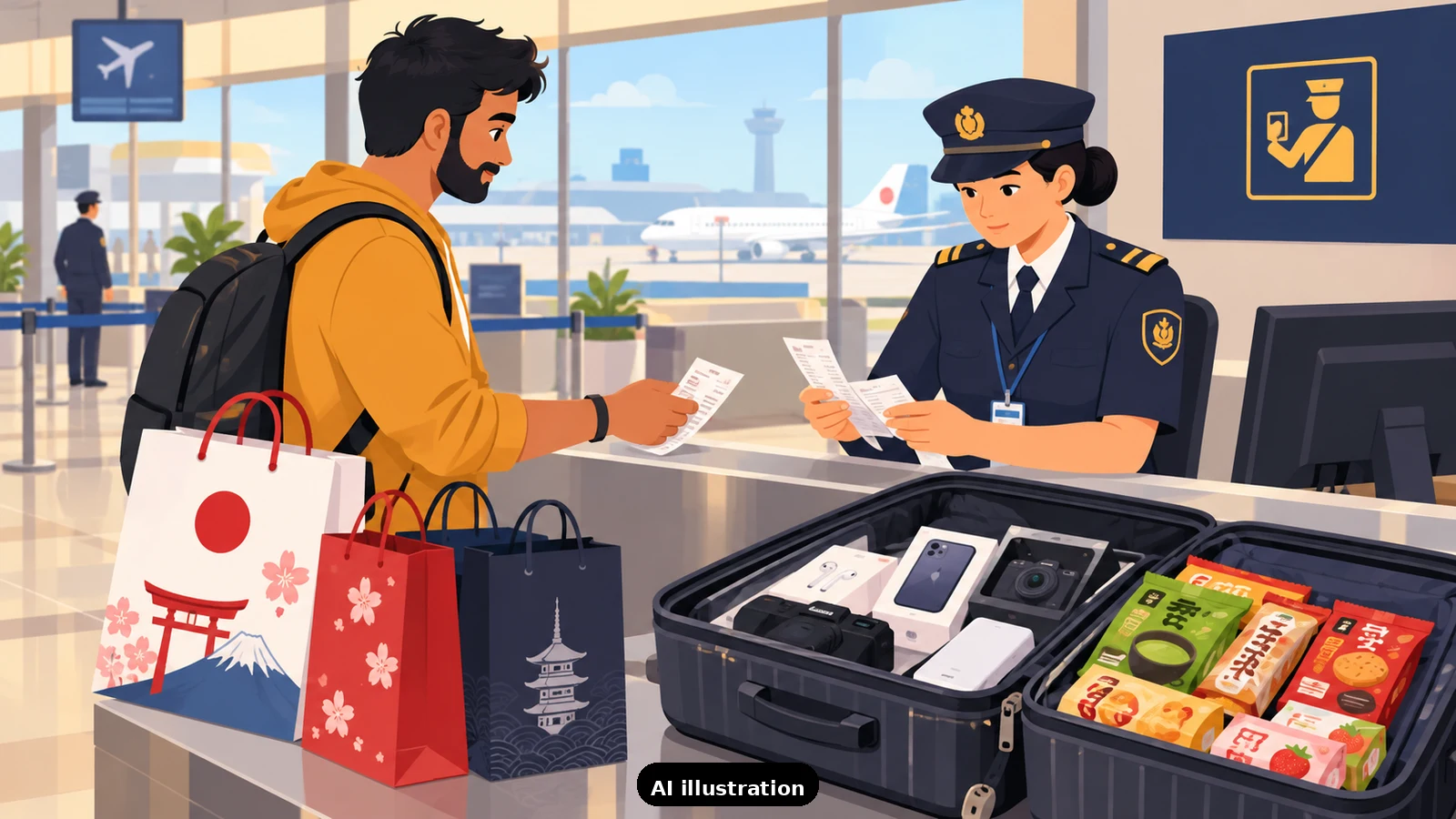
Half the fun of Japan is the shopping - Uniqlo basics, drugstore skincare, KitKat flavours, knives, cameras, whisky. The un-fun part is wondering what Indian customs will say when you land. The answer changed recently in travellers' favour: under the Baggage Rules 2026, notified by the Central Government, the general duty-free allowance for Indian residents returning from abroad is now 75,000 rupees, up from the older 50,000 figure many guides still quote. Here is how to use that allowance properly.
What the allowance covers. The 75,000 rupee general free allowance applies to Indian residents (and tourists of Indian origin) arriving by air, covering goods carried for personal use or as gifts - souvenirs, clothes, cosmetics, snacks, electronics and the like. Used personal effects you took with you - your own phone, camera, watch - do not count toward it. Two notable additions in the 2026 rules: one laptop per passenger above 18 years can now be brought duty-free over and above the general allowance, and passengers arriving by land borders get no general allowance at all.
How customs values your shopping. The allowance is counted on the purchase value of what you bought abroad, in rupees. Keep your Japanese receipts together in one pouch - they are your evidence of value, and Japanese stores are meticulous about issuing them. For tax-free purchases in Japan, the receipt value is still the purchase price you paid. If receipts are missing, customs officers assess value themselves, and their assessments are rarely generous to the traveller. A running total on your phone while you shop keeps you honest about where you stand against the limit.
Over the limit: what happens. Goods beyond the allowance are charged customs duty on the excess value - CBIC guidance puts the rate at about 38.5% (basic customs duty plus social welfare surcharge). That is still often cheaper than buying the same gadget in India, but it is not free, and it requires the red channel. Which brings up the honest-traveller rule: India runs a two-channel system - green for nothing to declare, red for dutiable goods. If you are over the allowance, walk the red channel and declare; penalties for being caught in green with dutiable goods cost far more than the duty.
Things people get wrong. The allowance is per passenger, not per family - a couple has two allowances, but goods must genuinely belong to each traveller. Alcohol and tobacco have separate quantity caps outside the general allowance. Gold jewellery has its own special rules (weight-based allowances apply to returning residents after more than a year abroad, not to ordinary tourists). And "I bought it tax-free in Japan" has zero bearing on Indian customs - Japan's tax exemption and India's import duty are two unrelated systems that both apply to the same suitcase.
A calm arrival routine. Add up your receipts on the flight home. Split family purchases across travellers sensibly while packing. Keep receipts accessible, not buried. If you are under 75,000 per person with no restricted items, walk green without worry. If you are over, declare at red, pay the duty, keep the challan - and enjoy the knife.
How TripKeeper helps. On our founder-hosted Japan departures, the team briefs the group on both ends of the shopping story - Japan's tax-free counters and India's customs allowance - and keeps an updated allowance note in the pre-departure pack, because these rules do change. Travelling independently? The "Plan your trip" inquiry gets you the same current guidance, so the only surprise on arrival is how much you saved.

A Miranda House graduate and lawyer who traded courtrooms for slow travel. Cheshta travels with the batches we host ourselves, with a soft spot for travelling alongside elders.
Planning your next trip?
We'll handle insurance, hotels, airport assistance and the itinerary — the same way we do it for every trip.
Questions on this article
asked by readers, answered by us
Was this helpful?
one tap, no sign-up