




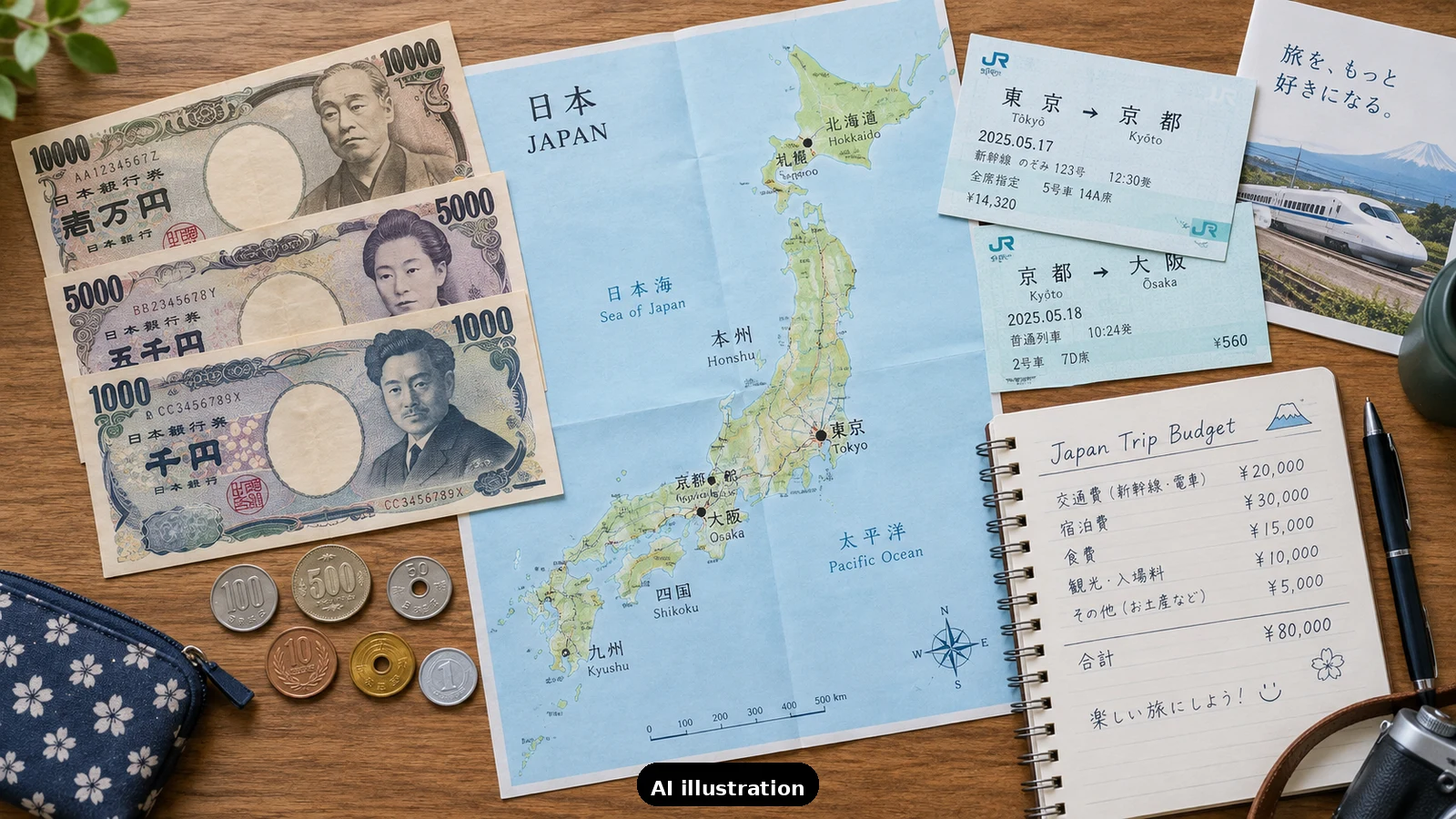
Japan has a reputation for expense it no longer fully deserves. With the yen where it is (roughly ¥150 to the US dollar as we write this in November 2026 - check the rate before you budget), a couple can travel Japan comfortably for less than Europe, or lavishly for less than the Maldives. Here are three realistic daily budgets for two people traveling together, with every assumption spelled out. All figures are per day, per couple, excluding international flights.
Assumptions first. These numbers assume the classic route (Tokyo, Kyoto, Osaka with a side trip or two), one room shared by two, and long-distance rail costs averaged across the trip rather than hit on one day. They swing with the seasons: cherry-blossom and autumn-color weeks can add 30-50% to the lodging line, and January (outside New Year) can subtract almost as much. Treat them as planning anchors, not quotes.
Budget: ¥18,000-25,000 a day (about $120-165). Lodging ¥9,000-13,000: a private double in a guesthouse, a clean business hotel off-peak, or a well-reviewed hostel's private room. Food ¥5,000-7,000: convenience-store breakfasts (onigiri, sandwiches, coffee - genuinely good), a ramen or gyoza lunch, an izakaya or set-meal dinner. Transport ¥1,500-2,500: metro day passes and IC-card fares, one shinkansen leg amortized. Sights ¥1,500-2,500: most temples cost ¥300-600, many shrines are free, and the best views (Fushimi Inari at dawn) cost nothing. This level is not suffering; it is how much of Japan lives.
Mid-range: ¥35,000-50,000 a day (about $230-330). Lodging ¥18,000-28,000: a solid 3-4 star hotel near a major station, the occasional boutique stay. Food ¥10,000-14,000: proper breakfasts, a nice lunch, dinner with drinks - a sushi lunch set here, a wagyu dinner there. Transport ¥2,500-4,000: reserved shinkansen seats, a taxi when it earns its fare, a limousine bus from the airport. Sights ¥3,000-6,000: paid gardens, a museum, an observation deck, the odd tea ceremony or guided walk. Add one ryokan night (¥30,000-50,000 with dinner and breakfast for two) inside a two-week trip and the daily average still holds. This is the level where Japan feels effortless without feeling extravagant.
Premium: ¥80,000-150,000+ a day (about $530-1,000+). Lodging ¥45,000-90,000: five-star city hotels and destination ryokan with private open-air baths. Food ¥20,000-40,000: kaiseki counters, high-end sushi, chef's-choice wagyu - note that Japan's best lunches are often half the price of the same kitchen's dinner. Transport ¥8,000-15,000: Green Car seats, private airport transfers, taxis at will. Experiences ¥10,000-25,000: private guides, geisha-district dinners, premium tea houses. The ceiling is genuinely high - Tokyo has some of the world's great hotels - but the floor of this bracket already buys a remarkable trip.
Where the money actually goes. Across all three levels the split is stable: lodging eats 45-55% of the daily total, food 25-30%, transport 10-15%, sights and shopping the rest. That is why the single most powerful budget lever is not skipping meals - it is choosing travel dates. Shifting a trip from peak sakura to late January or June can cut the lodging line nearly in half while the food, trains and temples cost exactly the same.
The costs people forget. Pocket Wi-Fi or an eSIM (¥300-800 a day). Luggage forwarding between cities (¥2,000-3,000 per bag, worth every yen). Travel insurance. The ¥1,000-per-person-per-night accommodation tax in some cities. And the 'convenience tax' of tiredness: the taxi you take because the station maze won, the meal near the hotel because your feet quit. Budget a 10% slack line and you will come home on plan.
How TripKeeper prices its trips. When our team builds an itinerary, the budget conversation starts with these same levers: travel dates before hotel class, one ryokan night placed where it matters most, reserved seats only on the legs where they pay off. Founder-hosted batches get a fixed, transparent per-person price with hotels, transfers and the itinerary handled; the trip-planning inquiry gives independent travelers the same cost engineering on their own dates - real numbers, no padding, no surprises on the ground.

A Miranda House graduate and lawyer who traded courtrooms for slow travel. Cheshta travels with the batches we host ourselves, with a soft spot for travelling alongside elders.
Planning your next trip?
We'll handle insurance, hotels, airport assistance and the itinerary — the same way we do it for every trip.
Questions on this article
asked by readers, answered by us
Was this helpful?
one tap, no sign-up
