




The old advice - "Japan is a cash country, bring piles of yen" - is a decade out of date. Card acceptance has spread to convenience stores, taxis, supermarkets and most restaurants, and your American cards work at the ATMs that matter. But the picture has texture: which card network you carry changes your experience, Apple Pay needs one setup decision before you board, and there is one checkout question that quietly costs travelers 3-7% if answered wrong.
Visa and Mastercard: no anxiety needed. These two are accepted essentially everywhere cards are taken in Japan - hotels, department stores, chain restaurants, convenience stores, train booking counters. Seven-Eleven Japan's own payment page lists Visa, Mastercard, JCB, American Express, Diners Club, Discover and UnionPay, and that is typical of the konbini chains. If your wallet is Visa/MC only, you will barely notice you are abroad.
American Express: better than its reputation, not universal. Amex has spent years widening acceptance in Japan and is now taken at convenience stores like 7-Eleven and Lawson, supermarkets, fast food chains, most hotels and department stores. Where it still bounces: smaller independent restaurants, some regional shops, ticket machines, and the occasional taxi. Carry it for the rewards if you like, but keep a Visa or Mastercard as the daily driver.
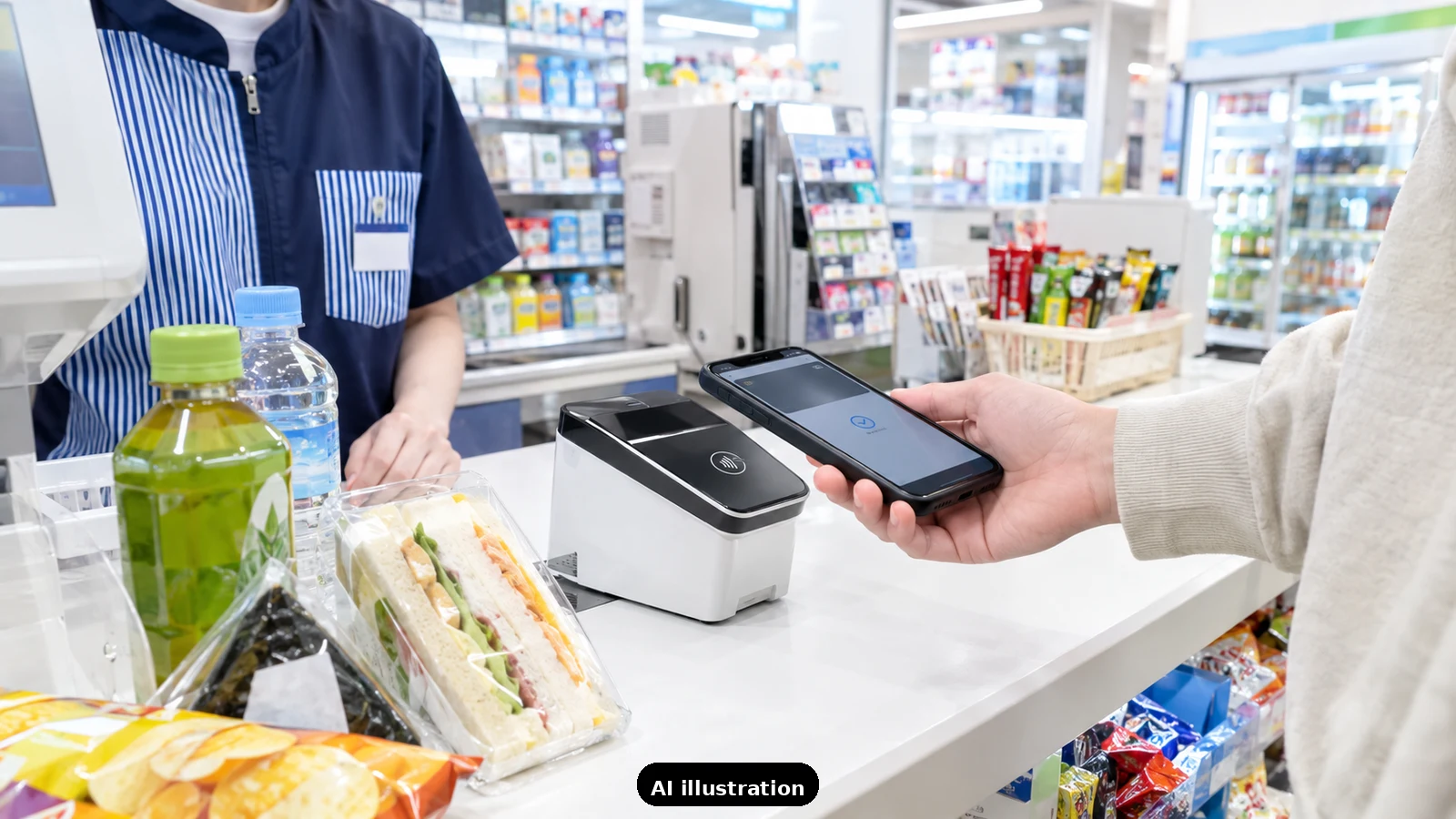
Apple Pay: the one setup step that changes everything. US-issued cards in Apple Pay work at Japanese terminals showing the Apple Pay or EMV contactless mark - and at Seven-Eleven, Apple Pay and Google Pay are explicitly supported. The power move, though, is adding a Suica card directly in Apple Wallet before you fly: tap-to-ride on every train and bus, plus tap-to-pay at konbini, vending machines, lockers and small shops that show the IC mark. Many places that take no foreign credit card at all take Suica. Load it in Apple Wallet from your US card and Japan becomes nearly frictionless.
ATMs: two names to remember. When you need cash - and you will, for market stalls, small eateries, temple offerings and some regional buses - go to a Seven Bank ATM (inside any 7-Eleven, open 24/7, English menus) or a Japan Post Bank ATM (post offices and stations). Both accept foreign-issued Visa, Mastercard, Amex and other major-network cards and dispense yen. Avoid random bank ATMs, which often reject foreign cards entirely.
The fee traps. Three of them. First, foreign transaction fees: if your card charges the typical 3%, use one that does not - several US travel cards waive it. Second, dynamic currency conversion: if a terminal or ATM offers to charge you in dollars, always choose yen - the DCC rate quietly skims several percent. Third, ATM operator fees: modest per withdrawal, so take out ¥20,000-40,000 at a time rather than ¥5,000 every day.
How much cash to actually carry. For a city-based trip, ¥10,000-20,000 in your wallet plus an ATM plan covers almost everything. Add more for rural stretches, festivals, or temple-heavy days where admission boxes are coin-fed. Coins accumulate fast - spend them at konbini self-registers, which happily eat change.
How TripKeeper takes this off your plate. On team-planned trips the big tickets - hotels, transfers, tours - are already settled before you fly, so your card and cash decisions shrink to meals, shopping and snacks. Your pre-departure notes spell out exactly which days are cash-light, and support is reachable mid-trip if a card ever gets declined abroad. That is the practical version of peace of mind: fewer moments where payment is a puzzle.

A Miranda House graduate and lawyer who traded courtrooms for slow travel. Cheshta travels with the batches we host ourselves, with a soft spot for travelling alongside elders.
Planning your next trip?
We'll handle insurance, hotels, airport assistance and the itinerary — the same way we do it for every trip.
Questions on this article
asked by readers, answered by us
Was this helpful?
one tap, no sign-up