




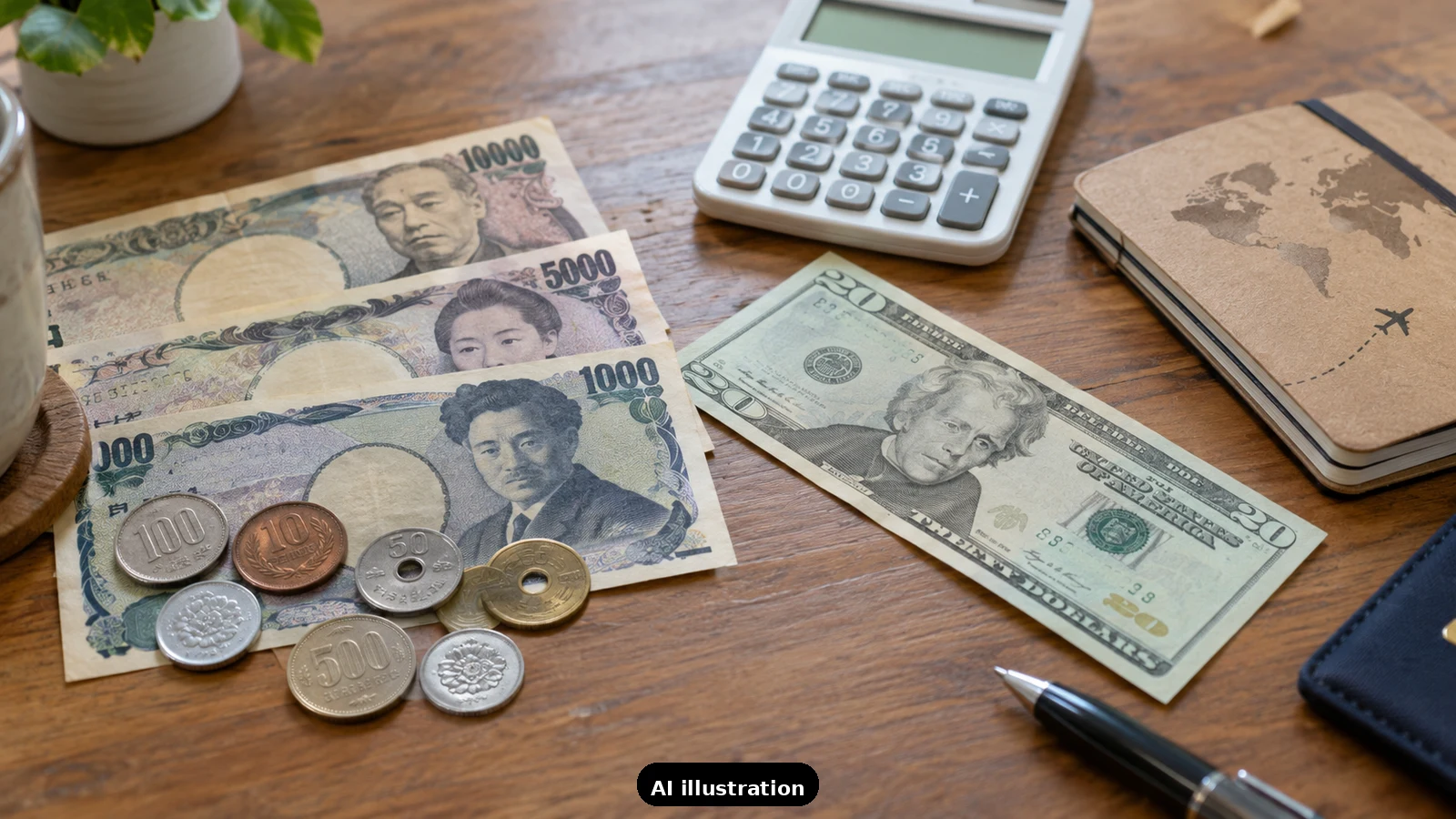
Every "how much does Japan cost" answer that gives you one number is hiding the split that matters: international airfare - which swings wildly with your home airport and dates - and what you spend on the ground, which is far more predictable. Keep them separate, budget each honestly, and the total takes care of itself. All yen figures below convert at about ¥158 to the dollar, the rate in late October 2026.
The on-ground number (13 nights). Current price checks put two weeks on the ground at roughly ¥155,000 ($980) per person on a backpacker budget, ¥350,000 (about $2,215) mid-range - a clean 3-star double shared, restaurant meals, paid attractions most days - and ¥710,000 (about $4,495) at the comfort level with four-star hotels and guided experiences. Mid-range travellers should sanity-check a band of ¥320,000-480,000 ($2,030-3,040) depending on hotel choices.
Where the mid-range money goes. Across 14 days, the breakdown runs roughly: accommodation ¥145,000 (half of a ¥18,000-32,000 double per night), food ¥98,000 (konbini breakfasts at ¥400-600, lunch sets ¥900-1,300, izakaya dinners ¥2,500-4,000), city transport on an IC card ¥17,000, intercity trains ¥38,000, attractions and a tour or two ¥28,000, and eSIM, taxes and sundries ¥24,000. Japan is that rare country where eating well is cheap; the line that decides your budget is where you sleep.
The intercity trap to avoid. A 14-day nationwide JR Pass now costs ¥80,000 - and on the classic Golden Route it rarely pays off. Tokyo-Kyoto by Nozomi is ¥14,170 reserved; add Kyoto-Hiroshima and the return and you are still barely past ¥45,000, just over half the pass price. Pay per trip unless your route is unusually rail-heavy.
Small costs that surprise Americans. Kyoto's lodging tax, raised in March 2026, runs ¥200-10,000 per person per night tiered by room rate (¥400 at typical mid-range rooms); Osaka adds ¥200-500. Budget ¥2,000-4,000 total. Attractions are gentle - most temples ¥400-1,000 - but headline tickets add up: teamLab Planets ¥3,800-5,800, Shibuya Sky ¥2,700-3,400.
Now the airfare. From the US West Coast, off-peak round-trips to Tokyo regularly price around $1,000-1,300; from New York or Chicago, $1,100-1,500 is a reasonable planning figure, with peak cherry-blossom and year-end dates pushing well above $2,000. ZIPAIR's bare fares from the West Coast can undercut everyone if you travel light - just price bags and meals before comparing.
The realistic totals. Put the halves together: budget trip, about $2,000-2,600 per person all-in; mid-range, $3,200-4,500; comfort, $5,500 and up. Couples sharing rooms land at the kinder end of each band; solo travellers pay the single-occupancy penalty on lodging, the biggest line.
Three ways to shrink it without shrinking the trip. Travel in the shoulder months (May, June, late January) when both fares and hotel rates dip. Split a double room - per-person lodging halves instantly. And eat the konbini-and-lunch-set pattern most days, saving the splurge for one omakase or wagyu dinner, which lands harder when it is the exception.
Where TripKeeper fits. Because the team books the hotels and sequences the itinerary for you, a "Plan your trip" inquiry comes back with real numbers for your dates rather than generic ranges - rooms at negotiated quality levels, trains ticketed per segment (no wasted rail passes), and airport assistance on both ends. You approve the budget before anything is booked.

A Miranda House graduate and lawyer who traded courtrooms for slow travel. Cheshta travels with the batches we host ourselves, with a soft spot for travelling alongside elders.
Planning your next trip?
We'll handle insurance, hotels, airport assistance and the itinerary — the same way we do it for every trip.
Questions on this article
asked by readers, answered by us
Was this helpful?
one tap, no sign-up