




Japan is more card-friendly than its cash-loving reputation suggests, but yen in hand still matters - small eateries, temple stalls, rural buses and the occasional ticket machine run on notes and coins. The real question is where your yen should come from, because the same rupees buy noticeably different amounts of yen depending on the route. There is no single right answer; there is a right split.
First, know the yardstick. Every exchange quote is measured against the mid-market rate - the live interbank rate you see on any currency converter. Nobody retails at that rate; everyone adds a margin. Your job is simply to keep the margin small. Before you buy anything, check the day's mid-market INR-JPY rate and compute the percentage difference on any quote you are offered. That one habit tells you more than any rule of thumb.
Buying yen in India: fine for a starter pack, not the whole trip. JPY is a less-stocked currency in India, so authorised dealers and online forex platforms often price it with wider margins than USD or EUR, and airport counters in India are consistently the worst of the lot. Still, landing with no local cash at all is uncomfortable, so a modest starter amount from India - enough for the first day or two of meals, trains and small spends - is sensible. Buy it a few days ahead from a dealer or platform whose quote you have compared against mid-market, not at the departure terminal.
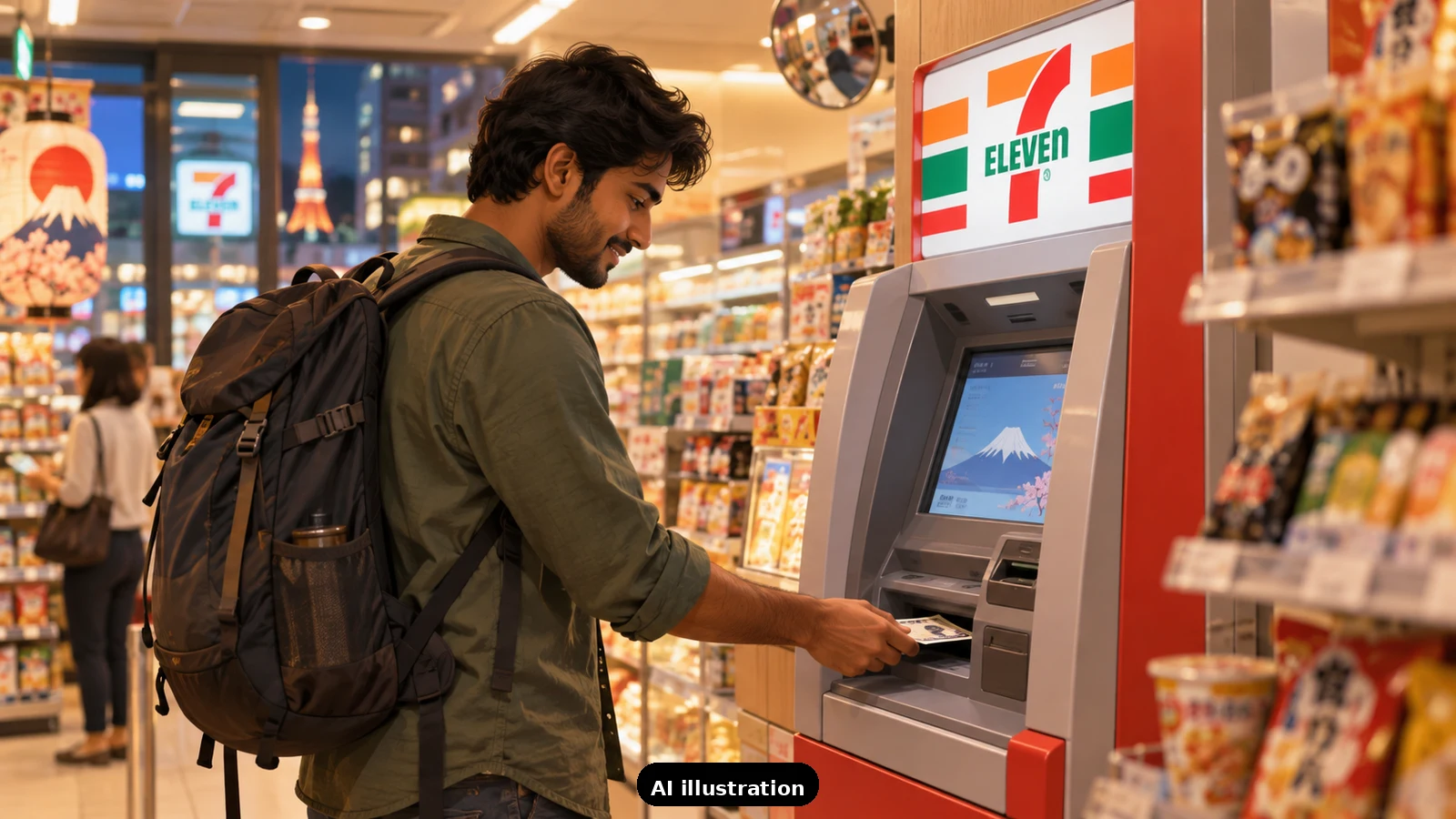
Withdrawing in Japan: usually the best rate you will get. Japan's convenience-store ATMs are the workhorse here. Seven Bank's ATMs - over 28,000 of them across Japan, in 7-Eleven stores and at Narita, Haneda and Kansai airports among others - accept overseas-issued Visa, Mastercard and other international cards and dispense yen around the clock, per the bank's own service pages. The catch is on your side of the card: your Indian bank's foreign-ATM withdrawal fee and its currency markup decide whether this route is a bargain or a drip of fees. Call your bank before flying: enable international usage, and ask exactly what each foreign withdrawal costs. A card with a fair markup makes Seven Bank ATMs your cheapest yen source; a card with a fixed per-withdrawal fee argues for fewer, larger withdrawals.
Forex cards: the controlled middle path. A prepaid forex card locks your rate on the day you load it, shields you from the rupee wobbling mid-trip, and works both at Japanese card terminals and at the same international ATMs. Check three things before buying one: whether the card actually supports JPY as a load currency, the cross-currency markup if it does not (spending yen from a USD-loaded card attracts a double conversion), and the ATM withdrawal fee schedule. Loaded correctly, a forex card plus a modest cash reserve covers almost everything.
Airport exchange in Japan: the acceptable last resort. If you land short of cash, the exchange counters at Narita, Haneda and Kansai will convert your rupees - or better, your leftover USD - at rates that are reasonable for airport counters, generally kinder than their Indian counterparts. Use them for what you need, not your whole budget.
How much cash do you actually need? For a typical city-based Japan trip with hotels and major spends on card, travellers commonly find a few thousand yen per person per day covers cash-only situations, with more for rural days. Carry the emergency reserve separately from daily cash, and spend coins actively - Japanese shops treat exact change kindly, and coins do not convert back.
TripKeeper plans include a simple money sheet for each family: how much yen to carry from India, which ATMs sit near your hotels, and which of your cards we have confirmed will work there - because the cheapest yen is the yen you never have to panic-buy at a counter. Share your dates on the plan-your-trip page and we will map the money side along with the route.

A Miranda House graduate and lawyer who traded courtrooms for slow travel. Cheshta travels with the batches we host ourselves, with a soft spot for travelling alongside elders.
Planning your next trip?
We'll handle insurance, hotels, airport assistance and the itinerary — the same way we do it for every trip.
Questions on this article
asked by readers, answered by us
Was this helpful?
one tap, no sign-up