




Two weeks changes the character of a Japan trip. The golden route stops being a checklist and becomes a spine, and you can hang three places off it that most first-timers never reach: Kanazawa, Takayama and Hiroshima. Each adds a texture the big three cities lack - a castle town that kept its geisha districts, a mountain town of sake breweries and morning markets, and a city that carries modern history with unusual grace. The catch is that the route is no longer a straight line, so the legs need checking, not assuming.
The route and its logic. Tokyo (4 nights), Kanazawa (2), Takayama (2), Kyoto (3), Hiroshima (2, with Miyajima), then out. This order works because Japan's rail map cooperates: the Hokuriku shinkansen runs Tokyo to Kanazawa directly, highway buses stitch Kanazawa to Takayama through the Japan Alps, and from Takayama you drop to Nagoya and rejoin the Tokaido shinkansen for Kyoto and Hiroshima. Fly into Tokyo and out of Kansai - or, if you can find the fare, out of Hiroshima airport and skip the backtrack entirely.
The travel-time checks. These are the numbers that make or break the plan. Tokyo to Kanazawa: the Kagayaki on the Hokuriku shinkansen, about two and a half hours, all seats reserved. Kanazawa to Takayama: no direct train worth taking - the move is the Nohi highway bus, about 2 hours 15 minutes, which stops at Shirakawa-go (the gassho-farmhouse village) roughly 75 minutes in; reserve seats ahead, especially in autumn and winter. Takayama to Kyoto: bus or the Hida limited express to Nagoya (about two and a half to three hours), then 35 minutes by shinkansen. Kyoto to Hiroshima: about an hour and three quarters on the Nozomi or Sakura. Miyajima: 30 minutes by JR train to Miyajimaguchi, then a 10-minute ferry that JR Pass covers. None of these legs is hard; two of them (the bus, the Alps crossing) need booking before you arrive.
Days 1-4: Tokyo. Same advice as any first trip - one day east (Asakusa, Ueno), one west (Shibuya, Shinjuku, Harajuku), one flex day. With fourteen days in hand you can afford the Nikko or Kamakura day trip here if it calls to you, but you do not need it: this itinerary's variety comes later.
Days 5-6: Kanazawa. The morning Kagayaki puts you in Kanazawa by lunch. Kenrokuen, counted among Japan's three great gardens, deserves an unhurried half day; pair it with the castle grounds next door, the 21st Century Museum of Contemporary Art, and an evening in the Higashi Chaya teahouse district. Day six: the Omicho market for a seafood breakfast (this is the Japan Sea coast - eat the crab and the sweet shrimp), the Nagamachi samurai quarter, and a gold-leaf workshop, Kanazawa's signature craft.
Day 7: Shirakawa-go to Takayama. Take a morning bus, hop off at Shirakawa-go for three or four hours - the steep-roofed farmhouses photograph best from the Shiroyama viewpoint - then continue on a later bus to Takayama, arriving for an evening walk through the dark, quiet lanes of Sanmachi Suji. This transfer day doubles as a sight, which is why the route works; book both bus legs when your dates are set.
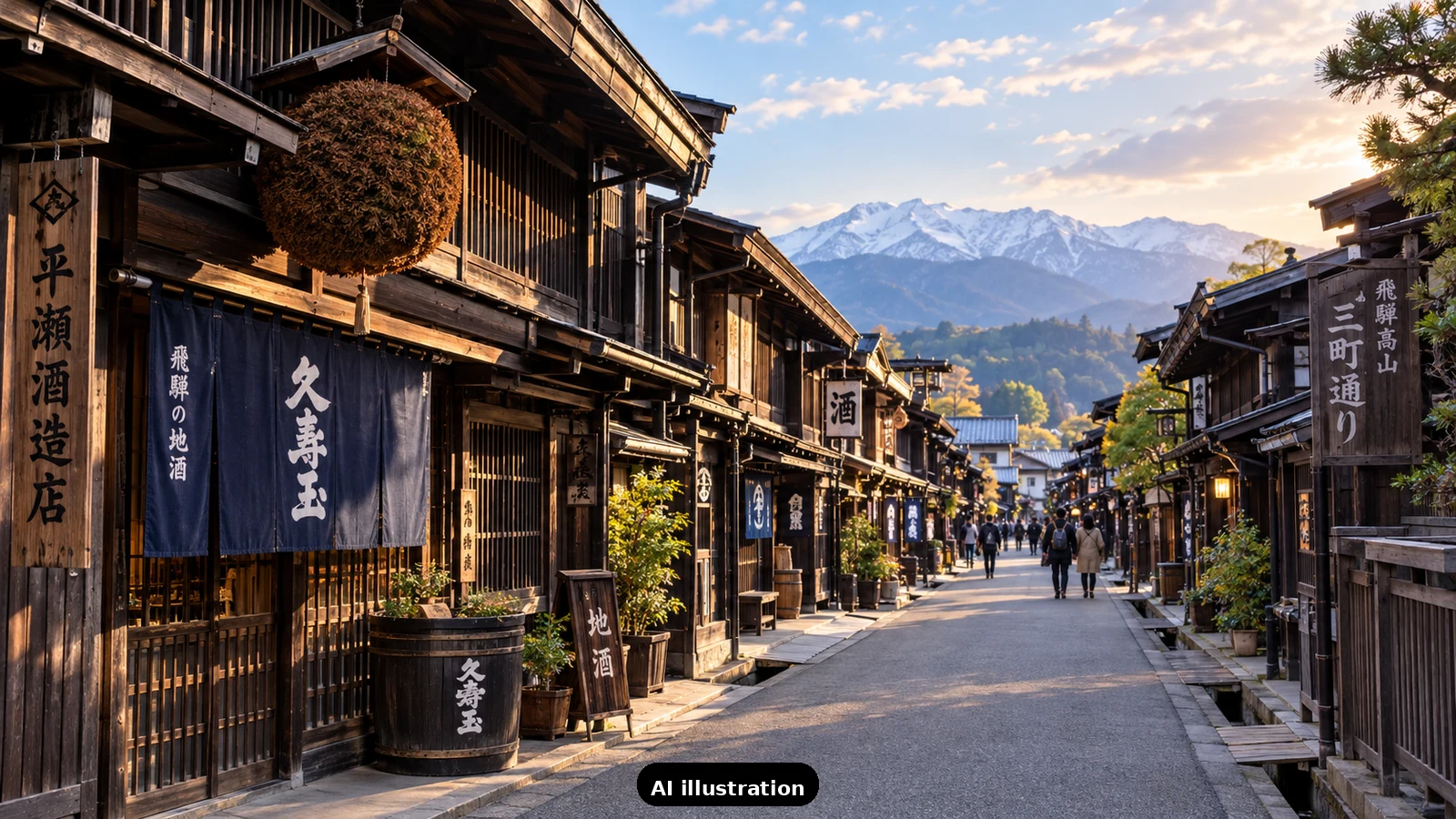
Day 8: Takayama. A small town that fills one unhurried day beautifully. The Miyagawa morning market along the river, the old merchant streets and their sake breweries (look for the cedar sugidama balls hanging at the doors), the Takayama Jinya historical government house, and Hida beef for lunch - this is one of Japan's great regional wagyu. Sleep early; mountain towns do.
Days 9-11: Kyoto. Drop to Nagoya and catch the shinkansen; you are in Kyoto for a late lunch. Three nights gives two full days: Fushimi Inari before 8 AM, Kiyomizu and Higashiyama one day, Arashiyama and the northwest temples the next, Gion in the evenings. If Nara tempts you, it fits as a half day - but after Takayama's deer-free calm you may prefer Kyoto's depth over another stop.
Days 12-13: Hiroshima and Miyajima. Under two hours from Kyoto by shinkansen. Give the Peace Memorial Park and Museum a full, sober morning; it is one of the most important half days of travel anywhere. Then eat - Hiroshima-style okonomiyaki, layered and griddled, is its own reason to stop. Day 13 is Miyajima: the floating torii of Itsukushima Shrine (check tide times - high tide for the floating view, low tide to walk out to the gate), the ropeway up Mount Misen if the sky is clear, and the island's tame deer. Sleep on the island or back in Hiroshima.
Day 14 and the exit. Osaka's Dotonbori is 90 minutes away if you want one last neon dinner before a Kansai departure; otherwise Hiroshima airport has international connections and the peace of a quiet final morning. Either way, day fourteen is a travel day - plan it as one and it will feel generous instead of wasted.
Is the JR Pass worth it for this route? Do the math before assuming. The 14-day ordinary pass costs ¥80,000. Adding this route's long legs - Tokyo-Kanazawa, the Nagoya shinkansen hops, Kyoto-Hiroshima, Hiroshima-Osaka - at standard fares lands well under that, so individual tickets usually win. The 7-day pass (¥50,000) only competes if you compress every long leg into one week, which defeats the point of having fourteen days.
How TripKeeper sequences trips like this. Multi-stop routes are where small decisions compound: which transfer day carries the Shirakawa-go stop, where luggage gets forwarded so the Alps crossing is done with a day bag, which nights justify the splurge ryokan. Our team builds these itineraries directly - founder-hosted batches run versions of this route with the logistics handled on the ground, and the trip-planning inquiry gets independent travelers the same sequencing on their own dates.

A Miranda House graduate and lawyer who traded courtrooms for slow travel. Cheshta travels with the batches we host ourselves, with a soft spot for travelling alongside elders.
Planning your next trip?
We'll handle insurance, hotels, airport assistance and the itinerary — the same way we do it for every trip.
Questions on this article
asked by readers, answered by us
Was this helpful?
one tap, no sign-up
