




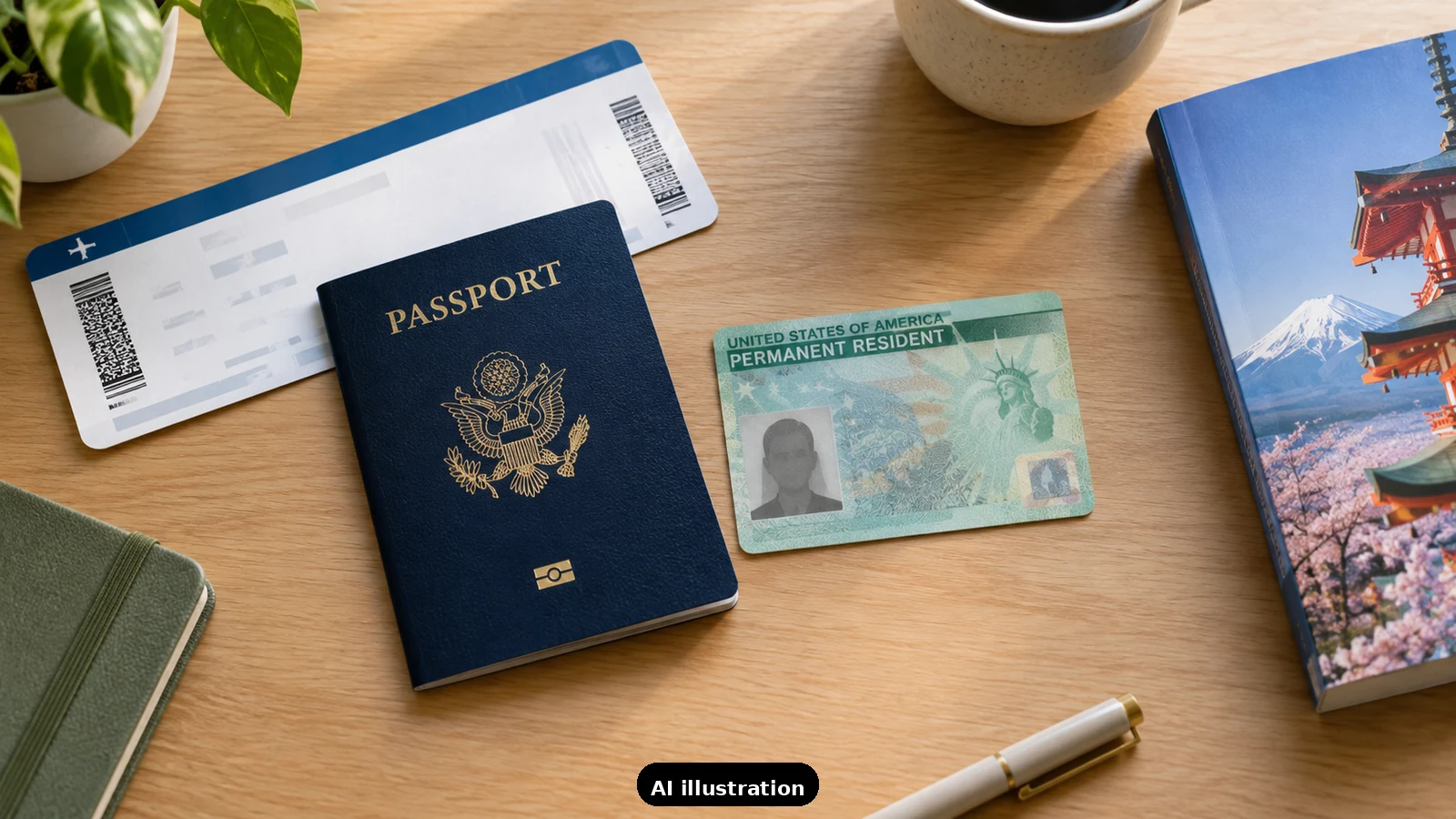
Of all Japan visa questions, this one causes the most airport-day panic: does a US green card get you into Japan the way a US passport does? The Embassy of Japan in Washington states the answer in plain language: the visa waiver program applies based on your nationality, not on your US residence status - including a green card. So the two documents lead to completely different trips, and knowing which rule governs you is a five-minute check that should happen months before departure.
If you hold a US passport. You do not need a visa for short-term stays of up to 90 days covering tourism, business without paid activities, conferences, transit or study. There is no six-month passport-validity rule for Japan - your passport simply needs to be valid for the duration of your stay, with at least one and a half blank pages. Fill in your arrival card (or use Visit Japan Web), get your landing permission stamp, and you are in. Longer stays, paid work or media activities are different categories that do need visas.
If you hold a green card. Your green card earns you nothing at the Japanese border except proof that you can return to the United States - which matters for your visa application, not your exemption. What decides entry is the passport you carry. A green card holder with, say, a British or Australian passport rides the same 90-day visa waiver as any citizen of those countries. A green card holder with an Indian, Chinese, Philippine or Vietnamese passport needs a visa in advance, because those nationalities are not on Japan's exemption list.
If you need the visa: how the US process works. You apply to the Japanese embassy or consulate that covers your state of residence - the Washington DC embassy, for example, serves only DC, Maryland and Virginia. Applications are in person or through an authorized proxy with the designated form; mail applications are not accepted, and the embassy will not take applications from B-1/B-2 visitor-visa holders at all, including online. Standard processing is at least five business days with no expedited service, so apply roughly six weeks ahead - and no earlier than three months before departure, because a single-entry visa is valid for three months from issue (double-entry, six).
Fees and payment. For applications from April 2024 onward, a single-entry visa costs $101, and double or multiple-entry $201 - with a notable exception: Indian passport holders pay just $6. US citizens are fee-exempt (they rarely need the visa anyway). Payment at the embassy is cash only; no cards, no personal checks. An online eVisa route also exists for certain nationalities legally residing in the US, so check eligibility before planning an in-person trip.
Documents you will typically gather. The passport itself, the completed application form and a photo, your flight and hotel bookings, a rough itinerary, proof of funds such as bank statements, and evidence of your US residence status - the green card, front and back. Each consulate publishes its exact list; follow the one in your jurisdiction to the letter, because incomplete files simply bounce.
At the border. Whatever your passport, keep your return or onward ticket, accommodation details and enough funds handy - landing permission is always at the immigration officer's discretion, though well-prepared tourists sail through. Ninety days is the standard landing period for short-term visitors.
How TripKeeper helps. Most of our travellers are India-based, but we regularly help US-based clients of Indian origin plan Japan - and for mixed families (a US-citizen spouse, a green-card-holding parent with an Indian passport) we map exactly who needs what, which consulate covers their state, and how the timelines interlock. Send a "Plan your trip" inquiry with your passport details, and our team will tell you precisely what your family needs before anyone books a flight.

A Miranda House graduate and lawyer who traded courtrooms for slow travel. Cheshta travels with the batches we host ourselves, with a soft spot for travelling alongside elders.
Planning your next trip?
We'll handle insurance, hotels, airport assistance and the itinerary — the same way we do it for every trip.
Questions on this article
asked by readers, answered by us
Was this helpful?
one tap, no sign-up
