




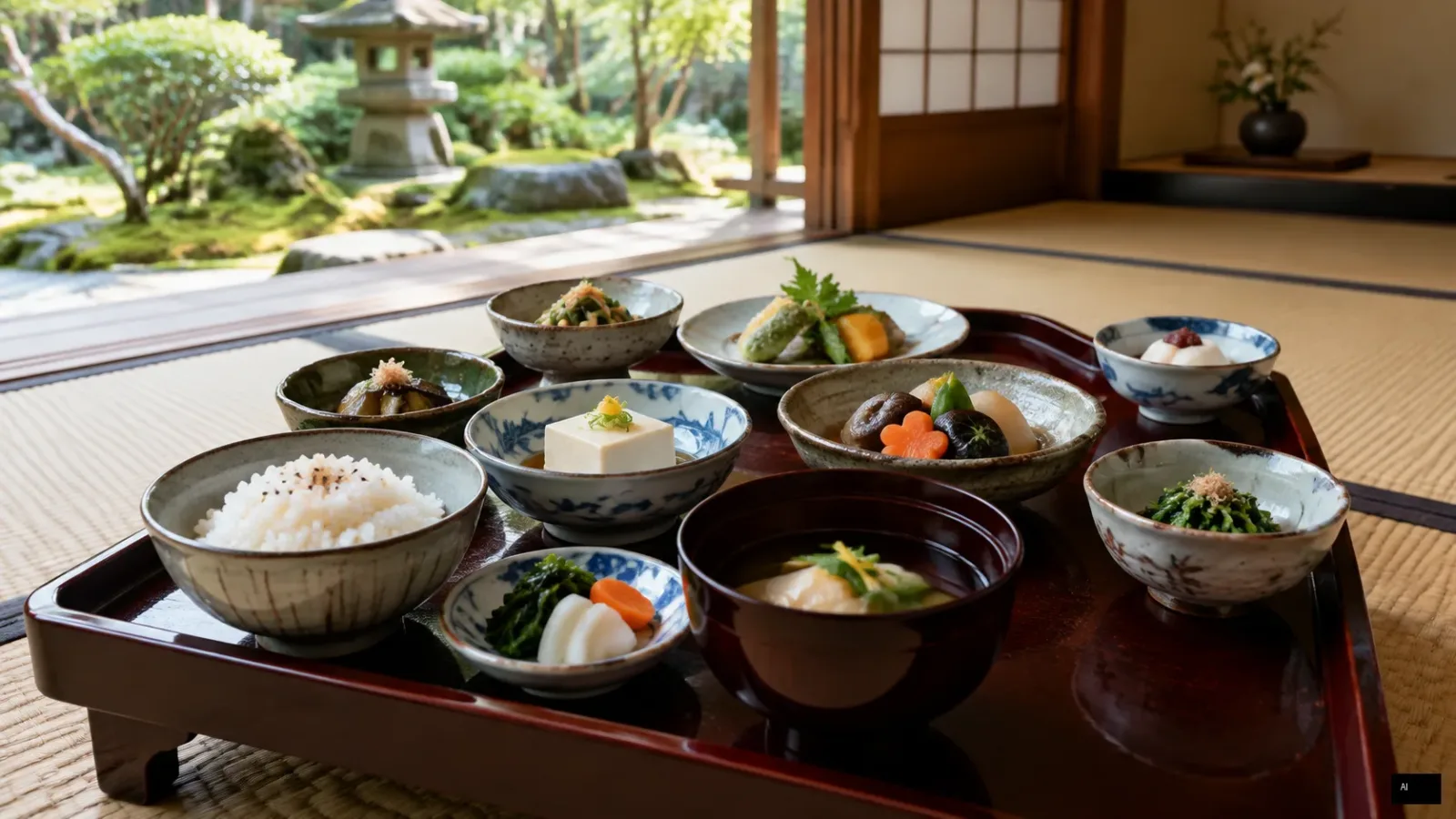
- Shojin ryori
- Zen temple cuisine - no animal products
- Book it
- Shigetsu at Tenryuji: reserve 3+ days ahead
- The trap
- Ordinary dishes use fish-based dashi
- Yudofu caution
- Tofu hotpot sounds safe; broth may be bonito
- Say this
- Dashi wa? - ask about the stock
Kyoto is the one Japanese city with a native vegetarian cuisine: shojin ryori, the Zen Buddhist temple food that has been cooked here for centuries. It is also a city where an ordinary bowl of udon hides fish stock. Both things are true, and a good vegetarian trip needs both halves.
Shojin ryori: the real thing, and how to get it
Shojin ryori came to Japan with Zen in the thirteenth century and builds full, satisfying meals from seasonal vegetables, tofu, herbs and wild plants - as Tenryu-ji's own restaurant page puts it, "depriving no animals of life". The classic place to eat it is Shigetsu, the temple-run restaurant inside Tenryu-ji's World Heritage gardens in Arashiyama. The temple's official booking rules: reserve through its form at least three days ahead, the reservation is final only when their confirmation email arrives (a human sends it, so allow days), and cancellation costs 50% the day before, 100% on the day. Treat it as a booked lunch experience, not a walk-in meal - and plan Arashiyama around it.
Everywhere else: the dashi problem
Outside temple kitchens, Kyoto runs on dashi. Miso soup, noodle broths, simmered vegetables, dipping sauces and most savoury batters are built on katsuobushi (bonito) stock - the same warning Osaka's official tourism guide gives for the whole region. Kyoto's own specialties need special care: yudofu (tofu hotpot, the Nanzenji classic) sounds perfectly safe but the simmering broth is usually bonito-based unless a shop says otherwise; kaiseki courses almost always include fish; and "vegetable" curry or udon is not vegetarian by default. Kombu-only dashi exists, but kitchens keep it only if they cater to shojin cooking.
Practical everyday eating
Vegetarian and vegan restaurants cluster around Kyoto Station, Gion and the Sanjo area, and Kyoto has Indian restaurants around the station for the days you want dal. Convenience stores carry onigiri with pickled plum, edamame and inari sushi (check for dashi). At any ordinary restaurant, the three phrases: "bejitarian desu" (I am vegetarian), "niku to sakana wa dame desu" (no meat or fish), and "dashi wa?" (what about the stock?). The last one is the one that matters.
Plan it in
Book Shigetsu when you book hotels, slot it into the Arashiyama day of our 3-day Kyoto itinerary, and keep the Kyoto budget guide open - shojin ryori lunches are a few thousand yen, not a cheap eat. Related: the Osaka vegetarian guide and the Tokyo vegetarian guide.

A Miranda House graduate and lawyer who traded courtrooms for slow travel. Cheshta travels with the batches we host ourselves, with a soft spot for travelling alongside elders.
Planning your next trip?
We'll handle insurance, hotels, airport assistance and the itinerary — the same way we do it for every trip.
Questions on this article
asked by readers, answered by us
Was this helpful?
one tap, no sign-up