




The good news first
Penang is genuinely one of Asia's easiest cities for a vegetarian - not because of a modern health trend, but because three vegetarian traditions have run here for over a century. Chinese Buddhist pure-veg stalls have cooked since the 1800s, South Indian Tamil restaurants serve the same idli, dosa and banana leaf rice they have served since colonial days, and a newer layer of plant-based cafes covers the Western-style gap. Going hungry in George Town is not a realistic concern. The only real work is knowing which famous dishes hide ingredients the menu never mentions.
The zero-ambiguity option: Little India
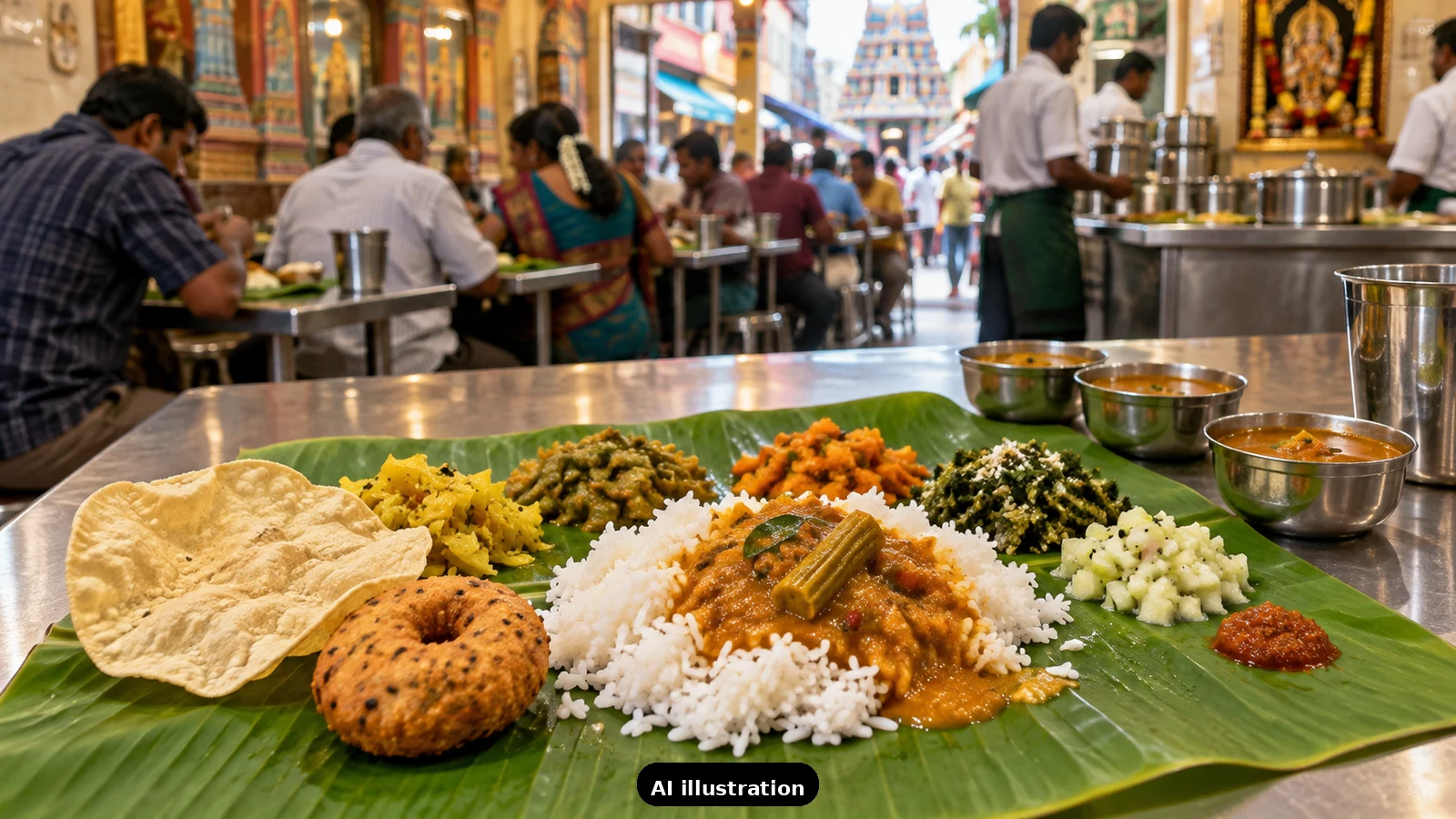
Penang's Little India runs along Lebuh Penang and Lebuh Pasar near the Kapitan Keling Mosque. The pure-veg South Indian restaurants here have never cooked meat - no verification needed, no phrase required. Sri Ananda Bahwan (on Lebuh Penang since 1972) does the canonical banana leaf lunch: a fresh leaf, rice, three or four rotating vegetable curries, sambar, rasam and papadom, with refills offered, for about RM10-15. Breakfast runs idli, dosa, vadai and pongal from 7am. Nearby, Woodlands does a more formal thali for RM12-20. For an Indian vegetarian, this is the safest square kilometre in Malaysia.
The yellow-banner hack: Buddhist vegetarian stalls
Penang's Chinese Buddhist vegetarian stalls are marked by yellow banners - and the rule is absolute: no meat, no seafood, no eggs, and in the strict tradition no onion or garlic. The cooking is famous for centuries-old mock meats: char siu made from wheat gluten, roast pork from seasoned tofu skin, ribs from mushroom. The densest cluster works the morning wet markets around Kimberly Street and Chowrasta Market from about 7am until sold out (usually by noon); a full plate with two or three items over rice runs RM5-8. On the 1st and 15th of the lunar month, when Buddhists observe a vegetarian day, the number of these stalls roughly doubles. They are also the closest thing to default-vegan eating on the island.
The menu surprises - read this before the hawker centre
Penang's signature dishes are mostly not vegetarian, and the reasons are invisible:
- Lard: char kway teow, Hokkien mee and wonton noodles are fried in lard-seasoned woks - the wok itself is non-vegetarian even if you ask for no pork. No pork and no lard are different questions.
- Belacan (shrimp paste): rojak sauce, assam laksa broth, nasi lemak sambal and chee cheong fun sauce are typically built on belacan - no visible seafood, but not vegetarian.
- Fish and prawn bases: assam laksa is a fish broth; Hokkien mee is a prawn broth.
- Egg: cracked into char kway teow, folded into roti telur, standard beside kaya toast.
- Condensed milk: default in kopi - order kopi-O kosong (black, no milk, no sugar) if you avoid dairy.
Safe moves at a mixed hawker centre
- Buddhist vegetarian stalls (yellow banner): the cleanest option - everything is vegetarian, usually near-vegan.
- Mamak (Indian-Muslim) stalls: no pork, no lard - roti canai, mee goreng mamak, teh tarik. Ask about egg if it matters to you.
- Halal Malay stalls: pork-free and lard-free by religious law - but not vegetarian, so you still choose the meat-free dishes.
- Universally safe: fresh fruit stalls, ice kacang and cendol, and potato (not sardine) curry puffs.
The phrases that prevent surprises
- Tak mahu lard - no lard (the question most tourists miss).
- Ada belacan? - is there shrimp paste in this?
- Saya tak makan daging - I don't eat meat.
- Tak mahu telur - no egg.
- Pure vegetarian - instantly understood at Indian and Buddhist restaurants.
A no-surprise vegetarian day in George Town
Breakfast: idli and masala dosa in Little India from 7am. Lunch: banana leaf rice at Sri Ananda Bahwan before noon, before the leaf rice runs out. Afternoon snack: a RM5-8 plate at a yellow-banner stall near Chowrasta Market. Coffee: kopi-O kosong at a kopitiam, or an oat-milk flat white around Armenian Street. Dinner: a plant-based cafe near Love Lane, or mee goreng at a mamak stall if you are out late - Buddhist restaurants mostly close by 9pm. Four traditions, one small radius, zero compromises.

A Miranda House graduate and lawyer who traded courtrooms for slow travel. Cheshta travels with the batches we host ourselves, with a soft spot for travelling alongside elders.
Planning your next trip?
We'll handle insurance, hotels, airport assistance and the itinerary — the same way we do it for every trip.
Questions on this article
asked by readers, answered by us
Was this helpful?
one tap, no sign-up