




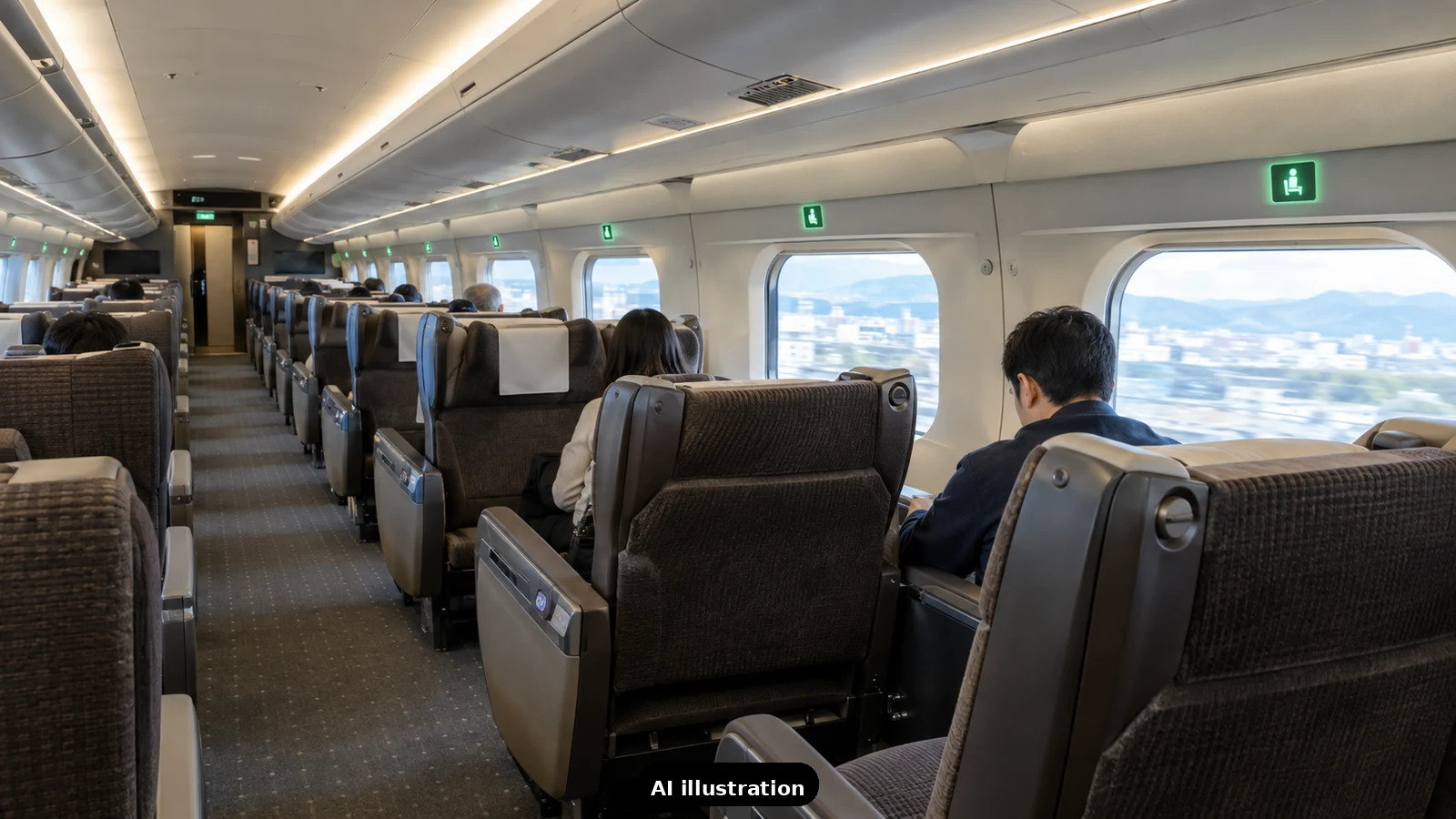
Every Shinkansen ticket decision comes down to one question: reserved or not? The price difference is small - a few hundred yen on most routes - but the rules behind each choice are worth knowing before you are standing on a platform watching your train leave.
What each ticket type means. A reserved ticket (shitei-seki) names a car, row and seat on a specific train - yours, guaranteed, with space for your things. A non-reserved ticket (jiyu-seki) lets you ride the unreserved cars of any train on that route that day, first come first served. On the Tokaido line, ordinary cars are split between the two: most Nozomi cars are reserved, with a handful of unreserved cars at the front.
If you miss your reserved train: breathe. Your reserved seat is gone, but the ticket is not dead. On the same calendar day you can still ride in the non-reserved cars of a later train on the same route at no extra cost. You paid for the journey; you only lost the guaranteed seat. Note the fine print: this rescue applies to standard reserved tickets. Deep-discount advance fares bought online (the Hayatoku family on the Tokaido line, for example) carry their own change rules, and Nozomi-specific deals can be less forgiving - read the fare conditions when buying those.
The free change almost nobody uses. Standard reserved tickets can be changed once, free of charge, before the train's departure - different time, different train, same route and class. If you know you will miss it, walk to a machine or counter before departure time and move the ticket. After departure, the change window closes and you are in non-reserved territory.
When non-reserved is the smarter buy. Off-peak weekdays, short hops (Tokyo-Shinagawa, Kyoto-Shin-Osaka), and flexible days: save the yen and take the unreserved cars, which on quiet days have whole rows free. When it is a bad idea: Golden Week, Obon, New Year, Friday evenings out of Tokyo, and any trip with kids, seniors or big luggage - the unreserved queue at those times is a genuine scrum, and remember the peak-period rule that makes every Nozomi seat reserved-only anyway.
Green Car is always reserved. First-class Green Cars have no unreserved section on these lines; the ticket is always for a specific seat, and the same missed-train rescue drops you to ordinary non-reserved cars, not the Green Car.
JR Pass holders. Pass holders ride either: unreserved cars with the pass alone, or reserved seats with a free reservation made in advance. The same missed-train logic applies - lose the seat, keep the ride.
Practical habits. Trains depart on the second; doors close about a minute before. Arrive at the platform 10 minutes early, check your car number against the platform markings (they differ between 8-car and 16-car trains), and if the worst happens, do not buy a new ticket - go to the gate staff or a counter and ask; the same-day non-reserved rescue is standard practice, not a favor.
How TripKeeper builds the buffer. On our planned trips we reserve seats on every long leg, schedule connections with sane margins instead of heroic ones, and brief travelers on the one-free-change rule so a late morning never becomes a lost afternoon. Rail in Japan forgives almost everything except panic.

A Miranda House graduate and lawyer who traded courtrooms for slow travel. Cheshta travels with the batches we host ourselves, with a soft spot for travelling alongside elders.
Planning your next trip?
We'll handle insurance, hotels, airport assistance and the itinerary — the same way we do it for every trip.
Questions on this article
asked by readers, answered by us
Was this helpful?
one tap, no sign-up
