




The Trip Keeper The Trip Keeper
three doors, pick the one that fits your family How do you want to travel?
Cheshta Agarwal, founder and host of The Trip Keeper, smiling on a green country road
Hosted by Cheshta

Founder-Hosted Group Tour

the trips where Cheshta travels with you

Our own exclusive group trips. Cheshta is on the trip, from the first flight to the last dinner.

  • Cheshta travels with the group
  • One clear price, inclusions listed
  • Meet your travel family
Next up: Vietnam, 17 DecView →
See founder trips →
A fixed-departure batch on tour

fixed dates, fixed flights

Join a batch of fellow travellers on set dates. Limited seats, flights included, with options. Our team doesn't travel on these.

  • Fixed dates and flights
  • Limited seats per batch
  • Flight options available
See departures →
A private family trip

Private Tour

your dates

just your family, nobody else

Trips planned around your family, your pace and your dates. Milestone birthdays and anniversaries.

  • Travel on your own dates
  • Route shaped around you
Ask for a quote →
← Journal ☏
Money & Payments 4 min read

Using an Indian Zero-Forex Debit Card at Japan's 7-Eleven ATMs

Zero-forex cards remove the currency markup, but not every fee. How network acceptance, withdrawal limits, local ATM charges and the DCC trap work at Seven Bank's 7-Eleven ATMs.

share WhatsApp Facebook X
Text size
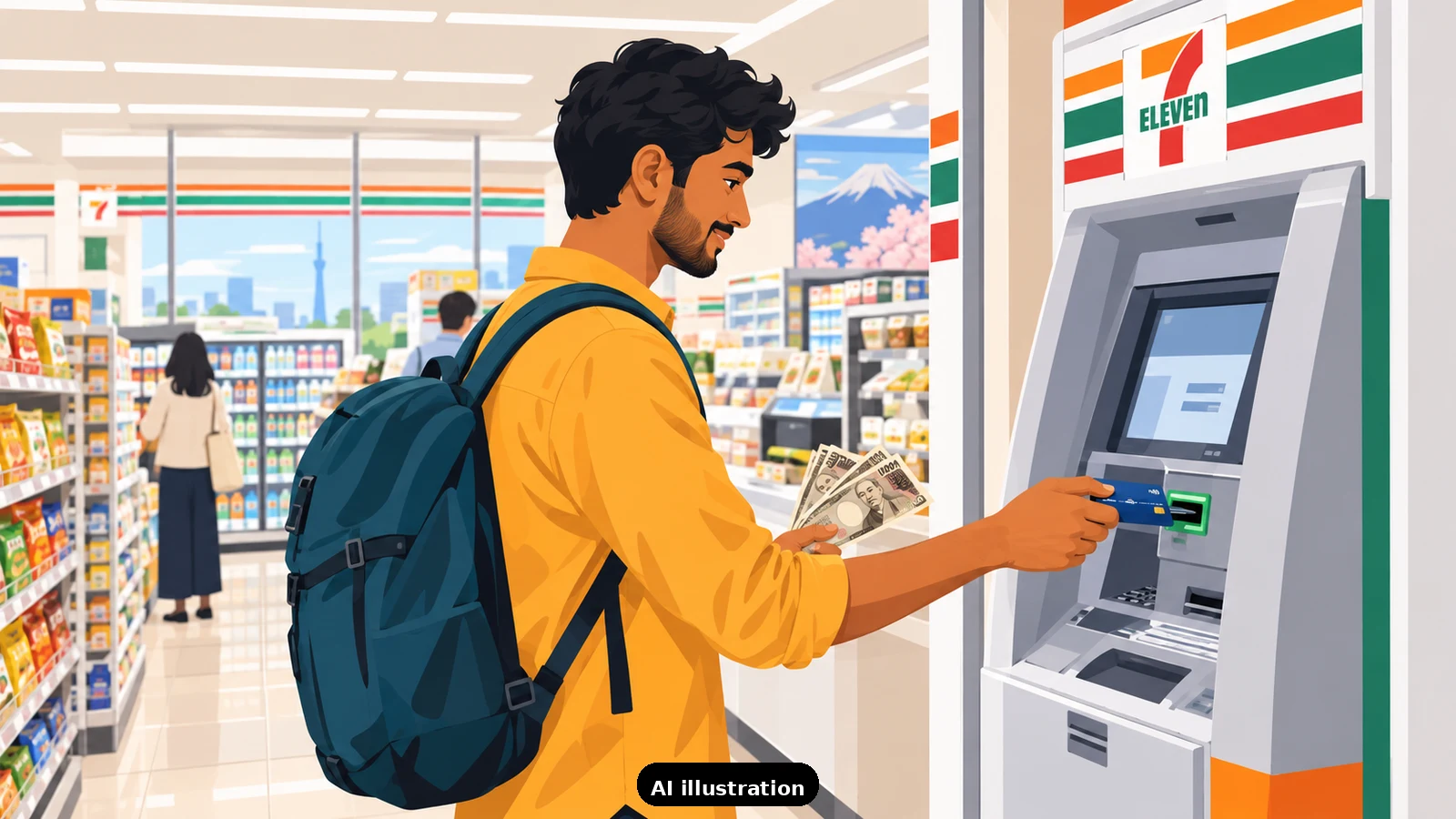
Illustration of an Indian traveller using a debit card at a 7-Eleven ATM inside a Japanese convenience store
Send to Mummy-Papa Opens WhatsApp with a short summary — pick who to send it to.

A zero-forex debit card - the kind several Indian fintechs and banks now issue with no foreign currency markup - is one of the best tools an Indian traveller can carry to Japan. Pair it with Seven Bank's ATM network and you have a way to get yen at close to the mid-market rate, any hour of the day. But "zero forex" does not mean zero fees, and the travellers who get the most out of these cards are the ones who know exactly which charges remain and which screen to watch at the machine.

Acceptance is about the network mark, not the card brand. Seven Bank's ATMs - more than 28,000 of them, sitting inside 7-Eleven stores and at major airports including Narita, Haneda and Kansai - accept overseas-issued cards carrying the Visa, Mastercard, Maestro, Cirrus and several other international network marks, per the bank's own service pages. What matters is the logo on the back of your card, not whether the card is from a fintech app or a large bank. A small caveat the bank itself states: even with a matching mark, some cards are not accepted, so never land with a single card as your only plan.

Know the machine's limits. For cards issued overseas, Seven Bank caps each withdrawal at 100,000 yen per transaction on chip-based transactions, and 30,000 yen for magstripe-only transactions, per its ATM guidance. Your own card will also have a daily international withdrawal ceiling set by the issuer, and whichever limit is lower wins. If you need a large amount - say, to pre-pay a ryokan that prefers cash - plan for more than one transaction across a day or two.

The fee that remains: a flat local ATM charge. Overseas cards pay a modest flat usage fee per withdrawal at Seven Bank ATMs, shown on screen before you confirm; the amount depends on the withdrawal size and your card brand, per the bank's notices. Because it is flat, two or three larger withdrawals beat many small ones. The bigger saving, though, is on the next screen.

Decline the rupee conversion, every single time. Seven Bank offers Dynamic Currency Conversion - the machine offers to bill you in INR instead of yen. It looks reassuring because you recognise the number, but the DCC rate is set by the ATM operator and is consistently worse than letting your zero-forex card convert at the near-mid-market network rate. Always choose to be charged in yen (JPY). This one tap is worth more than the card itself.

What your issuer still charges. "Zero forex" removes the currency conversion markup - typically 3.5% plus GST on regular Indian debit cards - but issuers can still levy a per-withdrawal foreign ATM fee on top of Seven Bank's local charge, and terms differ between providers and can change. Before flying: enable international usage in your card app, confirm the overseas ATM fee and daily limit in writing, and save the issuer's international helpline. Keep a backup: a second card on a different network, plus enough cash for the first day, covers the "some cards are not accepted" edge case.

Where this fits in a TripKeeper plan. Money logistics like this are exactly what our team walks through before you fly. On our founder-hosted Japan departures and private tours, travellers get a practical pre-departure briefing - how much cash to carry, which card routes actually work at konbini ATMs, and what to do if a machine declines your card at 11 PM. If you are building your own itinerary, the "Plan your trip" inquiry puts the same groundwork into your plan, and the team stays reachable on support while you are on the ground.

Send to Mummy-Papa Opens WhatsApp with a short summary — pick who to send it to.
Cheshta Agarwal
Founder · Travel Creator · Lawyer

A Miranda House graduate and lawyer who traded courtrooms for slow travel. Cheshta travels with the batches we host ourselves, with a soft spot for travelling alongside elders.

or let us do all of it

Planning your next trip?

We'll handle insurance, hotels, airport assistance and the itinerary — the same way we do it for every trip.

Questions on this article

asked by readers, answered by us

Do Indian debit cards work at 7-Eleven ATMs in Japan?

Yes, if your card carries an international network mark such as Visa or Mastercard. Seven Bank's ATMs accept major overseas card networks at over 28,000 locations, including 7-Eleven stores and Narita, Haneda and Kansai airports. The bank notes that even some marked cards are not accepted, so carry a backup card on a different network.

What is the cash withdrawal limit at Seven Bank ATMs for foreign cards?

For cards issued overseas, Seven Bank caps each withdrawal at 100,000 yen per chip-based transaction and 30,000 yen for magstripe-only transactions. Your Indian issuer's own daily international withdrawal limit applies on top, and the lower of the two limits wins.

Should I choose to be charged in rupees or yen at a Japanese ATM?

Always choose yen (JPY). If the ATM offers to bill you in INR, that is Dynamic Currency Conversion, which uses a rate set by the ATM operator and is consistently worse than your card's network conversion rate. Declining DCC is the single most valuable tap at the machine.

What fees apply even with a zero-forex card?

Two kinds can remain: a flat local ATM usage fee at the machine, shown on screen before you confirm, and any per-withdrawal foreign ATM fee your own issuer charges. Zero-forex removes only the currency conversion markup - typically 3.5% plus GST on regular Indian debit cards - so check your issuer's overseas ATM fee before relying on the card.

Is a zero-forex debit card better than carrying yen cash from India?

They work best together. Buy a modest starter amount of yen in India - compared against the mid-market rate - for your first day, then withdraw larger amounts in Japan at Seven Bank ATMs, where conversion happens near the network rate. JPY bought in India often carries wider margins than USD or EUR because it is less stocked.

What should I do if my Indian card is declined at a Japanese ATM?

First check that international usage is enabled in your card app - it is off by default on many Indian cards. Retry with a smaller amount, then try a Japan Post Bank ATM, which also accepts international cards. If it still fails, use your backup card and contact your issuer's international helpline.

Was this helpful?

one tap, no sign-up

Read next

← Journal See our trips