




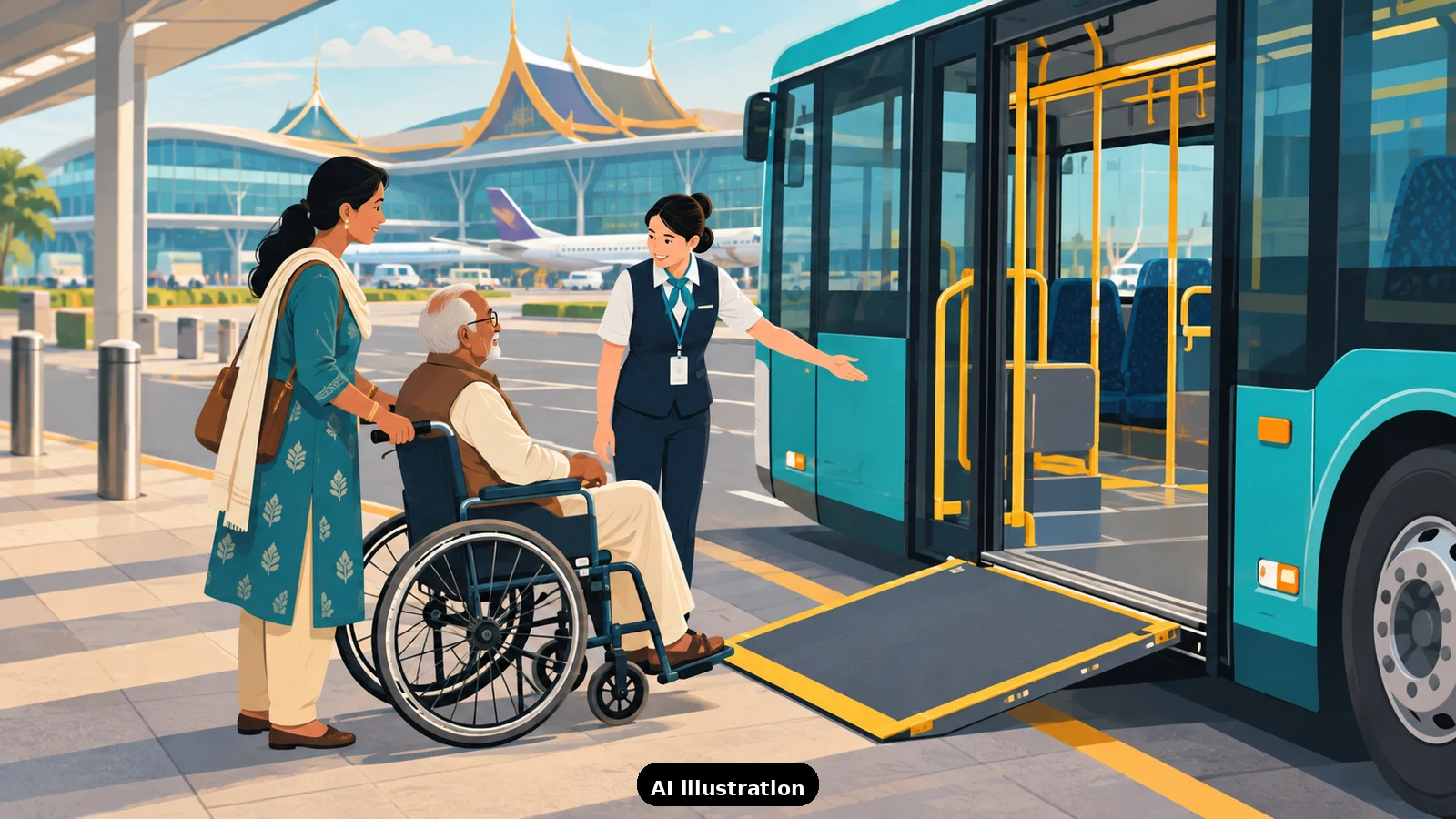
Short answer: do not try to board an inaccessible bus, and do not let anyone lift the passenger up the steps - that is how injuries happen. The correct move is to stop, tell the nearest staff member or the bus driver that you need an accessible transfer, and let the airport's assistance system send the right vehicle. Suvarnabhumi has wheelchair service points, buggy transport and trained assistance staff; an inaccessible shuttle is a problem the airport is equipped to solve, not one the family should improvise around.
First, the prevention - because this situation is largely avoidable. Wheelchair assistance booked through the airline at least 48 hours before the flight is the single most effective step. When assistance is on the booking, the airline's ground team is responsible for moving the passenger between aircraft, terminals and gates, and they arrange suitable vehicles - you will rarely even see the standard shuttle. Suvarnabhumi's own guidance mirrors every airport's: request assistance through your airline in advance. Families connecting an elderly parent through Bangkok should treat this booking as part of the ticket, not an optional extra.
If you are standing at an inaccessible bus anyway. Work through this order. One: tell the bus driver - drivers radio the operations desk and can call an accessible vehicle or advise the next suitable shuttle. Two: call or walk to the airport's assistance point - Suvarnabhumi runs a wheelchair service point on Level 4 at Gate 2 (in front of Row C) for departing passengers, free of charge, and assistance staff are stationed through the terminal. Three: contact your airline's ground staff or transfer desk - for a connecting passenger with assistance booked, moving you is their job, and they can summon an ambulift or buggy. Four: the airport operator AOT runs a call centre (1722 within Thailand) and an app with airport services information - useful when no staff is in sight.
What the alternatives look like. The airport can move a wheelchair passenger by buggy (the electric carts that run the long piers), by an accessible van or low-floor vehicle between buildings, or - for aircraft parked at remote stands - by ambulift, the high-lift vehicle that rises to the aircraft door level. None of these is exotic at a major international airport; they exist because the standard shuttle genuinely cannot serve every passenger. The family does not need to know which vehicle - only to say clearly: 'wheelchair passenger, we need an accessible transfer.'
What not to do. Do not attempt the bus steps with a wheelchair user - a fall at the start of a holiday ends the holiday. Do not let the bus leave without the driver acknowledging your situation and calling it in. Do not split the family across vehicles: the wheelchair passenger's companion rides with them. And do not pay anyone unofficial for a 'special ride' - the airport's assistance services are free.
If you are the family coordinating from India. Two habits cover most of the risk: keep the airline's wheelchair confirmation in the passenger's document folder (staff respond faster to a visible booking), and keep the passenger reachable by phone so you can talk them to the assistance point if anything goes wrong. If the transfer goes badly, note the flight, date, gate and staff involved, and raise it with the airline's customer care - ground handling failures are taken seriously precisely because assistance is a booked service.
How TripKeeper handles accessible connections. When a wheelchair user is in the itinerary, we book the assistance with the airline, confirm it before departure, and brief the family on exactly what to say if any leg of the journey fails. If you would like that level of preparation, send us a trip-planning inquiry.

A Miranda House graduate and lawyer who traded courtrooms for slow travel. Cheshta travels with the batches we host ourselves, with a soft spot for travelling alongside elders.
Planning your next trip?
We'll handle insurance, hotels, airport assistance and the itinerary — the same way we do it for every trip.
Questions on this article
asked by readers, answered by us
Was this helpful?
one tap, no sign-up