




Reviewed 18 November 2026. An editorial built-city versus landscape comparison using municipal and national tourism sources. The 2023 institutional city background is not a current programme announcement.
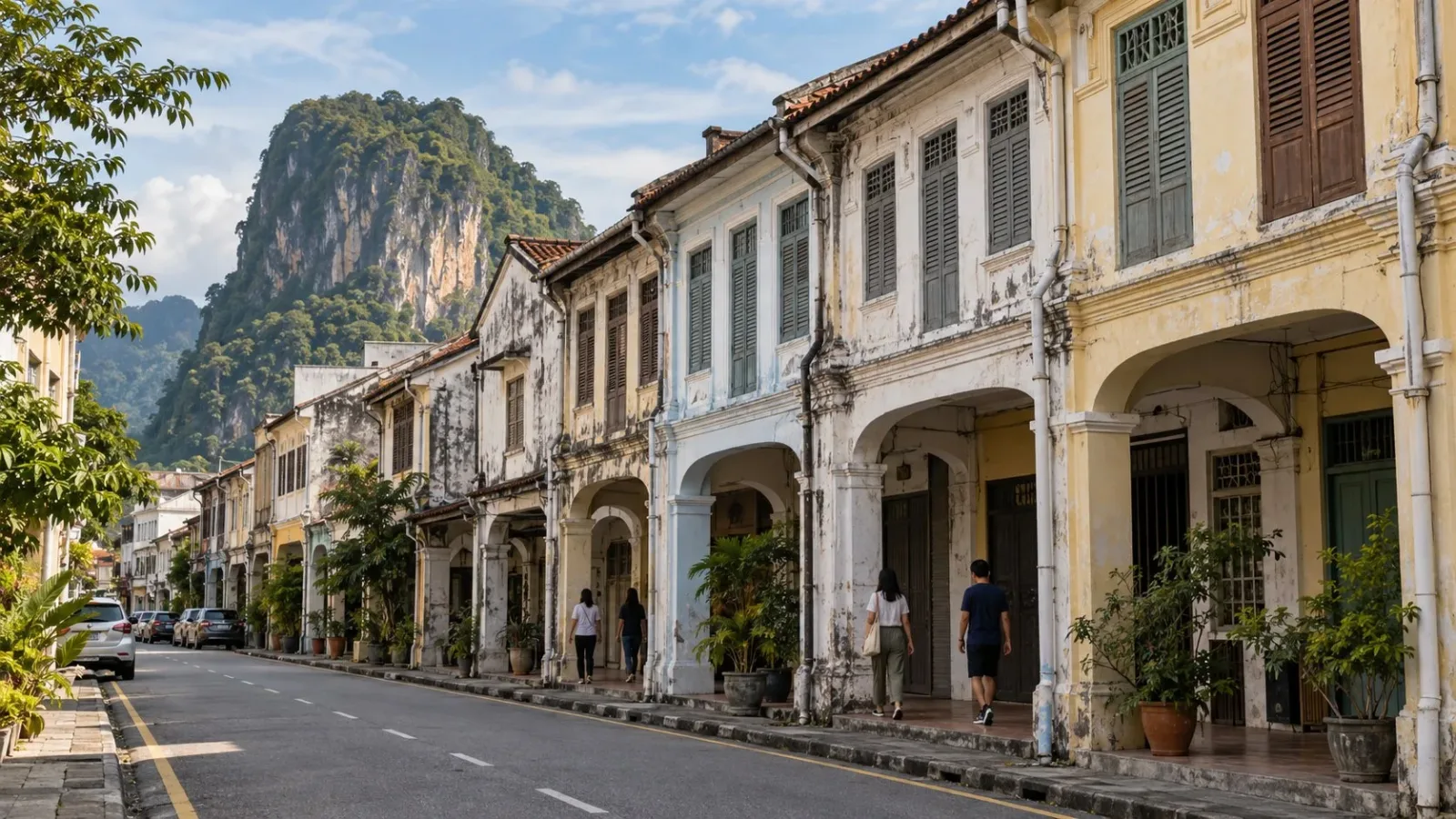
AI illustration: fictional Ipoh-inspired streetscape and limestone setting. Not an actual location, person, exact sightline, building condition or visitor arrangement.
Choose the city or its wider setting
Our suggestion is the built city for buildings, commerce and changing uses, or the limestone setting for the form of the land. A frontage and a hill are not interchangeable scenery.
Choose the scale that makes you curious. One clear main interest can explain more than a list of familiar names, without declaring the other subject less worthwhile.
Commercial history gives the streets a subject
Ipoh City Council describes an important business centre whose growth involved changes to buildings, streets and public spaces. Tourism Malaysia’s Ipoh account also describes shophouses at Concubine Lane.
Choose this interest if a city becomes more meaningful through its built relationships. A row of commercial premises is a different subject from one isolated landmark; think of the frontage as part of a street.
Civic landmarks add another scale
The council’s heritage list names the Town Hall, Birch Memorial Clock Tower and railway station. Its city history also connects urban growth with civic buildings and public infrastructure.
Our suggestion is to compare the scale of commercial premises with the larger institutional building. These published names establish architectural subjects, not a current visitor circuit or a promise of entry.
Older buildings can have another chapter
Tourism Malaysia describes Kong Heng Square through older buildings and discusses a former bank taking on a bookstore use. The useful idea here is reuse within an inherited streetscape, not a named shopping recommendation.
Choose this emphasis if the relationship between older form and later purpose interests you. Do not assume an old-looking frontage means an unchanged building. The source account is not a present inspection of any premises.
Limestone hills change the question
The Islamic Tourism Centre’s city-background section describes Ipoh as surrounded by limestone hills. Tourism Malaysia also describes limestone hills in its Ipoh account.
Choose this subject if the form of the land matters more to you than urban composition. The interest is the city’s wider setting, not a diagnosis of an individual outcrop’s age, formation history or present condition.
Keep a different question for each
For buildings, ask how form, purpose and history contribute to the city. For limestone hills, ask what the landform contributes to its setting. Both can appeal without becoming a compulsory circuit.
Check official visitor information separately for any visit. No route, cave outing, viewing position, interior, service, access or current building-condition assessment is supplied by this comparison.
Sources
- Ipoh City Council, city history, checked 18 November 2026
- Ipoh City Council, heritage list, checked 18 November 2026
- Islamic Tourism Centre, 2023 city background, checked 18 November 2026
- Tourism Malaysia, Kong Heng Square, checked 18 November 2026
- Tourism Malaysia, Ipoh account, checked 18 November 2026
Questions people ask at the gate
Which interest is suggested for commercial history?
The built city, using council history and the national tourism account of shophouses as starting points.
Is the architectural choice only shophouses?
No. The council also names civic landmarks including the Town Hall, clock tower and railway station.
What does reuse add?
A question about how older buildings and later purposes relate, without assuming the building is unchanged.
Which is suggested for landform?
The limestone-hill setting described in government tourism background.
Does this explain an individual hill’s geology?
No. No age, detailed formation history or field assessment is supplied.
Is this a visitor circuit or current premises report?
No. It helps choose an interest, not a route, entry arrangement, service or current building-condition assessment.
Next walk starts at a new gate.
Was this helpful?
one tap, no sign-up

A Miranda House graduate and lawyer who traded courtrooms for slow travel. Cheshta travels with the batches we host ourselves, with a soft spot for travelling alongside elders.