




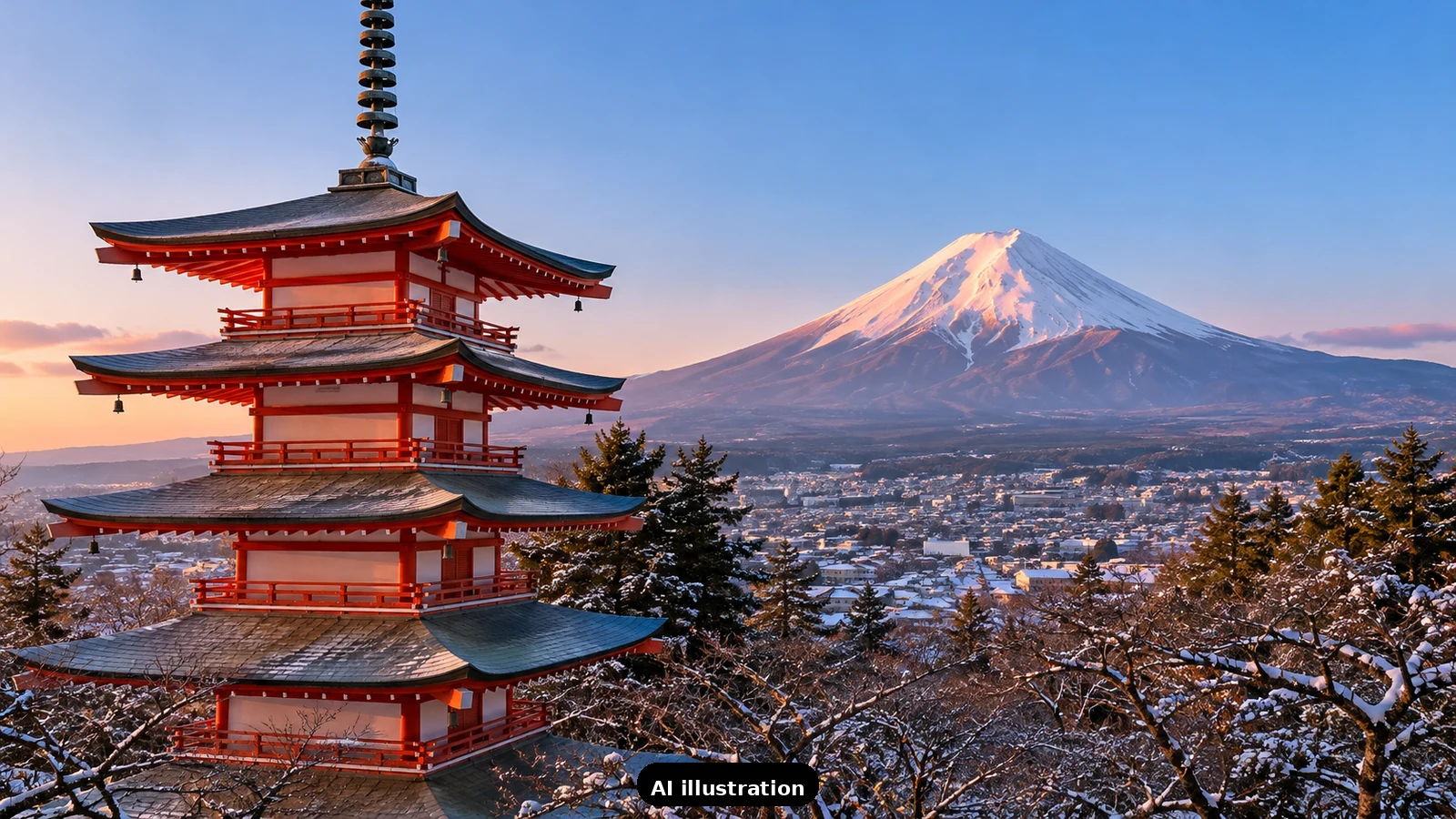
Here is the fact that reframes every Fuji plan: Japan's most famous mountain is invisible most of the time. In high summer, cloud and haze hide it on most days; in midwinter, it stands out sharp against the sky most mornings. Seeing Fuji is a probability game, and the travelers who win it are the ones who pick the right season, the right hour, and a Plan B for the day the mountain says no.
The seasonal odds, honestly. Winter is Fuji's revealing season: from December to February the air is dry and cold, and from the Tokyo side the mountain is visible on a clear majority of days - this is when you get the snow-capped postcard. Spring and autumn sit in the middle, decent but hazy-prone. Summer is the surprise for first-timers: July and August, when the most tourists come, are Fuji's shyest months - heat haze and cloud mean the mountain shows itself only a few days a week, sometimes less, and often only its lower slopes without the snow cap (the snow largely melts off by midsummer). If seeing Fuji is a priority, weight your trip toward the cooler half of the year.
The morning rule. Whatever the season, early morning is when Fuji comes out: the hours from dawn to about 8 or 9 AM, before daytime heat builds clouds around the peak. By midday in most seasons the summit has its cloud hat on. The practical translation: sleep near the mountain. A night at Kawaguchiko or Hakone turns Fuji-spotting from a lucky day-trip sighting into a sunrise appointment - walk out at dawn, look up, and the mountain is either there or it is not, with tomorrow morning as your second chance.
After weather comes the best weather. The single most reliable Fuji forecast trick locals use: the mountain is at its clearest the morning after a front or typhoon passes, when rain has scrubbed the air and cold dry wind follows. If your trip has flexibility, watch the forecast and aim your Fuji day at the morning after a rainy one.
The viewpoints worth building around. Kawaguchiko, the easiest of the Fuji Five Lakes from Tokyo (under two hours by express bus), gives the classic lake-reflection view from its north shore - go at dawn for still water. The Chureito Pagoda above Fujiyoshida is the famous five-story pagoda framing Fuji; expect steps and, in cherry and autumn seasons, queues for the platform. Hakone mixes Fuji views with onsen, but the mountain is less reliable from there - treat any Hakone Fuji sighting as a bonus. From Tokyo itself, winter mornings can reveal Fuji from high points like the Metropolitan Government Building observatories or the Skytree - a genuine thrill, but strictly a clear-winter-morning phenomenon. Closer in, the shinkansen between Tokyo and Kyoto offers a fine window-seat view around Shin-Fuji on clear days - sit on the right leaving Tokyo.
Plan for the day it hides. Build Fuji into your trip as a region, not a sighting: Kawaguchiko and the Five Lakes area are worth a full day regardless - ropeway, lakeside walks, museums, onsen - and Hakone carries itself without the mountain. Keep your Fuji morning early, keep a second morning if you can, and treat the sighting as the bonus on top of a good day, not the point of it. There is no schedule, no season and no viewpoint that guarantees the mountain. Anyone who promises you Fuji is selling something.
How TripKeeper plans around a shy mountain. Our team sequences Fuji-region days to put mornings at the viewpoints and afternoons at the covered options, favors an overnight near the lakes over a day-trip in uncertain months, and shifts the order of days when the forecast offers a post-front clear morning. Founder-hosted batches run with that weather-aware structure; independent travelers get the same sequencing and a backup-ready itinerary through the trip-planning inquiry.

A Miranda House graduate and lawyer who traded courtrooms for slow travel. Cheshta travels with the batches we host ourselves, with a soft spot for travelling alongside elders.
Planning your next trip?
We'll handle insurance, hotels, airport assistance and the itinerary — the same way we do it for every trip.
Questions on this article
asked by readers, answered by us
Was this helpful?
one tap, no sign-up
