




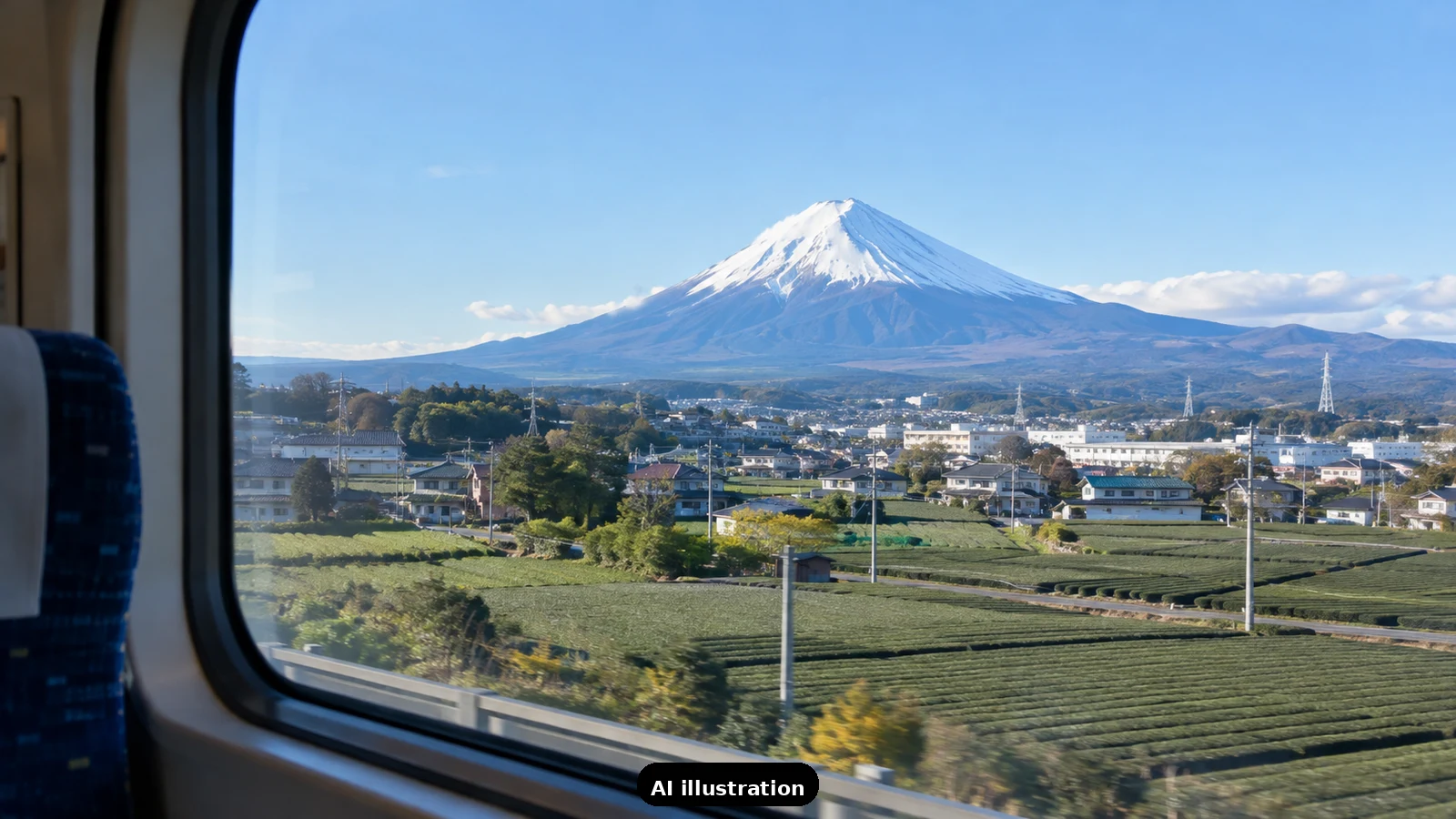
Half the passengers on the Tokyo-Kyoto Shinkansen are sitting on the wrong side for Japan's most famous free view. Mount Fuji appears for only a few minutes of the ride, on one side only - and it hides behind clouds more often than first-timers expect. Here is how to actually catch it.
The rule. Traveling from Tokyo toward Kyoto or Osaka (westbound), Fuji is on the RIGHT side of the train. Heading back east toward Tokyo, it is on the LEFT. That is it - the track never crosses to the other side of the mountain.
The seat letters. In ordinary cars (2+3 layout), the right-side window going west is seat E; the left-side window going east is seat A. In Green Car (2+2 layout), the Fuji-side windows are seat D westbound and seat A eastbound. When you book at a machine, counter or online, you can pick the exact letter - do not leave it to chance, because aisle seats and the trio side see nothing but heads.
When to look. Fuji appears roughly 40-45 minutes after leaving Tokyo, around the Shin-Fuji station area in Shizuoka prefecture. From Kyoto-bound Nozomi trains that is after Shin-Yokohama and before the Shizuoka stops; the closest approach lasts only a few minutes, so have your camera ready rather than rummaging at the announcement. There is usually an English announcement on board - listen for it after the train passes Shin-Yokohama.
Visibility reality. The mountain is shy. The clearest views come on cool, dry mornings - late autumn through winter are the best odds, and the snow cap photographs beautifully. Summer afternoons are the worst: haze and clouds build around the peak by midday, and Fuji can be invisible for days at a stretch even in perfect beach weather. Check the morning sky from Tokyo: if you can see crisp horizons, your odds are good. Websites and webcams tracking Fuji visibility exist, and a quick check the evening before is worth the 30 seconds.
Green Car vs ordinary for the view. Identical glass, same side of the train. Green Car buys you a quieter carriage and more elbow room for camera work, not a better angle. The one real upgrade is seat D's position slightly ahead of the window pillar, but ordinary seat E is just fine.
Backup plans. Missed it or clouded out? Kodama trains stop at Shin-Fuji station, whose platform itself has a famous view of the mountain - some travelers deliberately hop off for a photo and catch the next train. And if you are flying into or out of Haneda, domestic and some international flight paths pass Fuji too, on the left side heading west out of Tokyo.
A small courtesy. If you are on the Fuji side, your aisle neighbor may ask to lean over for a photo around Shin-Fuji. The local custom is to smile and allow it - everyone gets their few minutes.
How TripKeeper plans it. When we reserve Shinkansen seats for travelers, the Fuji side is one of the small things we get right by default: right-side windows westbound, left-side eastbound, timed where possible for morning legs when the mountain performs. It costs nothing extra and it is the detail people message us about afterward.

A Miranda House graduate and lawyer who traded courtrooms for slow travel. Cheshta travels with the batches we host ourselves, with a soft spot for travelling alongside elders.
Planning your next trip?
We'll handle insurance, hotels, airport assistance and the itinerary — the same way we do it for every trip.
Questions on this article
asked by readers, answered by us
Was this helpful?
one tap, no sign-up
