




- December
- Mean -0.9°C, 113 cm snow (JMA)
- January
- Coldest: -3.2°C, 137 cm snow
- Snow Festival
- Feb 4-11, 2027, 2M+ visitors
- Festival beds
- Feb hotel median 24,100 yen, ~2x
- Powder peak
- Niseko's best snow Jan-Feb
Hokkaido in winter is not one season but three different trips wearing the same coat. December is lights and early snow, January is the deep freeze with the best powder and the emptiest streets, and February is festival season with hotel prices to match. Here is the month-by-month picture, with Japan Meteorological Agency (JMA) normals for Sapporo and the official 2027 event dates.
December: lights, markets and the snow arriving
Sapporo's December normal is a mean of -0.9°C (daytime highs around 2.0°C, nights near -4.0°C) with 113 cm of snowfall across the month and snow on about 28 days (JMA 1991-2020 normals). Early December often feels manageable to Indian travellers - cold, yes, but the heaviest snow is still coming. The city compensates with atmosphere: the Sapporo White Illumination runs from November 20, 2026 to March 14, 2027, and the Munich Christmas Market in Odori Park runs November 20 to December 25 (both official Sapporo tourism dates). Ski resorts open progressively through the month as the base builds. One planning note: many Japanese attractions and museums close over the New Year period - the Sapporo Beer Museum, for example, is closed on December 31 - so late-December itineraries should check opening days.
January: the deep freeze, the best snow, the quietest streets
January is Hokkaido at full winter: mean -3.2°C, highs around -0.4°C, lows near -6.4°C, and the heaviest monthly snowfall at 137 cm (JMA normals). Some years run far above that - January 2026 recorded 242 cm in Sapporo (JMA monthly data). This is the month for skiers: Niseko's powder is at its most reliable, and the Lake Shikotsu Ice Festival opens January 30, 2027, just outside the city. For everyone else, mid-January is the value window - the New Year rush is over, festival crowds have not arrived, and hotel rates sit near their winter lows. The trade-off is real: pavements are icy, daylight is short, and outdoor sightseeing needs proper boots, not sneakers.
February: the festival, the crowds, the prices
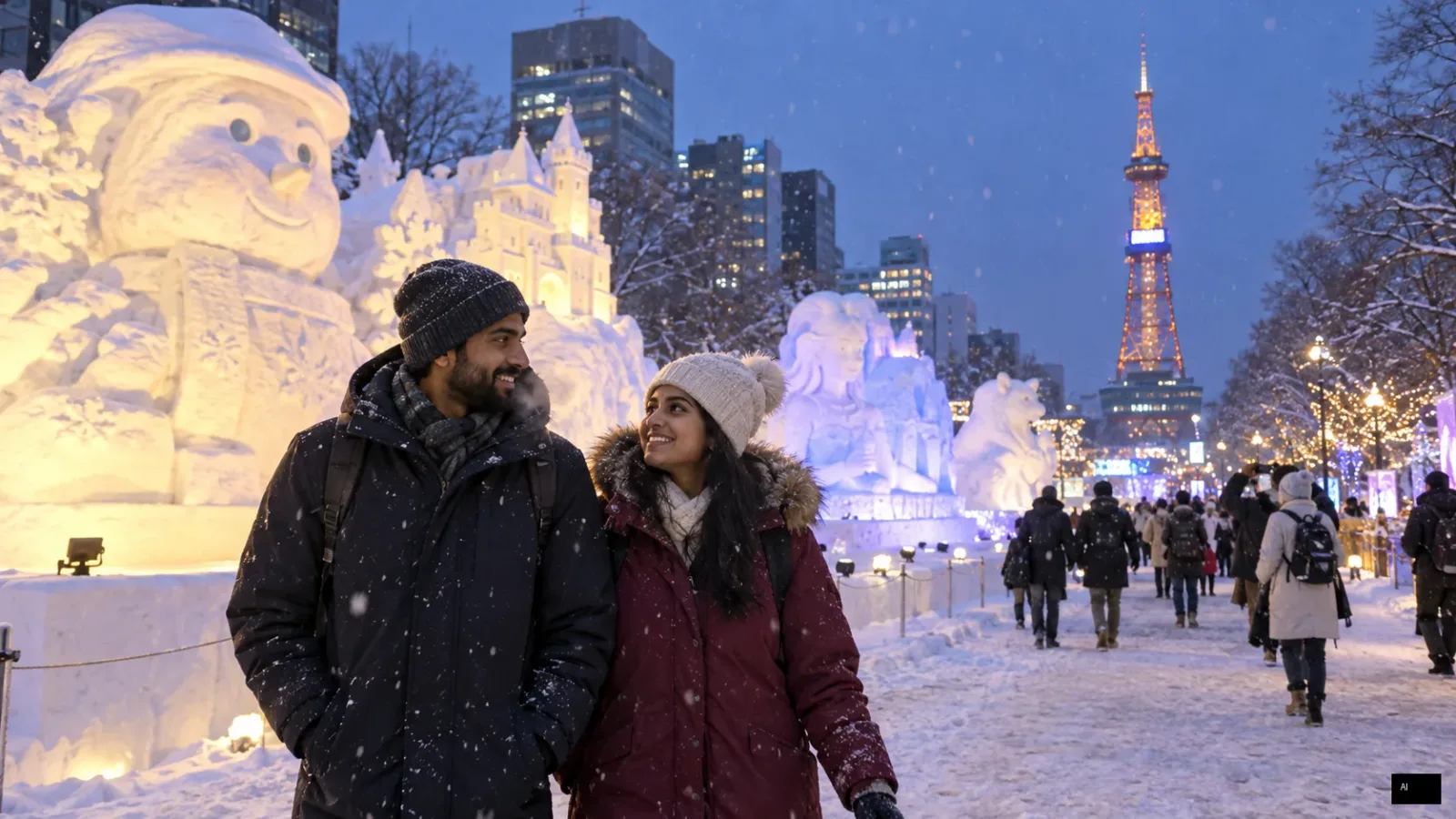
February stays deep-winter (mean -2.7°C, 116 cm snow, JMA normals) but the city fills up. The 77th Sapporo Snow Festival runs February 4-11, 2027 across three sites - Odori Park, Tsudome and Susukino - drawing more than two million visitors, with sculptures lit from sunset to 10:00pm (official festival site). Otaru's Snow Light Path follows February 6-13, 2027, making it the obvious pairing - the canal town is 30-34 minutes away by JR rapid (see our 3-day Hokkaido itinerary). The catch is money: a Metro Engine analysis of 130 Sapporo hotels shows a February median of 24,100 yen for a double room, roughly double November's 12,400, with festival Saturdays quoted higher still. Festival-week beds sell out months ahead.
Crowds and disruptions: what actually goes wrong
Snow rarely closes Hokkaido, but storms can delay flights into New Chitose and slow trains. The JR Rapid Airport service (37 minutes, 1,150 yen - our airport transfer guide has the options) runs in most weather, and Sapporo's underground walkways mean you can cross the centre without touching the ice. The sensible buffer: avoid flying home on the same day you travel down from Niseko or in from a storm forecast. Crowds are otherwise modest - except festival week, when Odori Park and Susukino are packed after dark and restaurant waits grow.
What to book first
In order: (1) Snow Festival hotels if you are coming February 4-11 - book a season ahead, and our Hokkaido couple budget shows what February does to the bill; (2) flights - India to Tokyo, then Tokyo to Sapporo, where LCC one-ways start around 5,500 yen when booked early (fares and options in our Tokyo to Sapporo guide); (3) Niseko accommodation and ski lessons for January-February; (4) anything with New Year or festival dates - restaurants and tours fill where the crowds go. What to pack: thermal layers, a real insulated waterproof boot with grip, gloves and a beanie. Indoor spaces and trains are strongly heated, so dress in layers you can shed.

A Miranda House graduate and lawyer who traded courtrooms for slow travel. Cheshta travels with the batches we host ourselves, with a soft spot for travelling alongside elders.
Planning your next trip?
We'll handle insurance, hotels, airport assistance and the itinerary — the same way we do it for every trip.
Questions on this article
asked by readers, answered by us
Was this helpful?
one tap, no sign-up